



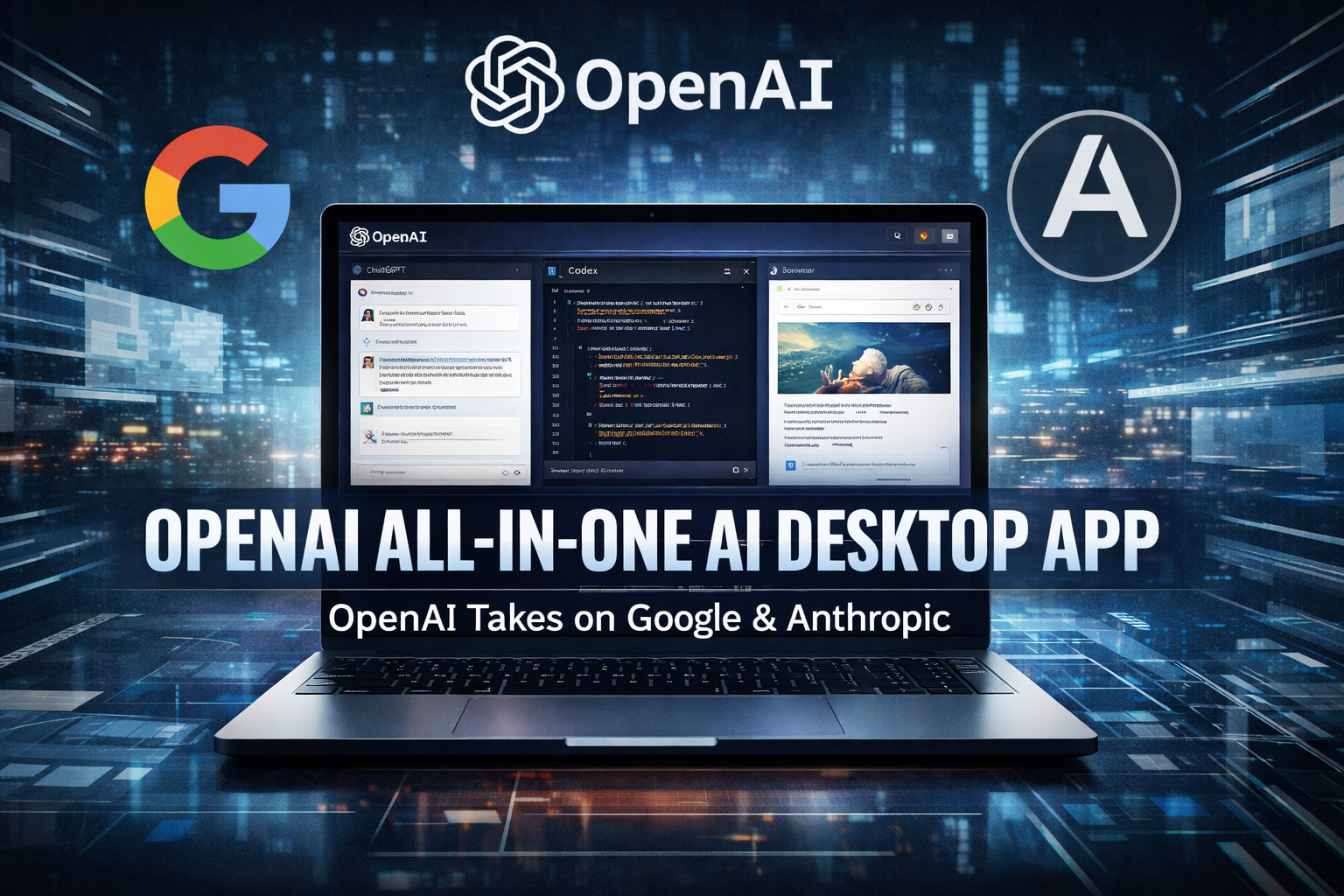
OpenAI is working on an all-in-one AI app for users’ desktops that will integrate its ChatGPT, Codex, and AI browser into one application. The development puts OpenAI in a head-to-head race with Google and Anthropic as it works on improving user interface and integrating its expanding array of products. The development of a new desktop app is a step towards integration and further development in consumer and developer products.
Summary
Unified desktop strategy takes shape
Reports state that OpenAI plans to merge multiple AI tools into a single desktop interface. The company aims to reduce fragmentation across its services by placing chat, coding, and browsing capabilities in one environment. This approach is expected to make the process easier for users who are used to working with different tools.
It has been observed that the desktop application is a move towards improving the overall structure of the product. It seems that internal modifications are aimed at increasing efficiency while bringing all development teams under a single umbrella. This comes at a time when many individual products were growing exponentially for various uses.
Codex growth supports integration plans
The coding platform OpenAI Codex is expected to play a central role in the desktop application. The standalone app has been successful in reaching millions of weekly active users among developers. This can be a starting point to further embed it into a larger desktop system.
Codex offers features to carry out multi-step programming tasks through AI agents. This feature can be considered a step towards the company’s aim of developing a unified workspace where coding, communicating, and browsing can be done in a collaborative manner.
Competitive pressure drives product direction
Competition from Google and Anthropic is still affecting the decisions of OpenAI. It is reported that the two companies have improved their products, especially when it comes to coding and business applications. In response, the company is seeking to offer integrated products to keep users within the same system.
It is noted that the company could leverage the desktop platform to enhance its presence among business and technical users. By providing a product that includes various features within the same application, the company is seeking to offer a clearer product. This is a move by the company to change the way user interfaces are being designed by AI companies.
Leadership alignment and rollout plans
Leadership changes also form part of the transition. Greg Brockman is expected to support product coordination during the rollout, according to sources. Meanwhile, Fidji Simo continues to oversee application strategy and operational alignment.
The company hasn’t announced a release date for its unified desktop application. Nevertheless, there have been indications that the development is underway as the company perfects its integrations. The desktop application is a step toward a unified platform where users will be able to interact with AI technologies without using multiple services.
