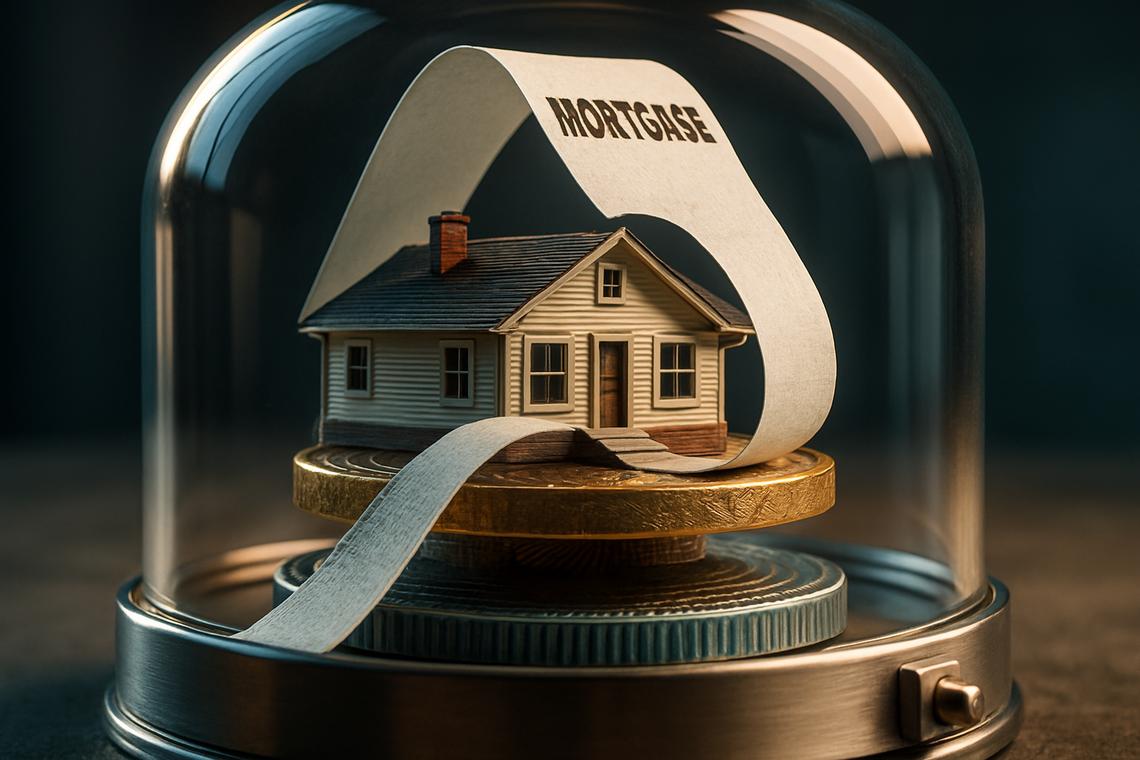
In a move that could reshape access to housing finance, Coinbase and Better are rolling out a new crypto backed mortgage product for U.S. homebuyers.
Summary
A new route to homeownership for digital asset holders
Millions of Americans now have a fresh path to homeownership as Coinbase powers Better’s first crypto-backed mortgages. Prospective buyers will be able to use Bitcoin or USDC held in their Coinbase accounts to fund cash down payments without liquidating long-term positions.
These mortgages will be originated and serviced by Better and will benefit from the same backing of Fannie Mae as other conforming mortgages. That said, the loans are subject to Better’s standard credit approval requirements, just like traditional products.
For the tens of millions of Americans who hold digital assets, this structure creates another option in a housing market where affordability and access have become increasingly constrained. Moreover, it links onchain wealth more directly to real-world assets.
Why crypto-backed home loans matter in today’s market
Homeownership remains one of the most powerful engines of generational wealth, but access is tightening. Traditional mortgage systems tend to favor older generations who have enjoyed decades of compounding equity gains that outpace the widening gap between housing costs and income.
Meanwhile, high interest rates, record home prices, and limited inventory have pushed the median age of a first-time homebuyer to 40 in 2025, according to the National Association of Realtors. However, younger and lower-income households are facing particularly heavy payment burdens.
In Q2 2025, a typical family needed 36% of their income just for a mortgage payment on a median new home, based on a national median income of $104,200 and a median new home price of $410,800. For low-income families, that share jumps to upwards of 71% of their income, underscoring the strain in the current market.
When qualifying for a home loan depends primarily on income history, credit profile, and cash savings, the system tends to favor those who have already accumulated capital. Moreover, that dynamic reinforces wealth gaps across generations and leaves many digital asset holders on the sidelines.
Unlocking liquidity from digital assets
At the same time, millions of Americans have built meaningful net worth in digital assets, from BTC to USDC. Until now, they generally could not get credit for those holdings in the traditional mortgage underwriting process without selling them first.
That forces a familiar tradeoff: liquidate long-term positions and potentially trigger capital gains taxes, or miss the window for purchasing a home. However, the new product aims to change this equation by treating onchain holdings as pledgeable collateral.
Crypto-backed mortgages address a core friction: liquidity. These products allow holders to secure a home loan without having 100% of the required cash upfront and without being forced to sell their digital assets. By enabling borrowers to pledge BTC or USDC in underwriting, onchain wealth starts to translate into real-world access.
This approach effectively expands the pathways to homeownership while preserving long-term investment strategies. Moreover, it offers a way for crypto investors to diversify into real estate without exiting their positions completely.
How Coinbase and Better structure the loans
From a borrower perspective, crypto-backed mortgages function similarly to conventional home loans and come with the same legal protections. The key difference is the down payment structure, where digital assets stand in for cash via a separate, collateralized loan.
Instead of bringing the full cash down payment to closing, borrowers can pledge their crypto holdings as collateral for an additional loan used to fund that down payment. This is positioned as a major step forward for crypto’s real-world utility, combining digital asset collateral with government-backed mortgage financing.
At closing, the borrower receives two loans. The first is a standard Fannie Mae mortgage on the home. The second loan funds the cash down payment and is secured by the BTC or USDC pledged as collateral. Both loans are originated and serviced by Better.
One distinctive feature of Better’s structure is that both loans share the same interest rate and amortization term, so the borrower effectively manages a single combined monthly payment. Moreover, this unified payment structure is described as a true market first in the conforming mortgage segment.
For example, if a buyer wants to purchase a $500K home, they can pledge $250K in BTC and obtain a $100K loan to cover the cash down payment. The pledged crypto remains in custody in Better’s Coinbase Prime account for the life of the down payment loan and is returned once that loan is repaid.
Further, when a borrower chooses to pledge BTC, the loan terms remain unaffected by Bitcoin‘s price volatility. That said, even if the market fluctuates, the mortgage terms stay the same, offering a degree of stability that differs from many typical crypto-backed lending products.
Collateral requirements and custody details
The program sets specific collateral ratios depending on the asset used. If pledging Bitcoin, the initial collateral value must be at least 250% of the fiat down payment loan amount. If pledging USDC, the initial collateral value must be at least 125% of that amount.
For instance, a $250k BTC pledge unlocks a $100k cash down payment loan, while a $125k USDC pledge unlocks a $100k cash down payment loan. Moreover, any BTC or USDC pledged as collateral will be held in custody by Better on behalf of borrowers until the down payment loan is repaid in full.
The assets are kept in Better’s Coinbase Prime account rather than at the individual retail level. This institutional-grade setup is meant to align with the broader Coinbase Prime custody framework that many professional investors already use for digital asset storage.
USDC itself is not legal tender or currency, and USDC held on Coinbase is not subject to protections or insurance from the Federal Deposit Insurance Corporation (FDIC) or the Securities Investor Protection Corporation (SIPC). However, the structure leverages stablecoin liquidity while relying on traditional mortgage protections on the real estate side.
Bridging onchain finance and U.S. housing
Stablecoins like USDC are now widely used for global payments and treasury management, while tokenization is bringing credit funds, sovereign issuances, and capital markets onchain. Institutional adoption of crypto continues to expand, and housing is emerging as the next logical frontier.
These new loans are positioned as the first step in integrating crypto into the core plumbing of the U.S. housing finance system. Moreover, they represent a practical expression of Coinbase’s “Everything Exchange” vision, where multiple asset classes can be traded and then deployed in real-world use cases.
In that framework, the crypto backed mortgage concept is not just about trading tokens but about making them interoperable with regulated, government-backed systems. It aims to enable greater economic freedom while widening access to what many still view as the American dream of homeownership.
This offering also aligns with Coinbase’s broader flywheel of products, including crypto-backed loans and USDC lending. Together, these services are designed to give people more control over how they deploy capital and build long-term wealth across both digital and physical assets.
Eligibility, rebates, and potential savings
To get started, borrowers need a Coinbase account and the BTC or USDC they intend to pledge as collateral for the down payment loan. All loans are originated and serviced by Better and remain subject to its underwriting standards and credit review.
Coinbase One members approved for a crypto-backed or regular mortgage through Better will be eligible for a rebate equal to 1% of the mortgage value, capped at $10,000. The rebate is paid by Better in the form of lender credits applied against closing costs and fees.
For example, a Coinbase One member securing an $800,000 mortgage via Better would be eligible for an $8,000 rebate in lender closing credits. Moreover, this incentive effectively reduces the overall cash burden at closing, especially for larger loan sizes.
Coinbase One members who pledge USDC holdings can also continue to earn rewards on that stablecoin balance, subject to region and ongoing experimentation. That said, those rewards can help offset monthly servicing costs, adding a new layer of affordability to the homeownership equation.
Loan terms, risks, and important considerations
Borrowers can choose between 15-year and 30-year fixed-rate mortgage options within the program. All loans must pass Better’s credit approval process, which still evaluates income, credit history, and other traditional underwriting metrics.
Importantly, USDC rewards rates are subject to change and can vary depending on jurisdiction and product experimentation. Moreover, prospective borrowers should weigh the potential tax implications of their broader crypto strategy even if they are not directly selling assets to fund a down payment.
While the mortgage terms are not affected by price volatility when BTC is pledged, crypto markets remain inherently volatile. That said, maintaining excess collateral, diversifying holdings, and understanding the full loan terms are key steps for anyone considering this type of structure.
Early access and next steps
Interested buyers who are ready to turn digital wealth into a physical home can register for early access and review common questions on Better’s dedicated page at better.com/crypto-backed-mortgages. The initiative signals how quickly crypto’s role in mainstream finance is evolving.
As crypto-backed mortgages move from concept to reality, they may offer a new bridge between onchain capital and the U.S. housing market. Moreover, if adoption scales, this model could help redefine how Americans leverage digital assets to secure long-term, real-world wealth.
In summary, the Coinbase and Better partnership brings together conforming Fannie Mae mortgages, institutional-grade crypto custody, and targeted rebates to unlock homeownership for digital asset holders, while keeping their investment strategies largely intact.