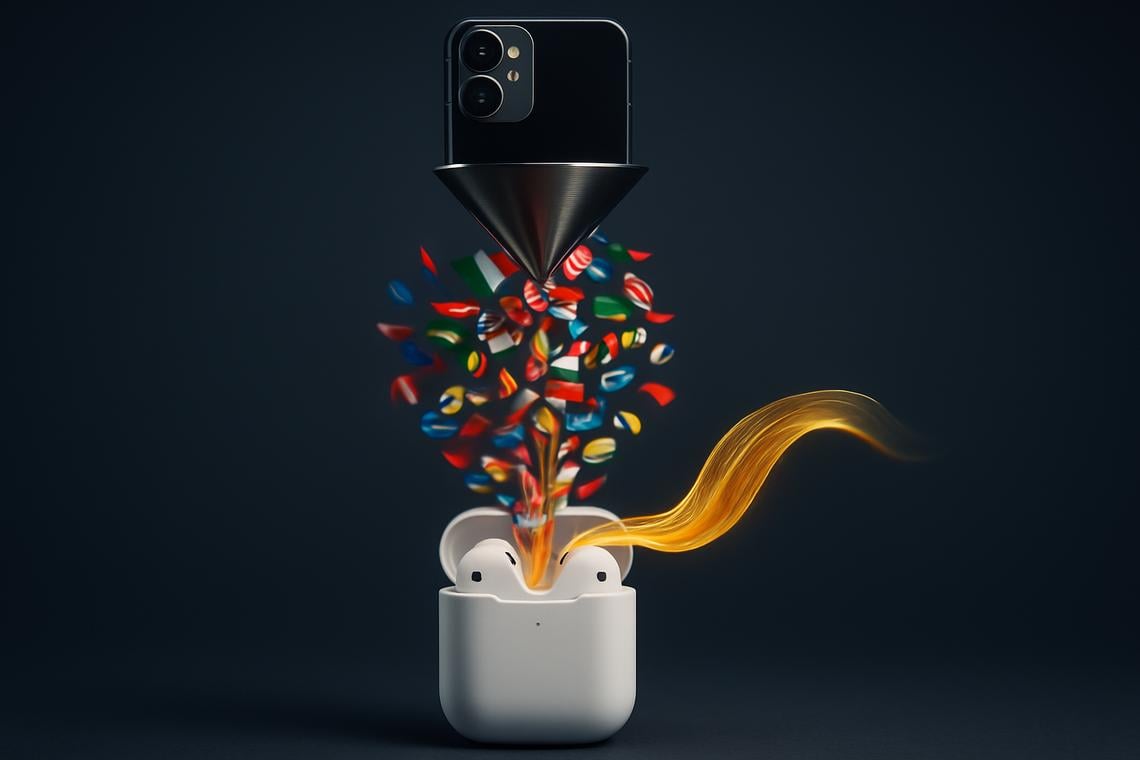
Apple users can now tap into the full power of Google Translate for live audio translation directly through their headphones on iOS devices.
Summary
Gemini AI brings live headphone translation to iOS
A new Google Translate feature that enables real-time translation on headphones using Gemini AI has arrived on iOS. Initially launched in beta in December for Android, the feature is now expanding to Apple hardware and rolling out in additional markets worldwide.
Moreover, Google’s live translation had been a major selling point for newer Apple AirPods, but it previously required Android to work. Now, it can run on Apple phones and tablets while supporting virtually any wired or wireless headphones, greatly widening its potential user base.
The feature debuted in a beta build with support for translating 70 languages, according to Google. However, it was initially limited to Android devices and select regions. The ongoing rollout extends availability to more countries, including France, Germany, Italy, Japan, Spain, Thailand and the UK.
How the on-device translation system works
That said, the translation workload happens directly on the mobile device rather than on external servers. This design allows users to access translated audio with any headphones connected to their phone or tablet, including those attached through a headphone dongle or a traditional headphone jack.
To use the live headphone translation feature, you first open the Google Translate app. Then you tap the Live Translate icon at the bottom of the screen and select among several modes: Listening, Conversation, Text Only or Custom Settings. Each mode targets a different real-world scenario.
The Conversation option offers full two-way translation, playing audio through the phone speaker or any connected headphones. The app automatically detects the spoken languages, reducing setup friction. There is also a Face-to-Face mode that splits the screen so each participant sees a transcription and translation in their own language.
A representative for Google did not immediately respond to a request for comment about future enhancements, such as deeper gemini ai translation features or expanded device compatibility.
Apple vs Google: which live translations should you use?
With headphone support now active, owners of Apple devices gain several options for listening to live translations. If they have newer models such as AirPods 4, AirPods Max 2 or AirPods Pro 2 or 3, they can rely on Apple’s native iOS Live Translation or choose Google’s Gemini-based solution.
Moreover, Google’s strategy appears geared toward a broader audience, regardless of the phone brand or headphone model in use. Apple, by contrast, keeps its experience tightly integrated within its own ecosystem. The choice between them depends largely on language needs, hardware and user priorities.
Analysts note that if you are working with a less commonly spoken language, Google’s headphone-based live system may be the better pick. In this context, the combination of Gemini and google translate can provide more robust coverage and higher-quality output than many rivals.
“Google brings broader language coverage and a stronger underlying model for less commonly spoken languages,” said Thomas Randall, research director at Info-Tech Research Group. However, he added that for mainstream language pairs, Apple’s integrated solution remains highly competitive.
However, if your headphones support Apple’s implementation and you are translating into a more widely spoken language, Apple’s built-in processing may hold the advantage. “Apple’s native, on-device processing will offer a privacy and lower latency advantage,” Randall said, highlighting speed and data protection as differentiators.
Impact on rival translation apps
Ultimately, Randall believes that most everyday users will not notice a major difference between Apple’s and Google’s live translation performance. Both have reached a level of quality where casual listeners are unlikely to distinguish subtle variations in output or latency.
That said, the competitive pressure on third-party translation apps could be significant. Services such as iTranslate and SayHi now face powerful, free alternatives from tech giants that are already deeply embedded into users’ daily digital lives.
Moreover, as these integrated translation tools improve, independent apps may struggle to justify their existence unless they focus on niche features, enterprise workflows or specialized domains. Free, on-device tools from Apple and Google reduce friction and cost for travelers, students and professionals alike.
In summary, expanding live headphone translation to iOS solidifies Google’s position in real-time language services while giving Apple users more choice. Over time, both ecosystems are likely to keep pushing innovation, leaving smaller competitors to search for new ways to stand out.