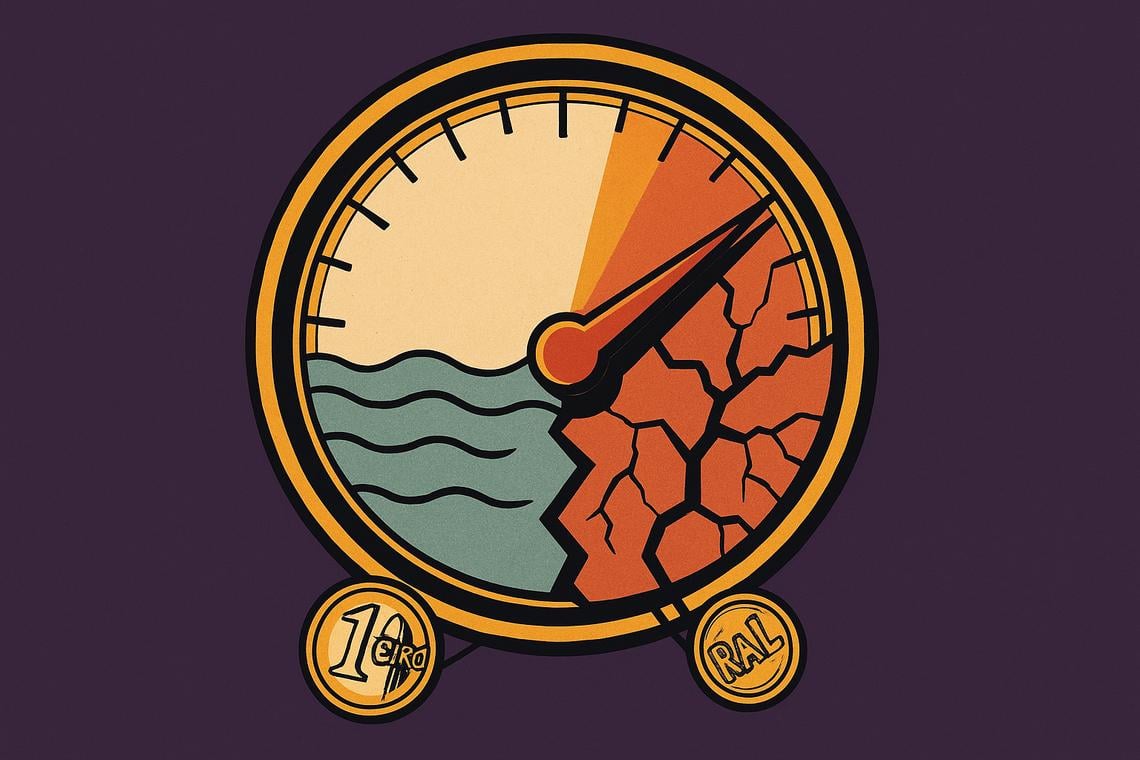
Global monetary policy is entering a more complex phase as each central bank reassesses its interest rate path amid slowing growth and persistent inflation.
Summary
Interest rate policy in Brazil enters an easing cycle
The Central Bank of Brazil has moved decisively into an easing phase, cutting its benchmark SELIC interest rate by 25 basis points to 14.50%. This decision came after a two-day COPOM meeting held on 28–29 April 2026 and was approved unanimously by policymakers. It marked the second consecutive 25 basis point reduction since the current cycle began the previous month, signalling a clear change in the monetary stance.
According to the central bank, the Brazilian economy is slowing and the prolonged period of high borrowing costs is increasingly being transmitted to the real economy. Consequently, authorities judged that maintaining the previous level of the SELIC rate risked amplifying the downturn. Nevertheless, inflation projections have actually worsened and remain above target, which complicates the timing and pace of easing.
This tension between weak activity and elevated price pressures highlights the delicate balance central banks must manage. On one hand, keeping the policy interest rate too high can deepen a slowdown and increase unemployment. On the other, cutting too quickly may undermine progress on inflation, especially where expectations are not yet firmly anchored.
Why Brazil is easing despite worsening inflation forecasts
Brazil’s choice to reduce the SELIC rate even as inflation forecasts deteriorate illustrates how policymakers sometimes prioritise financial and real-economy conditions. The central bank stressed that high rates had been effective in transmitting tight monetary conditions, but that this transmission was becoming increasingly costly for households and companies. Therefore, a gradual easing path was seen as a way to prevent an excessive contraction.
However, the institution remains constrained by the fact that inflation is still above its target. This means any further reduction in the benchmark interest rate will likely be cautious and conditional on incoming data. The next scheduled policy meeting on 16–17 June 2026 will be a key moment to reassess both domestic inflation dynamics and global financial conditions.
Because the latest cut was only 25 basis points and followed a similar move the previous month, the strategy appears incremental rather than aggressive. Consequently, markets are likely to scrutinise future communications for signs of how far and how fast the easing cycle can proceed without destabilising inflation expectations.
ECB signals possible adjustments to its interest rate path
While Brazil moves into an easing phase, the European Central Bank is signalling a very different challenge. ECB Executive Board member Piero Cipollone recently warned that the war in the Middle East has increased the probability that the institution may have to adjust interest rates. The main concern is the potential for higher energy prices and renewed inflation risks stemming from geopolitical tensions.
At present, the ECB’s deposit rate stands at 2.00%, with the main refinancing rate at 2.15% and the marginal lending rate at 2.40%. These levels reflect a tightening cycle designed to bring euro area inflation back under control. Yet, if energy costs surge again, the disinflation process could stall, forcing policymakers to reassess whether the current stance is sufficiently restrictive.
Therefore, the ECB is in a wait-and-see mode, keeping its options open in case new shocks hit the economy. Any upward revision in expected inflation or energy prices could prompt discussions about either prolonging the current level of the policy interest rate or, in a more extreme scenario, tightening further. At the same time, officials must consider the impact on growth and financial stability across member states.
How higher policy rates are reshaping European savings products
The elevated interest rate environment in the euro area is already reshaping retail financial products. Italian banking coverage, in particular, points to deposit accounts and savings instruments offering yields of up to 4%. Banks are using these higher returns as a tool to attract and retain household savings, which had previously been parked in low-yield deposits during years of ultra-loose policy.
This shift demonstrates how central bank decisions filter through the financial system into consumer choices. When the policy interest rate rises, funding costs for banks increase, but so does the incentive to offer more attractive remuneration on deposits. As a result, households can benefit from higher nominal returns on their savings, even though inflation may erode part of the real gain.
Moreover, banks compete for deposits as a stable source of funding, especially in periods of market uncertainty. Therefore, higher advertised yields on savings products reflect both the impact of ECB policy rates and strategic choices by financial institutions. For savers, comparing the offered interest rate with inflation and alternative investments becomes increasingly important.
The global divergence in interest rate strategies
The contrast between Brazil’s rate cuts and the ECB’s cautious stance underscores the growing divergence in global monetary policy. Emerging markets such as Brazil, where policy rates are significantly higher in absolute terms, may feel pressure to support growth even when inflation risks remain. By contrast, advanced economies like the euro area focus on ensuring that inflation continues to trend down after a period of severe price shocks.
Nevertheless, all central banks face a common challenge. They must decide how long to hold interest rates at restrictive levels without triggering unnecessary economic damage. Furthermore, they must communicate their decisions clearly enough to avoid destabilising markets or unanchoring inflation expectations. The interaction between policy rates, inflation outlook, and real activity will continue to define the macroeconomic landscape in 2026.
As the next Brazil COPOM meeting approaches and the ECB monitors geopolitical and energy developments, the direction of the global interest rate cycle remains uncertain. For investors, borrowers, and savers, staying attentive to central bank signals is essential, since even small basis-point adjustments can have significant effects on currencies, asset prices, and everyday financial products.