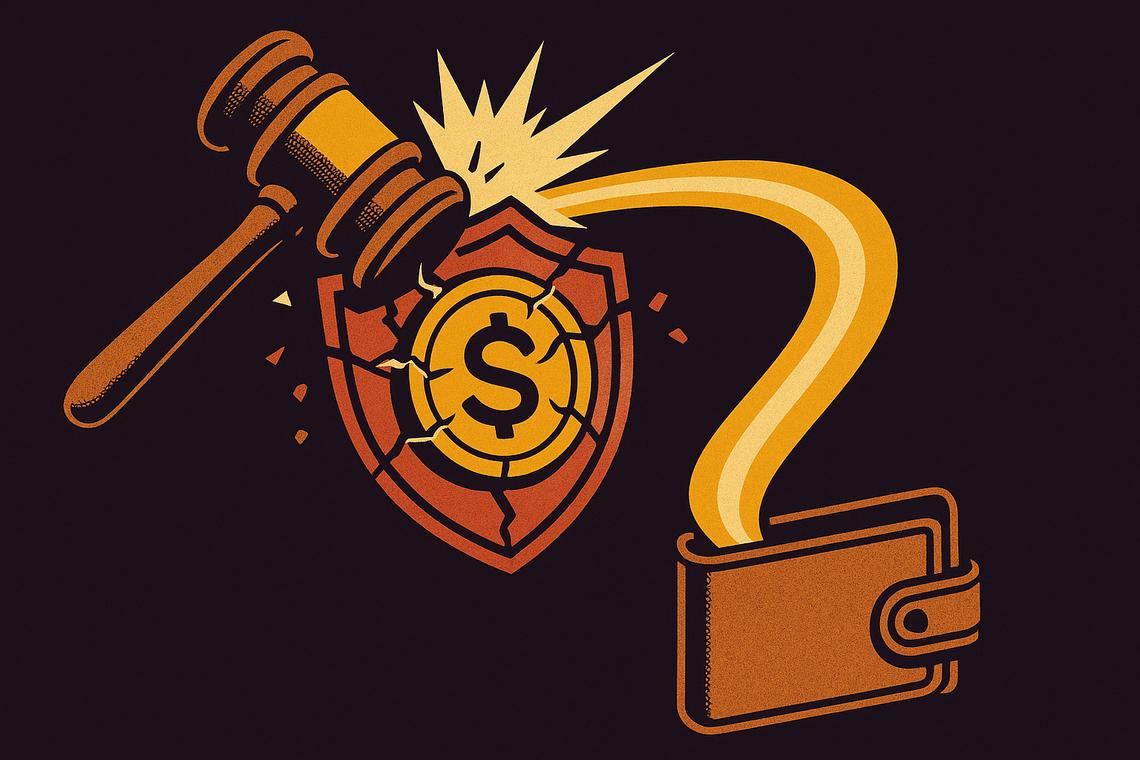
A new Tether frozen USDT seizure fight is putting one of crypto’s biggest legal questions before a Manhattan federal judge: when a stablecoin issuer freezes sanctioned tokens, can a court force those assets to be redirected to victims holding terrorism judgments?
That is now the request in the Southern District of New York, where attorney Charles Gerstein filed a motion seeking control of 344,149,759 USDT — roughly $344 million — that Tether froze after U.S. sanctions action. The plaintiffs want the tokens reissued to a wallet controlled by their counsel.
At the center of the dispute are families tied to the 1997 Hamas bombing in Jerusalem, part of a group with unpaid U.S. court judgments against Iran. After years of trying to collect, they are now testing whether crypto infrastructure can become a tool for enforcing those awards.
Summary
What the Tether frozen USDT seizure motion asks the court to do
The filing asks a Manhattan federal judge to order Tether to transfer $344 million in frozen USDT to satisfy terrorism-related judgments.
More specifically, the request targets 344,149,759 USDT that the plaintiffs say should be placed under their control. Their proposed remedy is unusual but direct: they want Tether to reissue the same amount to a wallet controlled by their lawyer.
That makes this more than a sanctions story. It is also a live test of whether a stablecoin issuer’s technical control over tokens can be turned into a court-enforced collection mechanism.
The court has not yet ruled on the request.
Why the USDT was frozen after OFAC action
The disputed USDT was frozen after OFAC designated two Tron wallet addresses as linked to Iran’s Islamic Revolutionary Guard Corps, or IRGC.
Tether then immobilized the tokens held in those wallets. The plaintiffs’ argument leans heavily on that step. In their view, once the tokens were blocked following OFAC sanctions, they became the kind of property that can potentially be reached to satisfy terrorism judgments.
That link matters because the case is not about an ordinary wallet dispute. It sits at the intersection of sanctions enforcement, blocked property rules, and crypto custody.
And unlike Bitcoin or Ether, USDT comes with a level of issuer control. Tether can freeze or blacklist addresses, a feature that now sits at the heart of the Tether frozen USDT seizure fight.
Charles Gerstein’s legal theory in the Southern District of New York
Gerstein filed the motion in the Southern District of New York on May 15, 2026. His argument is built around a simple idea: Tether has already locked the tokens, so it has the ability to do more than merely hold them in place.
In the filing, he argued that Tether “has the technical ability to burn and reissue the blocked tokens.” The plaintiffs say that capability means a court can order the company to redirect the value, rather than leave the tokens frozen indefinitely.
Gerstein also argues that federal law allows victims to execute against blocked property of a state sponsor of terrorism. That is the core legal theory driving the case.
Why this matters is straightforward. If the court accepts that theory, frozen stablecoins could become more than dormant sanctioned assets. They could become recoverable property for judgment creditors in terrorism cases.
Why terrorism judgments crypto enforcement is watching this case
Gerstein is not new to contested frozen-crypto fights.
He previously handled a dispute on Arbitrum involving KelpDAO and restaked Ether, where questions over control, theft, and ownership were heavily contested. Aave challenged the claim in that matter, and the case remained disputed.
This time, the plaintiffs are framing the Tether matter as cleaner and more direct. Their position is that OFAC has already designated the Tron wallets as tied to the IRGC, and Tether has already taken the freeze action.
That distinction is important. In many crypto cases, courts first have to untangle who owned what. Here, the legal battle is centered less on tracing a hack and more on whether blocked USDT can be judicially redirected.
Why the outcome could matter for future crypto enforcement
The broader implications go well beyond one motion in New York.
This case could help define how courts treat centralized stablecoins during sanctions enforcement and judgment collection. Bitcoin and Ether generally do not give an issuer the same direct ability to freeze balances or reissue tokens. USDT does, and that difference could make it more reachable in enforcement actions.
That is why the Tether frozen USDT seizure request is drawing attention. It asks the court to treat a stablecoin issuer not just as a passive software provider, but as a controllable intermediary that can carry out a judicial remedy.
For creditors, that could open a new path to collection in cases where traditional recovery has dragged on for decades. For crypto, it sharpens a reality the industry already knows well: some digital assets may function less like bearer instruments and more like programmable balances subject to issuer and court control.
The next move now belongs to the court. Its decision could shape how frozen stablecoins are handled when sanctions law and terrorism judgments collide.