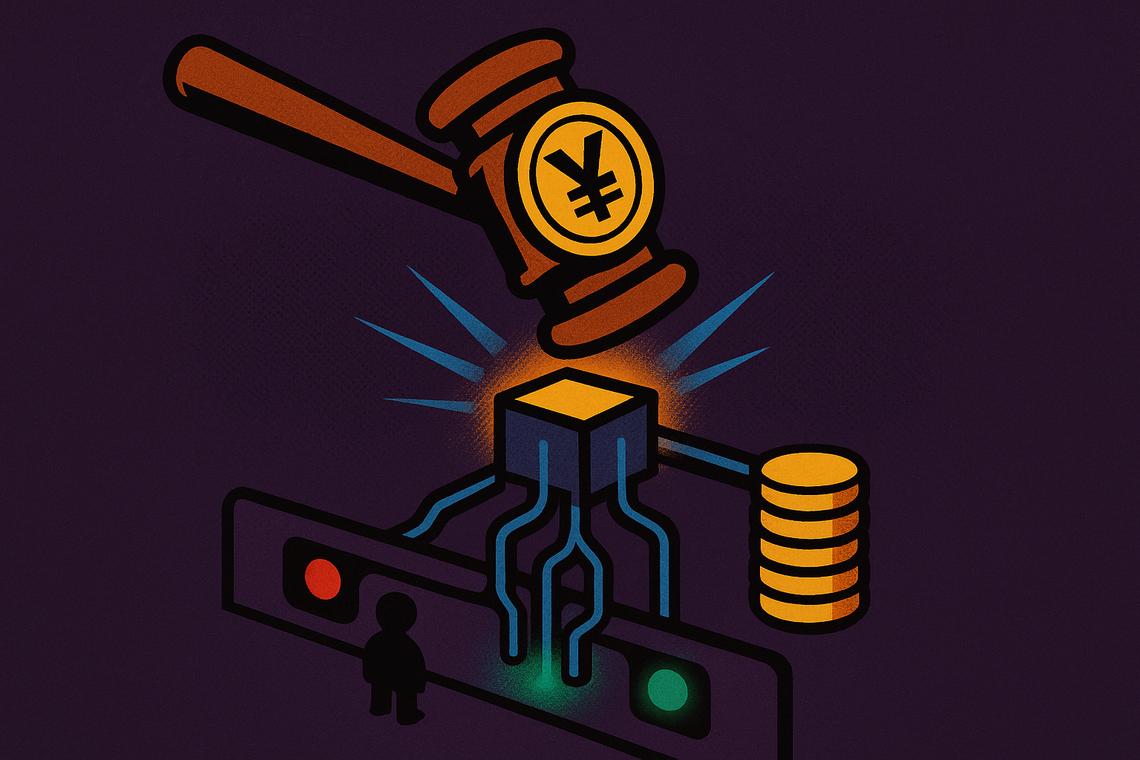
Japan is pushing deeper into digital money infrastructure, with Japan AI blockchain finance moving from theory to party-backed strategy. On May 19, 2026, the Liberal Democratic Party gave the green light to a framework that blends artificial intelligence with blockchain-based finance, opening the door to a more automated system built around tokenized bank deposits, yen stablecoins, and machine-managed transactions.
That approval matters because it signals political support for a financial model in which software does more than assist banks. Under the proposal, AI would identify and execute transactions involving goods and services, while blockchain systems and smart contracts would handle settlement and reconciliation automatically.
At the center of the effort is Seiji Kihara, who spearheaded the Liberal Democratic Party project team behind the proposal. The idea is ambitious: create a financial architecture that can keep economic activity running continuously, with digital representations of yen-based value moving through a transparent, code-driven system.
Summary
LDP backs AI and blockchain finance
The Liberal Democratic Party’s support gives fresh momentum to a policy vision that ties financial automation directly to blockchain rails. In practical terms, the framework combines AI-driven finance with decentralized transaction infrastructure, aiming to reduce friction across the network and support round-the-clock activity.
This is the core of the Japan AI blockchain finance plan: AI systems would independently identify and execute transactions, while blockchain provides a transparent and immutable record. Smart contracts would then automate back-end functions that often slow traditional finance, including settlement and reconciliation.
Why this matters is straightforward. It is not just a crypto story or an AI story. Instead, it is a proposal to redesign financial plumbing so that digital assets, automated decision-making, and regulated oversight work together inside one system.
Tokenized bank deposits and yen stablecoins are central
The framework puts tokenized bank deposits at the heart of the model. It also supports stablecoins pegged to the Japanese yen, giving the proposal a clear focus on yen-denominated digital money rather than purely speculative crypto assets.
That includes support for:
- tokenized bank deposits
- stablecoins pegged to the Japanese yen
- collaborative stablecoin initiatives involving Japan’s three largest banking institutions
The proposal also advocates converting the Bank of Japan’s current account holdings into digital tokens. In the framework’s logic, that would help create a more efficient digital financial architecture for AI-managed commerce.
The inclusion of yen stablecoins and tokenized deposits is one of the clearest signs that this plan is aimed at real financial infrastructure. Rather than treating digital assets as a side market, the proposal ties them to deposits, liquidity, and institutional use.
That could be one of the biggest implications of the entire package. If digital yen-linked instruments are built into core payment and settlement processes, tokenization moves closer to mainstream banking operations rather than staying at the edge of finance.
A system built for automation and oversight
The strategy does not stop at digitizing money. It also sketches out how the system would function once those assets circulate.
AI systems are expected to oversee digital currency circulation while tracking exposure across the financial system. At the same time, blockchain-based smart contracts would automate settlement and reconciliation. The framework emphasizes transparency, regulatory compliance, and systemic risk management as central design features.
That combination is notable. Faster automation often raises concerns about control and visibility, but this proposal presents blockchain as the record-keeping layer that makes AI-led finance easier to monitor. In other words, the same technology meant to speed up transactions is also being positioned as a tool for accountability.
Why Japan AI blockchain finance stands out
Japan AI blockchain finance stands out because it links automation to oversight rather than treating them as competing goals. AI handles transaction decisions, while blockchain preserves a transparent record and smart contracts manage execution. As a result, the model is designed to support speed, traceability, and compliance at the same time.
Implementation would run through the FSA
The next major step would fall to Japan’s Financial Services Agency. Under the framework, the FSA is tasked with creating a five-year implementation timeline, giving the proposal a defined policy horizon even though the full conversion into official government policy still lies ahead.
The Liberal Democratic Party is expected to work with relevant government bodies to turn the concept into formal policy. What stands out here is that the project already assigns responsibility for execution rather than leaving the plan at the level of broad political messaging.
For markets and institutions, that matters. A five-year implementation track suggests a long-build regulatory and infrastructure process, one that could shape how banks, payment firms, and digital asset projects position themselves around Japan AI blockchain finance in the years ahead.
The plan extends beyond Japan
The strategy also looks outward. It calls for partnerships with neighboring Asian nations on AI and blockchain ventures, signaling that the plan is not only about domestic modernization but also about regional coordination.
That regional element could strengthen Japan’s position in digital finance by linking its domestic framework to broader cooperation on technology and financial infrastructure. If the country wants its model to carry weight, cross-border alignment on AI and blockchain would be a logical next step.
For now, the political signal is the real headline: one of the world’s largest economies is backing a framework where digital yen-linked assets, automated transactions, and blockchain settlement are being treated as part of the future financial system, not as a side experiment.