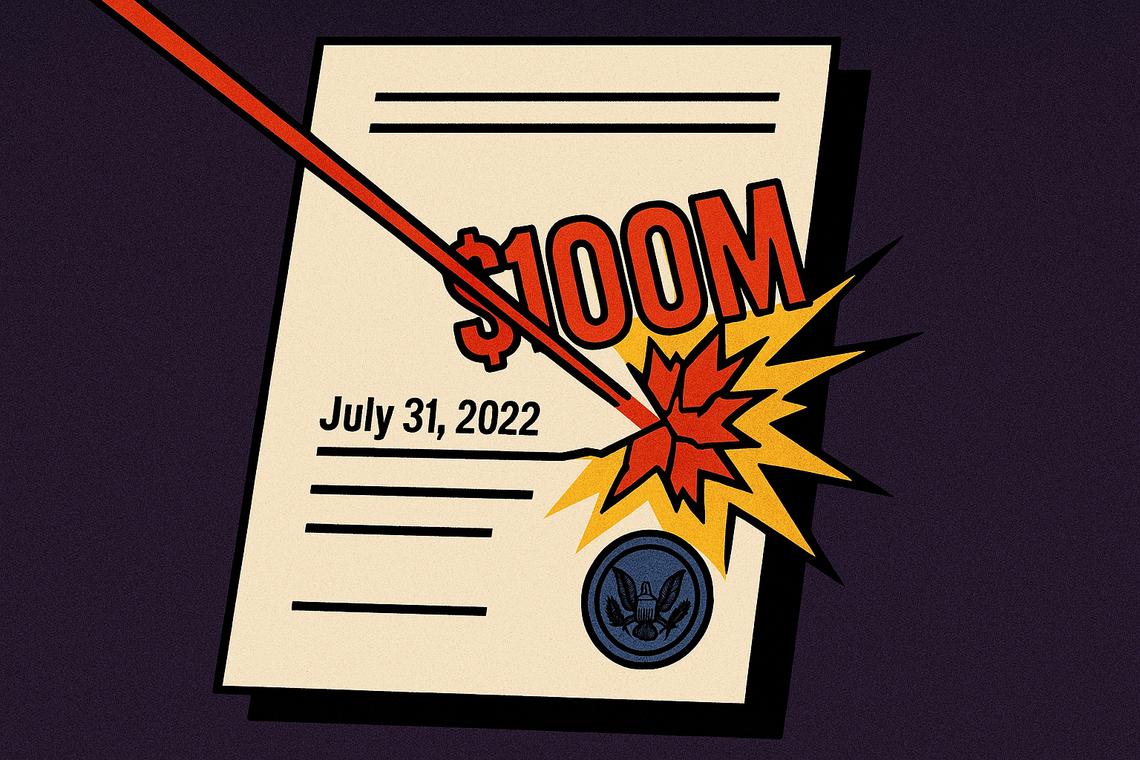
The Galaxy Digital BitGo dispute is back in the spotlight, with founder Mike Novogratz taking the stand in Delaware Chancery Court as a judge weighs whether Galaxy owes BitGo at least $100 million over a collapsed crypto deal. At the center is a merger that once looked like a bet on the industry’s future, but later unraveled as markets cracked and regulatory pressure intensified.
What began as a $1.2 billion agreement in 2021 has turned into one of crypto’s most closely watched contract fights. Galaxy agreed to buy BitGo when valuations were still elevated, but the failed merger was terminated in August 2022 after the Terra collapse and a broader market downturn shook the sector.
Now the case has narrowed to a hard legal question with big consequences: did BitGo miss a key requirement tied to audited financial statements, giving Galaxy the right to walk away, or did Galaxy wrongly abandon the transaction and trigger a $100 million payment?
Summary
Why the Galaxy-BitGo deal fell apart
The dispute stems from a failed merger agreed in 2021, when both firms were trying to build scale in digital asset services. The transaction was valued at $1.2 billion and would have joined Galaxy’s crypto financial business with BitGo’s custody operations.
That plan broke down in August 2022. Galaxy says it terminated the merger after BitGo failed to deliver required audited financial statements on time. BitGo has pushed back, arguing that Galaxy wrongly abandoned the deal and should be forced to pay at least $100 million.
That split matters because the litigation is not just about whether the merger failed. It is about whether the contract let Galaxy exit without paying a reverse fee. In practical terms, the judge is deciding whether a missed compliance requirement was enough to kill the transaction cleanly, or whether market stress gave one side an excuse to back out.
This is one reason the Galaxy Digital BitGo dispute has drawn attention beyond the two companies. It touches a recurring issue in crypto M&A: what happens when a fast-moving market collides with rigid legal deadlines and evolving regulatory expectations.
What Novogratz told the court
Novogratz appeared in Delaware Chancery Court this week as the trial moved toward an expected end before the week is over. The judge is expected to decide whether Galaxy owes the $100 million fee BitGo is seeking.
His testimony put the regulatory backdrop front and center. SEC Staff Accounting Bulletin 121 is central to the case, and Novogratz said he had been pushing to complete the deal while contending that the SEC made approval difficult under then-Chair Gary Gensler.
That point goes to Galaxy’s broader argument that the merger faced real regulatory friction, not just second thoughts after the market turned. At the same time, BitGo’s position remains straightforward: Galaxy walked away when conditions worsened, and the contract does not excuse that decision.
How SEC SAB 121 shaped the case
SEC Staff Accounting Bulletin 121 has become one of the most important pieces of the courtroom fight. The guidance addressed how public companies that safeguard digital assets should account for those holdings, and it became effective shortly before BitGo’s filing deadline, according to the Delaware Supreme Court.
The timing is a major part of the legal battle. The court has noted that if BitGo failed to submit compliant statements by July 31, 2022, Galaxy could terminate the agreement without paying the reverse fee.
That makes the accounting guidance more than background noise. It may determine whether the failed merger was a lawful exit or an expensive breach. In other words, the issue is not just technical accounting. It could decide whether Galaxy’s breakup was contractually justified.
Why the Galaxy Digital BitGo dispute matters for crypto M&A
The case shows how SEC accounting policy can shape the outcome of private crypto deals, especially where custody, audits, and public-company obligations overlap. For firms operating in digital asset custody, regulatory interpretation is not just a compliance issue. It can directly change deal economics.
BitGo says the breakup caused real damage
BitGo has argued that Galaxy’s decision hurt the company in concrete ways. CEO Mike Belshe testified that the failed deal was “incredibly damaging,” while BitGo maintained that it had provided the needed information.
Its argument is not just financial. BitGo’s side says Galaxy’s public explanation for ending the merger implied BitGo could not pass an audit, a claim with obvious reputational stakes for a company whose business depends on trust, custody standards, and institutional credibility.
Galaxy disputes that framing. Its position is that the contract allowed termination without the $100 million payment because the financial statements did not meet the required terms.
That clash helps explain why the litigation has remained so sharp. For BitGo, the case is about being painted as noncompliant. For Galaxy, it is about enforcing the contract as written in a period when crypto markets and rules were shifting fast.
What happens next for Galaxy and BitGo
The trial is expected to end this week, with the judge set to decide whether Galaxy must pay BitGo at least $100 million.
That ruling could carry weight beyond the immediate payout. A decision for BitGo would signal that courts may look skeptically at merger exits during market stress, even in crypto. A decision for Galaxy would reinforce how strictly Delaware courts can treat timing, documentation, and closing conditions in deal agreements.
Meanwhile, both firms are moving forward with their businesses even as the case plays out. Galaxy has been expanding its regulated U.S. footprint. GalaxyOne Prime NY recently received a BitLicense and Money Transmission License from New York regulators, allowing it to offer institutional trading and custody services in the state.
That separate development adds another layer to the Galaxy Digital BitGo dispute. While the courtroom fight is about a deal that failed, Galaxy is still pushing deeper into regulated U.S. crypto infrastructure. For a sector that has often struggled to align growth with compliance, that contrast is hard to miss.
The remaining question is whether the collapse of a 2021 bull-market merger ends as a contractually justified exit, or as a $100 million reminder that in crypto, broken deals can echo long after the market that created them has disappeared.