The Cardano Summit canceled decision came after a closely watched treasury vote fell just short, giving the network one of its clearest tests yet of how community governance works when real money is on the line.
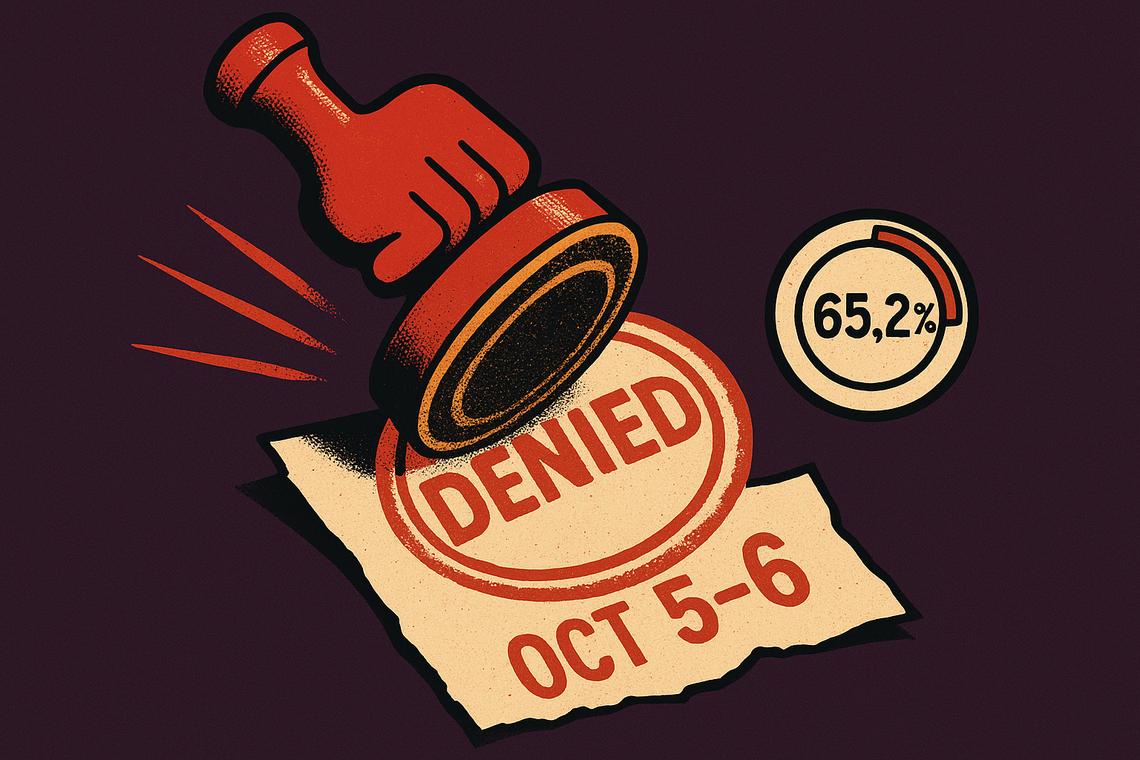
The Cardano Foundation pulled its October summit after a 7.8 million ADA treasury proposal failed to win the supermajority needed for approval. Support reached 65.2%, however, that was still below the 66.67% threshold required to unlock funding.
That narrow gap mattered. The event had been scheduled for Oct. 5 and 6 in Singapore as Cardano’s flagship annual conference, yet the vote showed that even a majority is not enough when governance rules demand broader consensus.
Summary
Cardano cancels its October summit after treasury vote fails
The immediate trigger was straightforward: the Cardano Foundation canceled its October Cardano Summit after the 7.8 million ADA proposal did not receive the required two-thirds approval from the governance community.
That proposal was worth about $1.84 million based on the figures provided in the voting materials. While most participants supported it, the final result did not clear the network’s approval bar.
The failed vote turned a funding question into a larger governance story. Cardano has spent years promoting community-led decision-making, and this result showed the process can block even a marquee ecosystem event if voters are not sufficiently convinced.
How the Cardano governance vote played out
The numbers tell the story of a proposal that came close, but not close enough.
- 135 participants backed the proposal
- 61 opposed it
- 24 abstained
Those totals produced 65.2% support, which fell below the 66.67% approval threshold.
The event itself was set for Singapore on Oct. 5 and 6. Instead of becoming the ecosystem’s annual gathering point, it has now become a case study in Cardano governance vote mechanics and treasury discipline.
What the rejected 7.8 million ADA proposal means for Cardano
This was not the first attempt to secure funding for the same event. Cardano’s delegated representatives, or DReps, had already rejected a separate proposal seeking roughly 14 million ADA for the summit.
That earlier push failed badly, with only 10% of DReps supporting it, and the Foundation returned with a smaller 7.8 million ADA proposal. Even then, the revised request still could not secure enough backing.
Why this matters goes beyond one conference. Treasury spending has become a pressure point inside Cardano, where token holders and their representatives are increasingly asking harder questions about cost, oversight, and who gets to direct shared funds.
Under Cardano’s model, ADA holders can delegate voting power to DReps, who then weigh in on treasury and policy decisions. In practice, that means spending proposals now face a higher level of public scrutiny than many crypto ecosystems are used to.
The result also lands in the middle of a broader debate involving Charles Hoskinson and parts of the governance community over spending priorities, budget oversight, and constitutional process. Hoskinson has discussed possible governance changes, constitutional discussions, and future technology upgrades, putting added attention on how Cardano balances decentralization with execution.
There is another reason the failed summit vote stands out. It suggests the community is not simply rejecting spending outright, but demanding stronger justification for major treasury requests. That could shape how future proposals are structured, especially for large ecosystem initiatives.
Treasury oversight is becoming a defining issue
Recent debates inside Cardano have not been limited to the summit.
Questions about treasury spending have also surfaced around a separate 32.9 million ADA proposal tied to Input Output Global’s research lab. The common thread is clear: parts of the governance community want sharper milestones, stronger accountability, and more competitive funding processes.
That shift may be uncomfortable for organizations seeking large allocations, but it also signals that Cardano’s governance system is moving into a more mature phase. For supporters of decentralized decision-making, this is one of the clearest examples yet of treasury controls working as designed, even when the outcome is disruptive.
Cardano shifts attention to TOKEN2049 Singapore
Even with the summit off the calendar, Cardano’s Singapore presence is not disappearing.
EMURGO secured approval to represent Cardano at TOKEN2049 Singapore on Oct. 7 and 8, keeping the ecosystem visible at one of the region’s major crypto gatherings just days after the now-canceled summit was supposed to take place.
That shift in focus could prove important. Instead of centering attention on a standalone flagship event funded through the treasury, Cardano may now lean on a more targeted conference presence through TOKEN2049 Singapore.
Hoskinson has also been exploring whether the community wants a bigger footprint there, including a larger booth and a possible embedded MiniSummit. That idea points to a practical consequence of the Cardano Summit canceled decision: if large treasury-funded events face tougher odds, smaller or more modular formats may become more attractive.
For Cardano, the bigger story now is not just that a summit was called off. It is that the network’s governance community showed it can stop a multimillion-ADA spend, redirect the conversation, and force ecosystem leaders to rethink how major public events get funded.