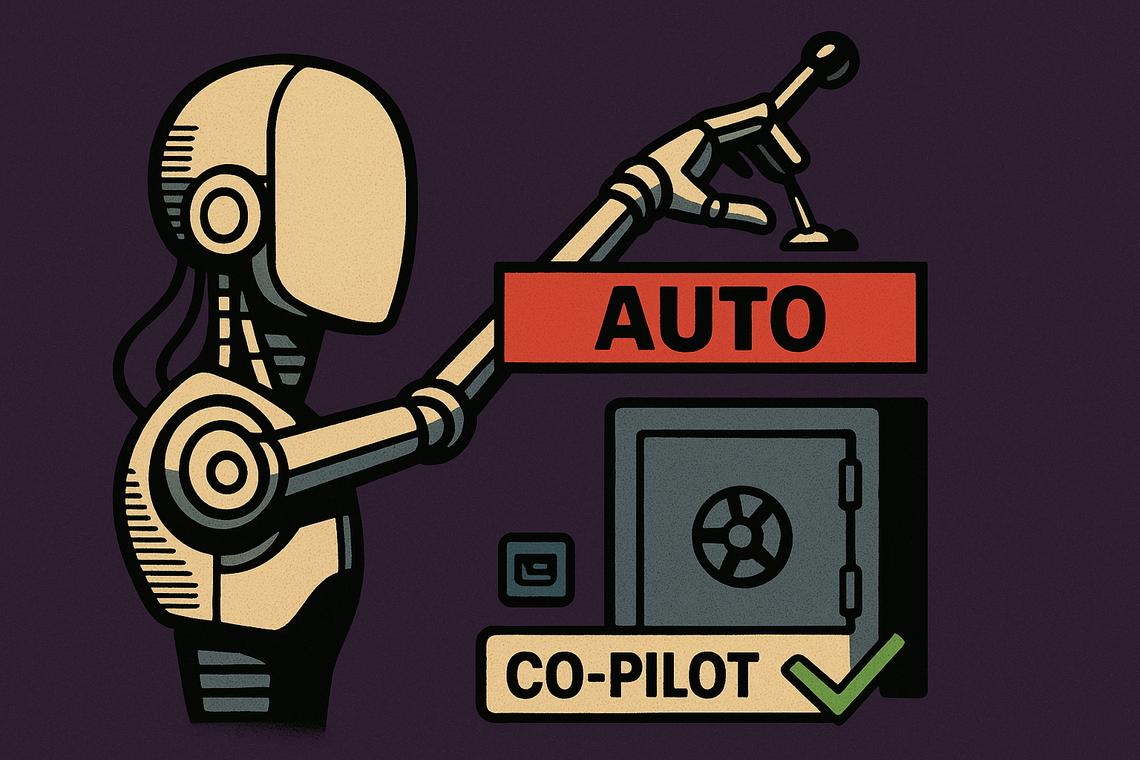
Most crypto investors think artificial intelligence can make them better traders. Far fewer are willing to let it actually run the show. That tension sits at the heart of a new AI crypto trading trust survey covering 1,036 crypto traders and investors, and the numbers paint a picture of a technology that has captured the industry’s imagination without yet earning full control of the vault.
The results are striking not because they show rejection, but because they reveal a specific kind of acceptance: enthusiasm for AI as a co-pilot, resistance to AI as a captain.
Summary
Crypto Investors See AI as Helpful, Not Decisive
The optimism is real, and it is widespread. A full 74.1% of crypto investors surveyed agree that AI can help traders make better decisions. Only 6.2% actively disagree. The rest sit in the middle.
That kind of consensus is hard to dismiss. It means AI has moved well beyond being a niche talking point in crypto circles. Traders across experience levels now treat it as a legitimate part of the conversation — something worth knowing about, worth watching, and worth testing.
Most traders treat AI signals as a second opinion
Believing in a tool and trusting it with real money are two different things. Despite broad optimism, only 14% of crypto investors say they heavily or often rely on AI recommendations before making trades. The majority use AI tools far more loosely: 33.3% engage with AI occasionally and say it has little influence on their decisions, while another 32.4% treat it as one input among several. A further 20.3% do not use AI tools at all.
The most common relationship traders have with AI is consultative. Some 68.5% use AI-generated signals as a reference or second opinion — something to check, not something to follow. The largest single group, 34.6%, describes their approach as treating AI output as a second opinion. Another 21.2% view it as general market information, and 12.7% say AI helps confirm ideas they had already formed on their own.
Only 3.3% say they find AI signals highly reliable and usually follow them directly. In practice, that means the typical investor is not outsourcing analysis to an algorithm. Instead, they are using AI the way a trader might use a financial columnist: interesting, informative, but not in charge.
Autonomous AI Trading Still Faces Strong Resistance
Here is where the data gets unambiguous. When asked directly whether they would allow AI to trade autonomously using their capital, 63.6% of crypto investors said no. Only 36.3% said they would permit it.
That majority rejection of autonomous AI trading crypto is not a fringe view. It comes from a group that largely believes AI is useful. The logic seems to be simple: useful for thinking, not trusted for doing. When a trade goes wrong in a fast-moving market, most investors want a human hand somewhere in the chain. Removing that layer entirely is a step most are not prepared to take.
Human oversight still matters in AI trading
The reasons behind this reluctance are not spelled out in the data, but the pattern is consistent. Across every measure of autonomous control, investors pull back. They will engage with AI, but they will not fully delegate to it.
This is not technophobia. It is a calculated boundary drawn by people who are clearly paying attention to what AI tools can and cannot do.
AI Portfolio Management Gets a Narrow Role
The portfolio allocation numbers reinforce this picture almost perfectly. A combined 79.4% of crypto investors said they would allow AI to manage 25% or less of their portfolio. The most popular ceiling, chosen by 29.4%, sits somewhere between 5% and 10%. Another 22.2% cap it at 11% to 25%, and 20.3% would restrict AI to under 5% of total holdings. A further 7.5% would not allocate any portion to AI whatsoever.
At the far end of the trust spectrum, the numbers collapse quickly. Just 6.5% would allow AI to control more than half their portfolio. And only 2% of crypto investors say they would hand their entire portfolio over to an AI system.
That 2% figure is arguably the most revealing number in the entire survey. Despite years of growing hype around AI-powered investment tools, the share of crypto investors willing to remove themselves entirely from capital decision-making is essentially a rounding error.
The message from the broader investor base is clear: AI participation, yes. AI majority control, no.
AI-Assisted Trading Profits Do Not Equal Full Trust
The profit data adds another layer of complexity to an already nuanced picture. Over half — 52.9% — of crypto investors reported making profits from AI-assisted trades. That is a majority. Under normal circumstances, a majority profit rate might be expected to drive stronger confidence in the technology and push more investors toward deeper adoption.
Why AI-assisted wins have not translated into stronger belief
Instead, something more interesting is happening. When asked whether AI-assisted trading actually delivers better returns than trading independently, only 32.7% agreed. That creates a gap of roughly 20 percentage points between investors who have experienced profits from AI-assisted trades and investors who believe AI deserves credit for those profits.
The implication is worth sitting with. Many traders appear to view their AI-assisted wins as coincidental — the result of good market conditions or their own instincts, with AI serving as background noise rather than a genuine edge. That is a serious obstacle for any sector trying to convert casual AI users into committed ones.
Crypto Investor Attitudes Toward AI Point to More Usage in 2026
Despite these doubts, adoption intent remains high. Some 59.8% of crypto investors say they definitely plan to use AI tools for crypto trading or investing in 2026. Another 34% are undecided. Only 6.2% say they definitely will not use AI tools in the coming year.
This is perhaps the most analytically interesting finding in the survey. Skepticism and adoption intent are not opposites; they are coexisting inside the same group of investors. Traders can simultaneously doubt AI’s performance advantage, refuse to let it trade autonomously, limit its access to a small slice of their portfolio, and still plan to keep experimenting with it next year.
For the AI trading sector, that combination represents both a foothold and a ceiling. The audience is genuinely engaged. Usage is growing. But trust — deep, capital-committing trust — has not followed the hype curve. Until investors start crediting AI for their wins rather than dismissing them as market luck, that ceiling may prove harder to lift than the technology itself.