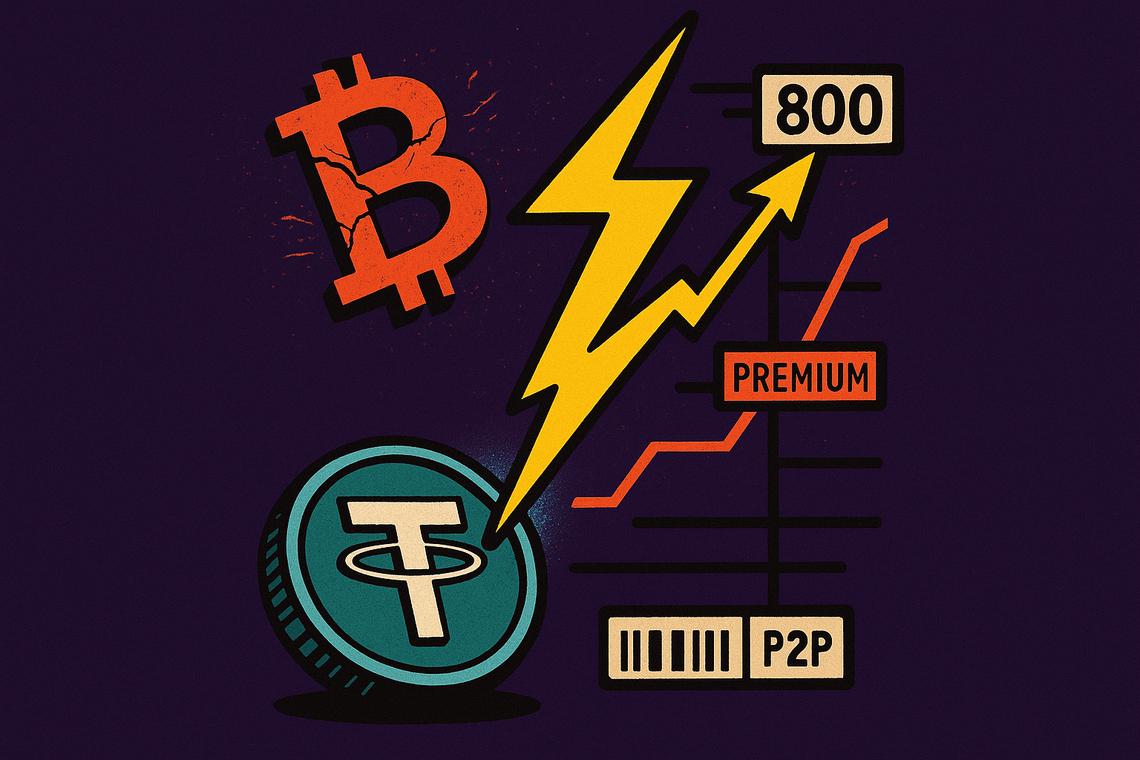
In Venezuela, the push to protect savings from a weakening currency has found a very specific outlet: buying USDT through Binance’s peer-to-peer platform. According to data reported by CriptoNoticias, the dollar-pegged stablecoin surged roughly 16% over the past 30 days in Venezuela’s local P2P market, climbing from around 690 bolivars per USDT to briefly above 800 bolivars. That kind of move, in a stablecoin meant to hold a fixed dollar value, tells a story not about crypto markets — but about the bolivar itself.
Summary
Key takeaways
- USDT rose approximately 16% in 30 days on Venezuela’s local P2P market, moving from around 690 to above 800 bolivars.
- Rapid bolivar liquidity expansion is accelerating local currency devaluation, pushing residents toward crypto alternatives.
- Government foreign-exchange purchase caps and limited bank dollar supply leave Venezuelans with few legal options to access dollars.
- Binance operates as a primary P2P platform where businesses and residents buy USDT to preserve purchasing power.
- The USDT price surge reflects a collective hedge strategy against sustained bolivar weakness, not a shift in the stablecoin’s underlying value.
Surge in USDT Prices Reflects Bolivar Devaluation
When a stablecoin pegged to the US dollar rises 16% against a national currency in a single month, the real story is the currency falling — not the crypto rising. That is precisely what is happening in Venezuela right now.
USDT Price Rise in P2P Market
The jump from roughly 690 bolivars to above 800 bolivars per USDT happened over a 30-day window, according to CriptoNoticias. On a P2P platform, prices are set by supply and demand between individual buyers and sellers — meaning this move reflects what real Venezuelans are actually willing to pay to get their hands on a dollar-equivalent asset. The premium being paid is a direct signal of how urgently people want out of the bolivar.
Bolivar Liquidity Expansion Effects
The core driver is monetary: rapid bolivar liquidity expansion is flooding the local economy with more currency, diluting purchasing power in the process. When a government prints or injects more of its own currency faster than productive output can absorb it, the value of that currency erodes. Venezuela has lived through this dynamic on extreme scales before, and the current P2P pricing surge suggests the pressure is intensifying again.
For ordinary Venezuelans, that erosion is not an abstract economic concept. It shows up at the grocery store, in rent negotiations, and in the value of wages earned in bolivars but spent in an economy increasingly priced in dollars.
Financial Restrictions Push Demand for P2P Cryptocurrency Solutions
The problem is not just that the bolivar is losing value — it is that the official channels for escaping it are tightly controlled, leaving P2P crypto platforms as one of the few practical alternatives available.
Limited Bank Dollar Supply
Limited bank dollar supply means that even Venezuelans who want to buy dollars through conventional financial institutions often cannot. The banking system simply does not have enough foreign currency to meet demand, and when it does, allocation is rationed and bureaucratic. For businesses trying to import goods or price contracts, this is a serious operational problem.
Government Foreign-Exchange Purchase Caps
Compounding the banking shortage, government foreign-exchange purchase caps formally limit how much currency any individual or entity can acquire through official channels. These restrictions, designed to manage foreign reserves, effectively push dollar demand into informal or alternative markets. P2P crypto platforms occupy that space — legally ambiguous in some jurisdictions, but practically indispensable for large portions of the Venezuelan population.
The combination of scarce supply through banks and government-imposed ceilings on official purchases creates a structural vacuum. That vacuum is exactly where platforms like Binance operate.
Binance’s Role as a Major Platform for USDT Purchases
Binance has become one of the primary venues where Venezuelans access USDT, functioning less like a speculative trading exchange and more like a practical financial utility.
Businesses and Residents Using P2P Platforms
Both businesses and individual residents use P2P platforms like Binance to preserve value, according to CriptoNoticias. For businesses, holding bolivar-denominated cash is a liability when inflation erodes it daily. USDT offers a way to park revenue in something that at least tracks the dollar, even if the P2P premium means paying above the nominal rate. For residents, it is often the most accessible savings tool available.
Binance’s Facilitation of USDT Transactions
The P2P model that Binance facilitates matches buyers and sellers directly, allowing transactions to settle in bolivars on one side and USDT on the other. This structure sidesteps the need for traditional banking infrastructure, which is precisely what makes it so useful in a country where that infrastructure fails to meet demand. The platform does not set the exchange rate — the market does — which is why the USDT price in bolivars can diverge so significantly from the official rate.
USDT Used as a Hedge Against Bolivar Weakness
Framing this as a “hedge” understates how fundamental the dynamic has become for many Venezuelans. A hedge implies an optional, strategic financial decision. For significant portions of the country’s population and business community, converting bolivars into USDT is less a choice than a necessity — one of the few practical tools available to avoid watching savings evaporate.
The fact that USDT itself carries no yield and involves a premium payment on P2P markets does not deter buyers. When the alternative is holding a currency losing value faster than any stablecoin premium, the math still favors crypto. This is what makes the 16% bolivar-denominated price increase so telling: it is not a reflection of USDT demand driven by speculation, but of a systemic failure in monetary policy creating structural demand for dollar-equivalent assets.
What the P2P price surge ultimately reveals is how quickly informal crypto markets can become the de facto financial system when official channels break down. Venezuela is not unique in experiencing currency pressure, but it remains one of the most vivid examples globally of stablecoins filling a role that banks and governments have left empty — and as long as bolivar liquidity keeps expanding without constraint, the pressure on that P2P market is unlikely to ease.
FAQ
Why has USDT price increased in Venezuela’s local market?
The USDT price rose about 16% over 30 days due to rapid bolivar liquidity expansion and government restrictions on dollar access, according to CriptoNoticias. As the bolivar loses purchasing power, demand for dollar-equivalent assets on P2P platforms increases, pushing USDT prices higher in local currency terms.
What challenges do Venezuelans face in accessing US dollars?
Venezuelans face two main barriers: limited bank dollar supply, which restricts how much foreign currency the banking system can provide, and government foreign-exchange purchase caps, which formally limit how much anyone can buy through official channels. Together, these restrictions funnel dollar demand into informal markets like crypto P2P platforms.
How does Binance facilitate USDT purchases in Venezuela?
Binance operates a P2P platform that directly connects buyers and sellers, allowing transactions to settle in bolivars on one side and USDT on the other. This model bypasses traditional banking infrastructure, making it accessible to businesses and residents who cannot obtain dollars through official financial institutions.
Why do Venezuelans use USDT as a hedge?
USDT is used as a hedge because it tracks the US dollar in value, offering protection against bolivar devaluation. When the local currency is losing purchasing power rapidly, holding USDT — even at a P2P premium — preserves more value than keeping savings in bolivars. For many Venezuelans, this is not a speculative decision but a practical financial survival strategy.
Article produced with the assistance of artificial intelligence and reviewed by the editorial team.