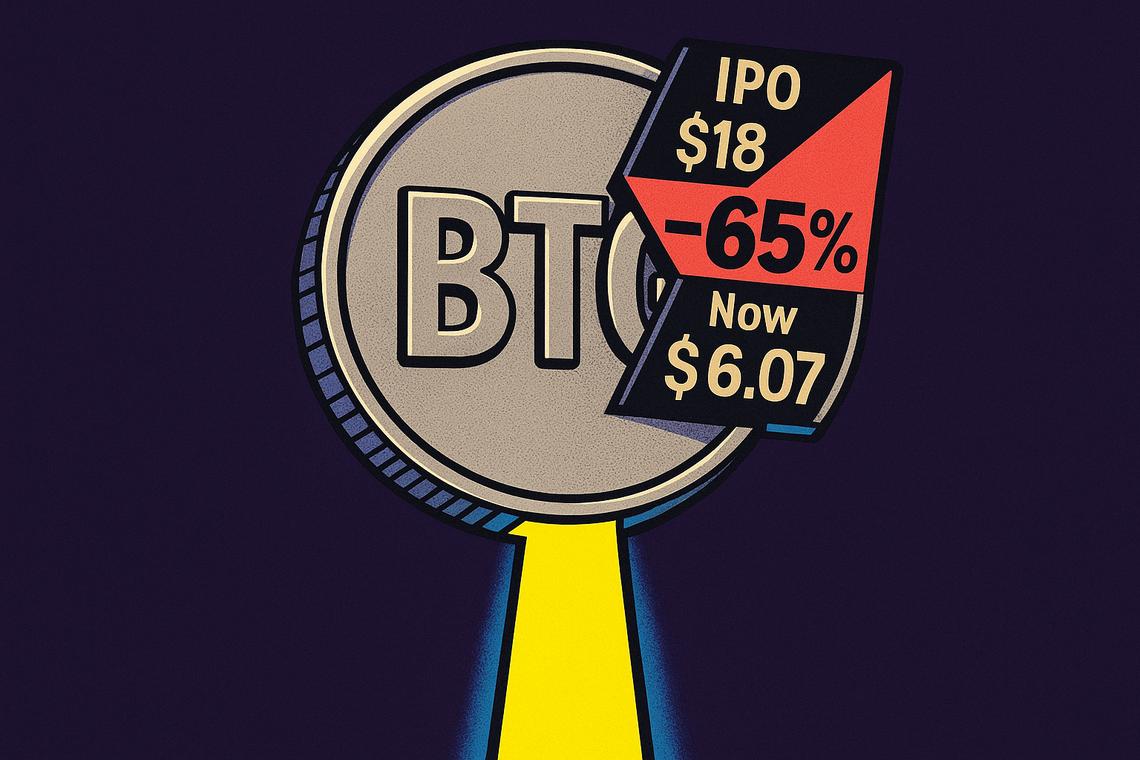
BitGo’s share buyback program sent its stock jumping as much as 20% on Wednesday — a sharp single-day rally that nonetheless left shares trading around $6.07, still more than 65% below the $18 IPO price the crypto infrastructure firm commanded when it debuted on the New York Stock Exchange back in January.
Summary
Key takeaways
- BitGo authorized a $50 million share repurchase program, covering roughly 8% of Class A shares outstanding, with no fixed expiration date.
- Shares surged as much as 20% on the news but remain over 65% below the January IPO price of $18, recently trading around $6.07.
- The buyback can be executed through open-market purchases, privately negotiated transactions, block trades, or Rule 10b5-1 plans, funded from existing cash and operations.
- BitGo issues the USD1 stablecoin linked to World Liberty Financial and provides custody, trading, staking, and settlement services for digital assets.
- The company is positioning its BaFin-regulated infrastructure in Germany as a compliance solution for firms navigating the EU’s MiCA licensing deadline.
BitGo Launches a $50 Million Share Buyback
The repurchase program authorizes BitGo to buy back up to $50 million of its common stock — approximately 8% of Class A shares outstanding based on current prices. It takes effect immediately, carries no fixed end date, and covers a range of transaction types: open-market purchases, privately negotiated deals, block trades, and Rule 10b5-1 plans. The company said it expects to fund repurchases through existing cash and cash equivalents, as well as ongoing cash from operations.
Chief Financial Officer Ed Reginelli framed the move as a vote of confidence. “This authorization reflects the Board’s confidence in our business and long-term trajectory,” he said in a statement accompanying the filing.
The open-ended structure is meaningful. Without a fixed expiration, BitGo retains maximum flexibility to buy opportunistically — particularly useful if the stock continues to trade at a steep discount to intrinsic value. It also signals the board isn’t treating this as a one-off PR gesture, but as an ongoing capital allocation tool.
A Stock Still Deep in the Red
Wednesday’s rally was real, but the context around it matters. Even after climbing as much as 20% on the buyback announcement, BitGo shares settled around $6.07 — leaving them roughly 65% below the $18 IPO price from January. That’s a painful stretch for anyone who bought at the offering.
The stock’s trajectory mirrors a broader cooling-off in crypto-linked equities. After a wave of digital asset IPO enthusiasm in late 2025, sentiment toward the sector has deteriorated as cryptocurrency prices pulled back and investor attention increasingly shifted toward artificial intelligence companies and high-profile tech listings like SpaceX. BitGo isn’t alone in feeling the squeeze: both Kraken and Consensys have reportedly paused their own IPO efforts in response to the turbulent market environment.
That’s the uncomfortable backdrop against which the buyback lands. A 20% single-session surge on buyback news is the kind of move that typically reflects thin liquidity and sentiment-driven trading more than a fundamental re-rating. Whether the program generates sustained buying pressure — or simply offers a short-term lift before macro headwinds reassert themselves — is a question the market hasn’t answered yet.
What BitGo Actually Does — and Why It’s Betting on Europe
Beyond the stock mechanics, BitGo operates as a core piece of institutional crypto infrastructure. The company provides custody, trading, staking, and settlement services for digital assets — the kind of back-end plumbing that institutions and exchanges rely on rather than build themselves. It also issues USD1, a U.S. dollar stablecoin tied to the Trump family-backed World Liberty Financial project, giving it a foothold in one of the most actively discussed corners of the stablecoin market.
On the regulatory front, BitGo is making a pointed push into Europe. The firm has been actively promoting its BaFin-regulated infrastructure platform in Germany as a ready-made compliance solution for companies scrambling to meet the European Union’s MiCA licensing deadline at the end of the month. MiCA — the EU’s Markets in Crypto-Assets regulation — is forcing crypto firms operating across the bloc to obtain formal licensing or risk losing market access. BitGo’s existing BaFin authorization puts it ahead of many competitors in that race.
That European positioning could prove to be one of the more underappreciated elements of BitGo’s story. While the buyback dominates the immediate narrative, the MiCA deadline creates a concrete near-term catalyst: firms that haven’t yet secured compliant infrastructure need a solution quickly, and BitGo is actively pitching itself as that solution. If even a handful of institutional clients migrate to its German-regulated platform before the deadline, the revenue and credibility implications could outlast any single share repurchase program.
FAQ
What is the value and scope of BitGo’s share buyback program?
BitGo authorized a $50 million share repurchase program representing about 8% of Class A shares outstanding. The program takes effect immediately, has no fixed expiration date, and may be executed through open-market purchases, privately negotiated transactions, block trades, or Rule 10b5-1 plans, funded from existing cash and operations.
How has BitGo stock performed since its IPO earlier this year?
BitGo stock remains over 65% below its January IPO price of $18, trading recently around $6.07. Shares did jump as much as 20% on the day of the buyback announcement, but the stock has had a difficult run since its New York Stock Exchange debut.
What services does BitGo provide in the crypto market?
BitGo offers custody, trading, staking, and settlement services for digital assets. The company also issues USD1, a U.S. dollar stablecoin linked to the World Liberty Financial project.
How is BitGo positioned regarding European crypto regulations?
BitGo is promoting its BaFin-regulated infrastructure platform in Germany as a compliant solution for companies adapting to the EU’s MiCA framework, ahead of a licensing deadline at the end of June 2026.
Article produced with the assistance of artificial intelligence and reviewed by the editorial team.