



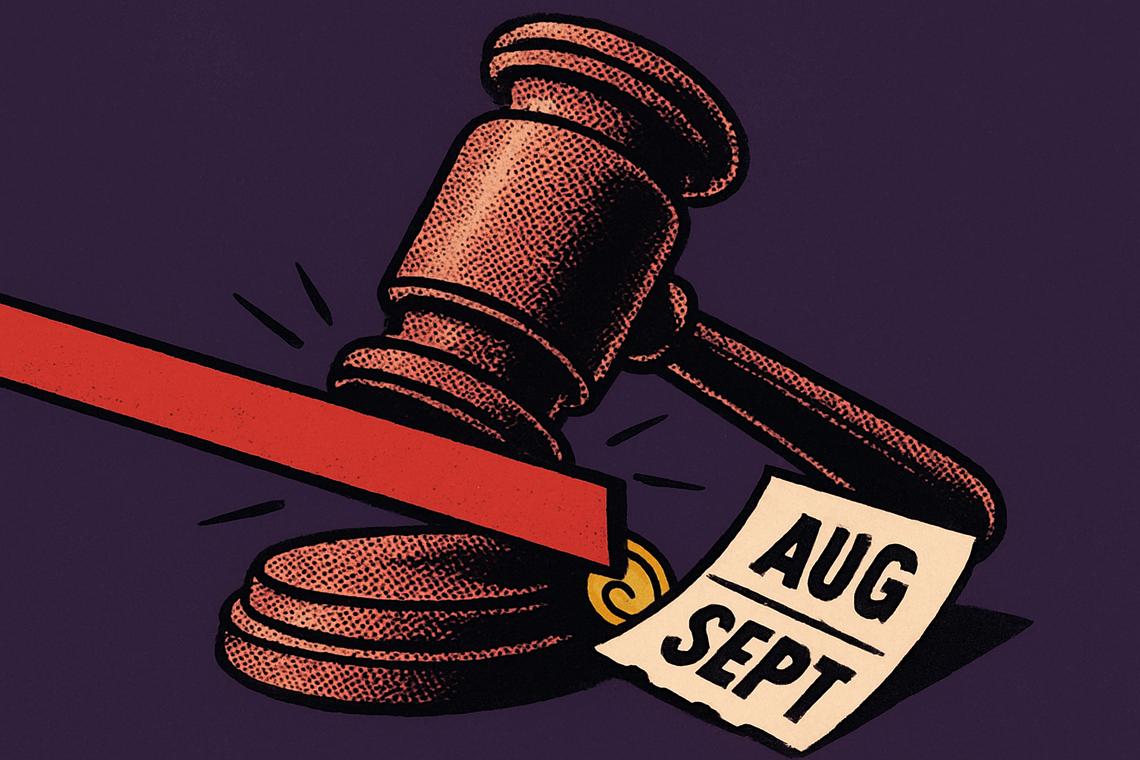
The U.S. Senate has effectively sidelined the Digital Asset Market Clarity Act — at least for now. With the chamber’s summer recess set to begin on August 8, the window to pass one of the most consequential cryptocurrency regulation bills in American history is closing fast, and Senate leadership has made clear that other priorities come first.
Summary
Key takeaways
- The Senate has deprioritized the Clarity Act to focus on federal nominations and a Russia sanctions bill, according to CoinDesk reporting on Majority Leader John Thune’s schedule.
- The bill passed the Senate Banking Committee 15–9, but has not yet reached the Senate floor for a full vote.
- Supporters need 60 votes to overcome a procedural filibuster — a threshold not yet secured.
- Senators Tillis and Gallego reached a confidential compromise on ethics provisions, though details remain undisclosed and White House approval is still pending.
- If the bill fails before recess, the next realistic window shifts to September — and after that, the political calendar gets significantly more complicated.
Urgent Senate Deadline Approaches for the CLARITY Act
The Senate’s handling of the Clarity Act right now tells you everything about how Washington works. Even with Coinbase CEO Brian Armstrong making the rounds on Capitol Hill — sharing photos from lawmaker meetings and declaring “It’s time to get CLARITY done” — the chamber’s majority leader has moved on to other business. According to CoinDesk, Majority Leader John Thune is currently pursuing a package of federal nominations and a Russia sanctions bill dedicated to the late Senator Lindsey Graham. Graham’s funeral this week is also drawing the chamber’s attention in Washington and South Carolina.
The mechanics of Senate procedure make this particularly damaging for the crypto industry. The arcane cloture process — which governs how the Senate manages bill debates — generally limits the body to one contested bill at a time. That means the Clarity Act almost certainly cannot come up for a vote until the Russia legislation clears or stalls, which could consume days of precious floor time.
Timeline before Senate recess
The summer recess is scheduled to begin on August 8. That leaves an extraordinarily thin strip of floor time — realistically confined to the final days before lawmakers scatter. The best realistic outcome the industry can hope for at this stage, according to CoinDesk, may be a preliminary push into the cloture process just before the recess begins. A full vote before the break looks increasingly unlikely.
If that window closes without action, the legislative process shifts to September, when both the House and Senate return for a few weeks. But the calendar gets tighter from there. After November’s elections, Congress enters its lame duck session — a period that can produce surprising last-minute deals but can just as easily lock up with political gridlock.
Need for 60 votes to overcome filibuster
The 60 votes needed to overcome a procedural filibuster remain unsecured. That’s not a small gap to close. Getting a bipartisan supermajority in a divided chamber, on a bill that still has unresolved provisions, while competing for floor time against sanctions legislation — it’s a steep climb in any political environment, let alone this one.
Wall Street and Coinbase Line Up Behind the Bill
The show of institutional support for the Clarity Act has been striking. Over the past week, BlackRock, Fidelity, Franklin Templeton, Goldman Sachs and SoFi have all publicly urged Congress to pass the legislation, according to CoinDesk. Their collective argument: clear rules would protect investors, give companies regulatory certainty, and keep the U.S. competitive as digital assets go mainstream.
Armstrong framed the effort in similarly direct terms. Calling the bill a genuine bipartisan achievement, the Coinbase CEO described the Senate as sitting on the one-yard line. The breadth of that Wall Street coalition — asset managers, investment banks, and fintech firms — represents one of the strongest unified pushes traditional finance has made on a crypto policy question.
Political Negotiations and the Ethics Compromise
The thorniest unresolved issue isn’t stablecoins or market structure — it’s ethics. The specific provision at the center of the debate involves restrictions on senior government officials, including President Donald Trump, backing crypto projects. That single clause has become the bill’s biggest stumbling block.
Last week brought what looked like a breakthrough: Trump agreed to accept a provision limiting his interactions with digital assets. White House officials described it as historic and unprecedented. Democrats quickly pushed back, arguing the constraints didn’t go far enough to limit Trump’s crypto interests. Both sides agreed to keep negotiating.
Since then, Senators Tillis and Gallego have reportedly finalized a new compromise on the ethics provisions. The details remain confidential, and the proposal still requires White House approval before it can meaningfully unblock the bill. A Monday event hosted by Democrats opposing the Clarity Act — focused specifically on the ethics section — signaled that the opposition isn’t standing down.
Legislative Uncertainty and Potential Delays
The Clarity Act’s path to becoming law involves more hurdles than the current Senate vote. Even if the Senate passes it, the bill must go back to the House for another approval, where recent Republican infighting has already derailed other legislative efforts. Only then would it head to Trump’s desk.
There’s an added wrinkle: Trump has refused to sign unrelated bipartisan legislation until Congress sends him a bill requiring new voter-identification requirements before the midterms. He has publicly called for the Clarity Act to be completed, but it’s unclear whether it would receive a free pass from that demand. Under Senate rules, if the president takes no action within ten days, an approved bill automatically becomes law.
The bill had previously been stalled for months over a separate dispute between the crypto sector and banking interests on how to treat stablecoin yield — specifically, whether stablecoin rewards programs would resemble and compete with yield-bearing bank deposits. A compromise eventually limited those programs. The ethics dispute replaced that one as the central obstacle.
SEC’s Contingency Plan If the Act Fails
SEC Chair Paul Atkins has been unambiguous about what happens if Congress fails to deliver. The SEC would begin imposing crypto market rules independently, using existing agency authority. That’s a significant threat — not because agency rulemaking is inherently bad, but because rules written by regulators rather than Congress are far more vulnerable to reversal when administrations change.
Atkins himself prefers the congressional route. A comprehensive law would create a durable foundation for crypto companies that doesn’t shift every time the White House changes hands. That’s precisely the kind of regulatory stability the industry has been pushing for — and precisely what’s at stake if the Senate runs out of time before August 8.
The broader implication is worth sitting with: even a well-intentioned SEC rulemaking process would produce a patchwork of agency rules, subject to legal challenge and political reversal, rather than the legislative foundation the industry has lobbied years to secure. For crypto companies planning long-term infrastructure and compliance programs, the difference between a law and an agency rule isn’t academic — it’s the difference between building on solid ground and building on sand.
September remains a possibility. But the Senate’s floor calendar after recess is already crowded, and the November midterm elections introduce a new layer of political calculation for every senator weighing a yes vote on crypto legislation.
FAQ
What is the CLARITY Act?
The CLARITY Act — formally the Digital Asset Market Clarity Act — is a sweeping U.S. cryptocurrency regulation bill designed to establish clear rules for the industry, including how the SEC and CFTC oversee digital assets.
Why is there a Senate deadline for the CLARITY Act?
The Senate’s summer recess begins on August 8, leaving only days of floor time. Supporters need 60 votes to overcome a procedural filibuster, a threshold not yet secured. If the bill doesn’t advance before recess, the next realistic window shifts to September.
What happens if the CLARITY Act does not pass before the Senate recess?
The legislative process would likely be delayed until September at the earliest. After that, the November elections and a potential lame duck session further complicate the timeline, potentially pushing final resolution into early 2027.
What is the SEC’s plan if the CLARITY Act fails?
SEC Chair Paul Atkins has stated the agency would begin imposing crypto market rules independently using existing authority. Atkins himself acknowledges this is a less desirable outcome than a congressional law, which would create more durable and politically stable regulations.
Article produced with the assistance of artificial intelligence and reviewed by the editorial team.
