SK Hynix Inc. is putting real money behind the AI memory rush, unveiling plans to spend 54 trillion won, or roughly $38 billion, on two new chip factories in South Korea. The SK Hynix chip expansion is one of the largest single investments the company has disclosed as it races to keep pace with soaring demand for memory chips used in artificial intelligence infrastructure.
Summary
Key takeaways
- SK Hynix will invest 54 trillion won ($38 billion) to build two new memory chip plants in South Korea.
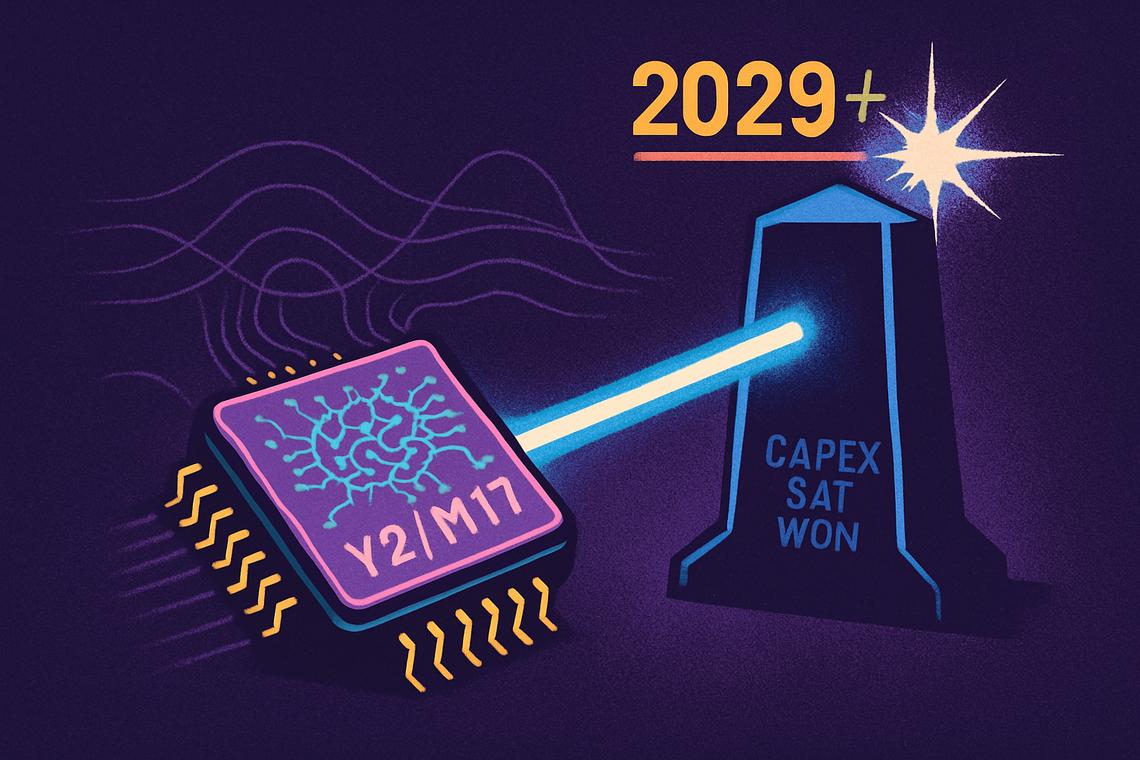
- A new DRAM facility called “Y2” is planned for Yongin, with a NAND plant called “M17” set for Cheongju.
- The company aims to rapidly double its production capacity to meet AI-driven demand and ease a global memory chip shortage.
- SK Hynix is the world’s second-largest memory maker, but Samsung reclaimed the top spot in DRAM market share in the second quarter of 2026.
- Analysts say the new capacity won’t hit the market until 2029 and beyond, meaning memory prices are unlikely to soften before the end of 2028.
SK Hynix announces $38 billion expansion project
SK Hynix confirmed the 54 trillion won ($38 billion) spending plan in a statement Friday, framing it as a direct response to what the company called “the continuously growing demand for memory in the AI era.” The figure ranks among the biggest capital commitments in the memory chip industry this year, and it lands at a moment when prices for DRAM and NAND have already spiked sharply because supply simply hasn’t kept up with demand.
Much of that demand is coming from companies building out AI data centers, along with chipmakers like Nvidia that need vast quantities of high-bandwidth memory, or HBM, to power their processors. The imbalance between what factories can produce and what the AI industry wants has fueled a rally in shares of the world’s top memory producers, including SK Hynix, Samsung and Micron.
New DRAM and NAND factories planned in South Korea
The expansion breaks down into two distinct projects, each targeting a different type of memory chip. SK Hynix earmarked 35.2 trillion won for the Yongin facility and 19.1 trillion won for the Cheongju plant, according to details shared by the company.
DRAM factory in Yongin
The Yongin site, dubbed “Y2,” will serve as a production base for DRAM, the type of dynamic memory prized for its low latency. It’s the second of four fabs SK Hynix has planned within its broader Yongin Semiconductor Cluster. Construction is set to break ground in July 2027, with the first cleanroom — the tightly controlled environment essential to chip fabrication — expected to open in June 2029 to produce HBM and other next-generation DRAM products.
NAND plant in Cheongju
The Cheongju facility, named “M17,” will focus on NAND, the solid-state storage technology built for fast access to large volumes of data. SK Hynix said demand for NAND “is surging rapidly.” Ground is scheduled to break in February 2027, with the plant’s first cleanroom opening in December 2028.
Strategic purpose: doubling production capacity amid AI-driven demand
The underlying goal behind this build-out is straightforward: SK Hynix wants to rapidly double its production capacity to close the gap between what it can supply and what AI-era customers now expect. The company put it bluntly in its press release, stating that “technological competitiveness alone is not enough” in the current environment, and that “the ability to supply the required volume at the exact moment customers need it is the ultimate competitive advantage.” SK Hynix added that it “reached this investment decision after a thorough review of market demand.”
That framing matters. It signals that SK Hynix sees the current memory shortage less as a temporary spike and more as a structural shift tied to how quickly AI infrastructure is scaling globally. Easing that shortage isn’t just about protecting margins — it’s about securing a place at the table as data center operators lock in long-term supply commitments.
The two new fabs also extend a much larger commitment SK Hynix made public last year, when it laid out a “master plan” calling for 600 trillion won in investment across the Yongin Semiconductor Cluster and another 100 trillion won to expand its Cheongju production base. Friday’s announcement represents the next tranche of that broader strategy rather than a standalone decision.
SK Hynix’s position in the global memory chip market
SK Hynix remains the world’s second-largest memory maker, but its lead over rivals isn’t guaranteed. Samsung reclaimed the number one spot by market share in the DRAM segment during the second quarter, according to Counterpoint Research — a shift that adds competitive pressure to SK Hynix’s expansion timeline.
Neil Shah, vice president of research and co-founder of Counterpoint Research, said the Samsung shift is part of what’s pushing SK Hynix to act now. “This has prompted SK Hynix to inject fresh capex to expand its footprint,” Shah said, adding that “in the near term, this won’t alter SK Hynix’s output but is built for 2029 and beyond.”
Shah also cautioned that the new capacity from SK Hynix won’t arrive in isolation. “Looking at the broader market, multi-vendor expansions from Samsung, SK Hynix, Micron, and CXMT will expand global supply significantly through 2028,” he said. “Yet with demand growing even faster than planned capacity, memory prices are unlikely to soften before the end of 2028.”
That’s the tension sitting at the heart of this story. Every major memory maker is pouring money into new fabs, yet none of that capacity lands before 2028 or 2029 at the earliest. Until then, the current squeeze on DRAM and NAND supply — and the price pressure that comes with it — looks set to persist, regardless of how many billions get committed today.
FAQ
What is SK Hynix’s planned investment amount for chip manufacturing expansion?
SK Hynix an expansion of its chipmaking facilities in South Korea valued at 54 trillion won ($38 billion) is being planned, covering two new plants.
Where will SK Hynix build new chip manufacturing plants?
SK Hynix will build a new DRAM manufacturing facility called “Y2” in Yongin and a NAND fabrication plant called “M17” in Cheongju, South Korea.
What is the purpose of SK Hynix’s expansion?
The expansion aims to rapidly double production capacity and ease the global shortage of memory chips driven by AI-era demand for data centers and high-bandwidth memory.
What is SK Hynix’s position in the global memory chip market?
SK Hynix is the world’s second-largest memory maker, though Samsung reclaimed the top spot by DRAM market share in the second quarter of 2026, according to Counterpoint Research.
Article produced with the assistance of artificial intelligence and reviewed by the editorial team.