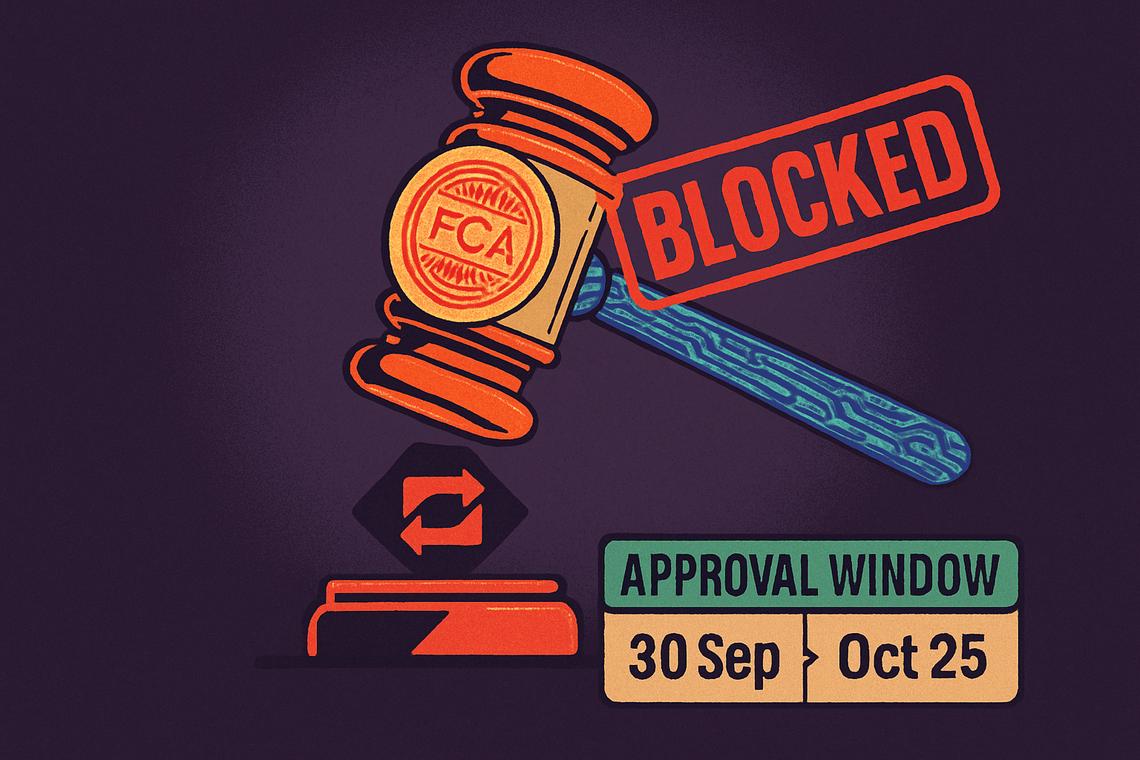
Binance is preparing to knock on the door of Britain’s financial regulator once again, this time hoping the outcome will be different. According to The Telegraph, the world’s largest crypto exchange plans to file for a Binance FCA license under the United Kingdom’s incoming digital asset framework, marking its most serious attempt yet to shake off years of restrictions and re-establish a foothold in one of Europe’s biggest financial markets.
Summary
Key takeaways
- Binance intends to apply for authorization from the Financial Conduct Authority under the UK’s new crypto regulatory regime.
- The FCA’s application window opens on September 30, 2026, with the regime itself taking effect on October 25, 2027.
- Applicants must build a genuine UK presence and satisfy governance, financial and “fit and proper” compliance standards.
- Binance is expected to form a dedicated UK board as part of its authorization push.
- The FCA restricted Binance’s UK entity from regulated activities in 2021, and the exchange stopped onboarding new UK customers in 2023 after financial-promotion rules changed.
Binance’s Plan to Re-enter the UK Market
Binance’s decision to pursue UK crypto regulation approval signals that the exchange sees a genuine path back into a market it was effectively pushed out of years ago. The move isn’t a formality — it’s a calculated bet that Britain’s overhauled rulebook offers a realistic route to legitimacy that didn’t exist under the previous framework.
FCA Authorization Application Timeline
The timeline is specific and already public. The FCA’s application window for the new regime opens on September 30, 2026, giving firms like Binance a defined starting point to submit paperwork. The broader regulatory regime itself doesn’t take effect until October 25, 2027, meaning there’s more than a year of runway between when applications can be filed and when the new rules formally kick in. That gap gives the FCA time to vet applicants thoroughly before anyone starts operating under the new standards.
Establishing a UK Presence and Governance Structure
Getting a green light won’t be simple. Firms will be required to establish an actual UK presence, maintain adequate financial and operational resources, and prove to regulators that they are “fit and proper” to operate in the country. For Binance specifically, that’s expected to include creating a UK-based board — a structural change that would give the exchange local accountability rather than running its British operations from abroad. It’s a meaningful shift for a company long criticized for its decentralized, borderless approach to compliance.
Background of Binance’s Regulatory Challenges in the UK
Binance’s relationship with UK regulators has been rocky for half a decade, and that history explains why this application matters so much. The exchange isn’t starting from a neutral position — it’s trying to rebuild trust after being locked out of core financial activities.
FCA Restrictions Since 2021
The trouble started in 2021, when the FCA restricted Binance’s UK entity from carrying out regulated activities, stating at the time that the entity was not capable of being effectively supervised. That decision effectively cut Binance off from operating as a licensed financial business in the country, even as it continued serving UK customers through other channels.
Impact of Financial-Promotion Rule Changes in 2023
The pressure intensified in 2023, when Binance stopped onboarding new UK users altogether after the country tightened its financial-promotion rules. Those changes made it harder for unregistered crypto firms to market themselves to British consumers, and Binance’s UK partner was blocked from approving the exchange’s promotional activity — effectively freezing new customer growth in the market.
Implications of the New UK Crypto Regulatory Regime
The FCA’s new framework represents a renewed and more structured approach to controlling crypto activity in Britain, replacing years of ad hoc restrictions with a formal authorization process. For an exchange the size of Binance, that shift changes the calculus entirely — instead of operating in a gray zone, firms now have a defined, if demanding, path to legitimacy.
Compliance Requirements for Market Re-entry
Why does this matter for the broader market? Because the same standards Binance must meet — UK presence, governance oversight, financial resource requirements — will apply to every crypto firm seeking to operate legally in Britain going forward. That levels the playing field somewhat, but it also raises the cost of entry, potentially squeezing out smaller platforms that can’t afford the compliance overhead a global exchange like Binance can absorb.
Potential Impact on Binance’s Business Model
Binance’s UK ambitions also fit into a wider pattern of the company navigating regulatory friction across multiple jurisdictions. In late June, Binance withdrew its Markets in Crypto-Assets application in Greece, opting to pursue authorization elsewhere in the European Union instead. The exchange said the decision reflected the status and timeline of the Greek process, though it has not named its next target jurisdiction, saying only that Europe remains a key priority. That broader context underscores how central regulatory approval has become to Binance’s growth strategy — and how much is riding on getting the UK application right this time.
FAQ
When will Binance be able to apply for a UK FCA crypto license?
The FCA’s application window for the new crypto regime opens on September 30, 2026.
What new requirements must Binance meet to operate in the UK?
Firms must establish a UK presence, Binance is anticipated to establish a UK board as part of efforts to satisfy authorization, governance, and compliance standards that process.
Why was Binance restricted in the UK previously?
In 2021, the FCA restricted Binance’s UK entity from carrying out regulated activities, and in 2023 Binance stopped onboarding new UK users after financial-promotion rule changes.
When does the new UK crypto regulatory regime take effect?
The new regime takes effect on October 25, 2027.
Article produced with the assistance of artificial intelligence and reviewed by the editorial team.