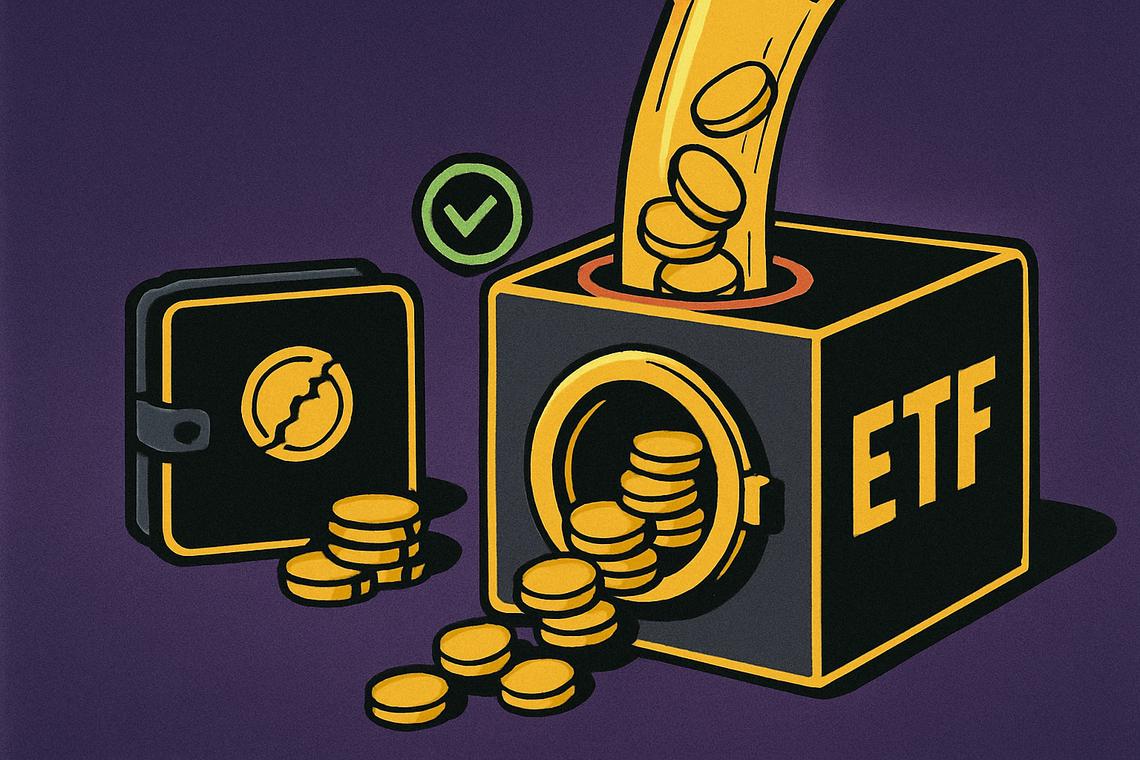
For roughly fifteen years, one rule about Bitcoin held steady: the amount sitting in personal wallets kept growing. That streak just broke. New data shows a decline in Bitcoin held outside exchanges and funds, and the reason isn’t a hack, a crash, or panic selling. It’s Wall Street quietly building a tax-friendly door for the wealthiest holders to walk through, and the shift is now reshaping Bitcoin custody trends across the market.
Summary
Key takeaways
- Bitcoin held in self-custody wallets declined for the first time in about 15 years, according to reporting cited by Bloomberg.
- BlackRock’s iShares Bitcoin Trust (IBIT) has absorbed more than $3 billion in Bitcoin through in-kind ETF creation by late 2025.
- The in-kind swap lets large holders trade coins directly for ETF shares without triggering a capital gains tax bill.
- Self-custody still holds roughly 65.9% of total Bitcoin supply — about 13.83 million BTC, worth approximately $1.09 trillion — as of August 2026, per a River Financial report.
- Hardware wallet exploits in August 2026 caused an estimated $116 million to $130 million in losses, adding pressure to the self-custody debate.
Shift in Bitcoin Custody Among Whales
The headline shift is straightforward: fewer coins are sitting in personal wallets than before, and more are flowing into regulated fund structures built by traditional finance. This marks a break from more than a decade of steady growth in self-custody balances, and it’s happening because Wall Street built a mechanism that large holders find hard to ignore.
Decline in Self-Custody Wallet Holdings
Bitcoin held in self-custody wallets has fallen for the first time in about 15 years, according to Bloomberg’s reporting. That’s not a small footnote — self-custody has long been treated as the backbone of Bitcoin’s decentralized ethos, the “not your keys, not your coins” principle that defined the asset since its early years. Seeing that balance shrink, even modestly, signals a real change in how the biggest holders are choosing to manage their exposure.
Rise of BlackRock’s Bitcoin ETF In-Kind Creation
The driving force behind that decline is BlackRock’s iShares Bitcoin Trust, which has facilitated more than $3 billion in Bitcoin deposits through in-kind creation mechanisms by late 2025. Instead of selling coins for cash and buying ETF shares afterward — a process that would trigger taxes twice — holders can now hand over their Bitcoin directly and receive IBIT shares in return. This trend toward the BlackRock Bitcoin ETF structure is quickly becoming the preferred route for whales looking to keep their exposure without the operational baggage of running their own wallets.
How BlackRock’s In-Kind ETF Creation Mechanism Works
In simple terms, in-kind creation lets an authorized participant deliver actual Bitcoin to the ETF’s custodian and receive newly issued fund shares in exchange, with no cash changing hands and no taxable sale event along the way. The economic exposure to Bitcoin’s price doesn’t change. What changes is the wrapper around that exposure — from a private wallet to a regulated, audited fund.
Tax Efficiency Through In-Kind Swaps
The core appeal is tax neutrality. Selling Bitcoin for cash and then buying shares would normally set off a capital gains tax event. Swapping coins directly for IBIT shares sidesteps that step entirely — same dollar exposure, no tax bill triggered by the transfer itself. For holders sitting on Bitcoin accumulated over many years, often with enormous unrealized gains, that difference can be worth a significant sum.
Operational Improvements in 2026
According to Bloomberg, these in-kind mechanisms became noticeably smoother and cheaper to execute for large transfers throughout 2026. That operational polish matters: a whale holding tens of thousands of Bitcoin accumulated over a decade previously faced real friction converting that position into an ETF. As the process matured, that friction largely disappeared, removing one of the last practical obstacles to this kind of migration.
Implications for Bitcoin Holders and the Market
Beyond avoiding taxes, the appeal of ETF wrappers comes down to convenience that self-custody simply can’t match for very large holders. Estate planning is one clear example — passing down a hardware wallet and a seed phrase is notoriously messy compared with transferring shares through a standard brokerage account.
Benefits Beyond Tax Avoidance
Holding Bitcoin through IBIT also means it can sit inside a normal brokerage account alongside stocks and bonds, giving wealthy investors a single consolidated view of their portfolio. ETF shares can also be pledged as collateral for loans through conventional banking channels — a liquidity option that self-custodied Bitcoin generally can’t offer through most banks. Wealth management platforms tied to these products add another layer of appeal, with reporting and compliance features tailored to high-net-worth clients.
Current State of Bitcoin Custody and Security Risks
Despite the shift, self-custody is far from disappearing. A River Financial report from August 2026 found that individuals still hold about 13.83 million BTC in non-custodial wallets, representing roughly 65.9% of total Bitcoin supply and approximately $1.09 trillion in value. ETF and corporate treasury holdings remain a much smaller slice of the overall pie by comparison.
Security incidents have added weight to the argument for moving into regulated custody. Hardware wallet exploits in August 2026 led to estimated losses between $116 million and $130 million, reigniting long-running concerns about the practical risks of managing one’s own private keys — especially for individuals whose Bitcoin holdings make up a large share of their overall wealth.
Market Transparency and Regulatory Oversight
Why does this matter beyond individual portfolios? Moving Bitcoin out of anonymous on-chain wallets and into regulated, audited fund structures makes the market more legible to institutions and regulators. It’s a structural change with real consequences: every dollar that shifts from an opaque address into an ETF is a dollar that shows up in fund disclosures, custodial records, and compliance reporting.
The tax-neutral nature of in-kind swaps also creates a self-reinforcing incentive. Each whale who successfully migrates without a tax hit becomes a reference case for the next one weighing the same move. The $3 billion that has already moved through BlackRock’s mechanism looks less like a peak and more like an early chapter — a sign that self-custody decline among the largest holders could continue as the in-kind ETF creation process becomes standard practice on Wall Street.
FAQ
What is causing the decline in Bitcoin held in self-custody wallets?
The decline is driven by large Bitcoin holders swapping their coins directly for ETF shares through BlackRock’s in-kind creation mechanism, which offers tax efficiency and simpler financial management compared with holding private keys.
How does the in-kind ETF creation mechanism benefit Bitcoin whales?
It allows large holders to exchange Bitcoin for regulated ETF shares without triggering capital gains taxes, while also offering benefits like simplified estate planning and access to liquidity through loan collateralization.
Does self-custody still dominate Bitcoin holdings?
Yes. As of August 2026, self-custody wallets still hold about 65.9% of total Bitcoin supply, roughly 13.83 million BTC, according to a River Financial report.
What security risks affect Bitcoin self-custody?
Hardware wallet exploits in August 2026 caused estimated losses between $116 million and $130 million, underscoring the ongoing risks tied to managing one’s own private keys.
Article produced with the assistance of artificial intelligence and reviewed by the editorial team.