Cardano founder Charles Hoskinson is personally writing a new Cardano programming language designed to connect what users want a transaction to achieve with cryptographic evidence that its rules were followed. The project would combine transaction intents with proof-carrying data through Groth16 proofs, Hoskinson said on X.
Summary
Key takeaways
- Hoskinson is developing the language alongside Aiken co-creator Lucas Rosa.
- The proposed tools combine transaction instructions with verifiable, privacy-preserving proofs.
- No name, public code or release date has been shared.
Hoskinson’s role in the new Cardano programming language
Working alongside Hoskinson on the language’s development is Lucas Rosa, a software engineer at Input Output Global who previously co-created Aiken, a smart contract language already used on Cardano.
“I’m actually personally developing a programming language for Cardano,” Hoskinson wrote on X on Sunday. He described the proposed combination of intents, proof-carrying data and Groth16 proofs as the first of its kind.
The disclosure came in response to a community member asking about Cardano’s distinctive benefits as a decentralized foundation for blockchain applications.
How intents and cryptographic proofs would work
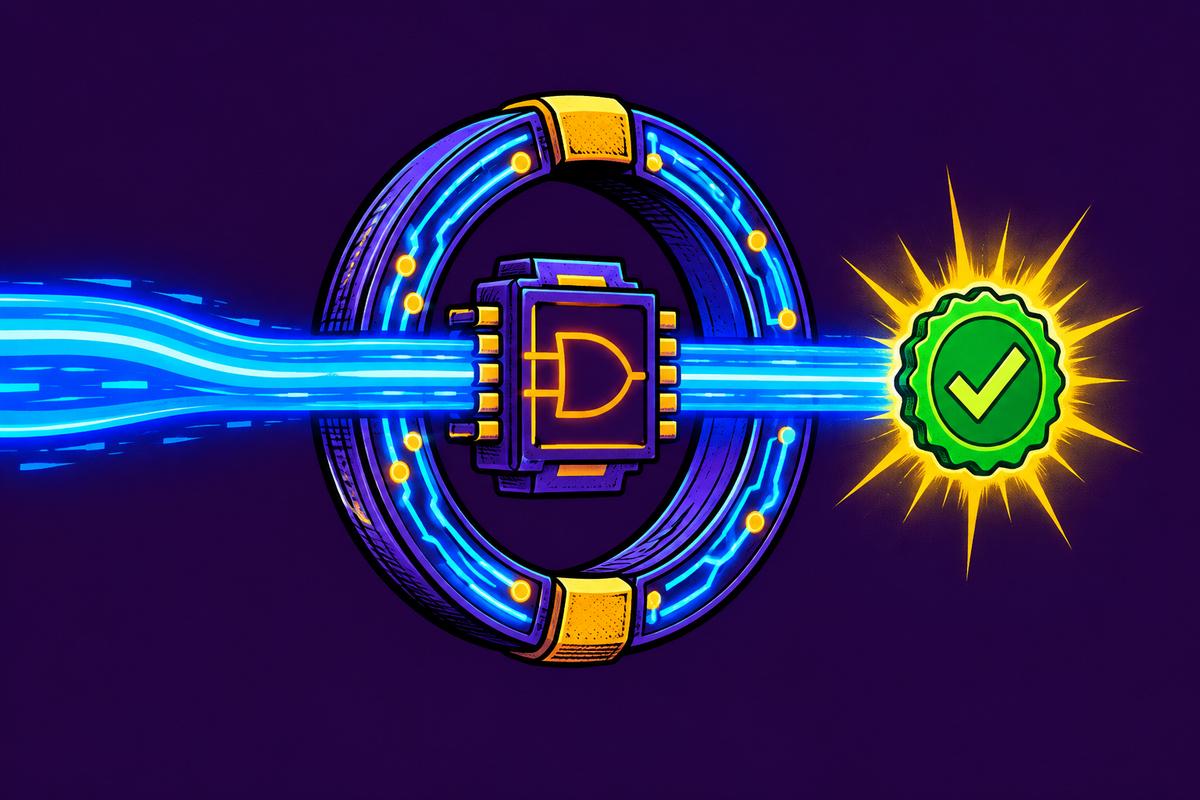
The new Cardano programming language would support three connected capabilities: transaction intents, proof-carrying data and Groth16 proofs. Together, these tools could help applications coordinate transactions, verify conditions and exchange information backed by cryptographic evidence.
An intent describes the outcome a user wants while leaving the application to determine the steps. For example, a user could request a token swap that proceeds only when the final price satisfies specified conditions, without detailing the route.
Proof-carrying data pairs information with cryptographic evidence that it meets particular rules. Another application can verify that evidence instead of repeating all the calculations that produced it.
Groth16 produces small proofs that computers can verify quickly. Those proofs can establish that a condition was satisfied without exposing the private information behind it.
The proposed combination could let developers coordinate trades, test complex conditions and transfer verified information between services, leaving Cardano to check a small proof at the end.
Where Plutus, Aiken and Compact fit
Cardano developers currently use Plutus, which is based on Haskell, and Aiken to write smart contracts.
Midnight, the privacy-focused blockchain built by Input Output Global, also has a language called Compact. It supports applications that work with confidential data.
Public code and release details
Hoskinson has not shared the project’s name, public code or a date when developers can begin using it. His public description identifies transaction intents, proof-carrying data and Groth16 proofs as its planned capabilities.
Article produced with the assistance of artificial intelligence and reviewed by the editorial team.