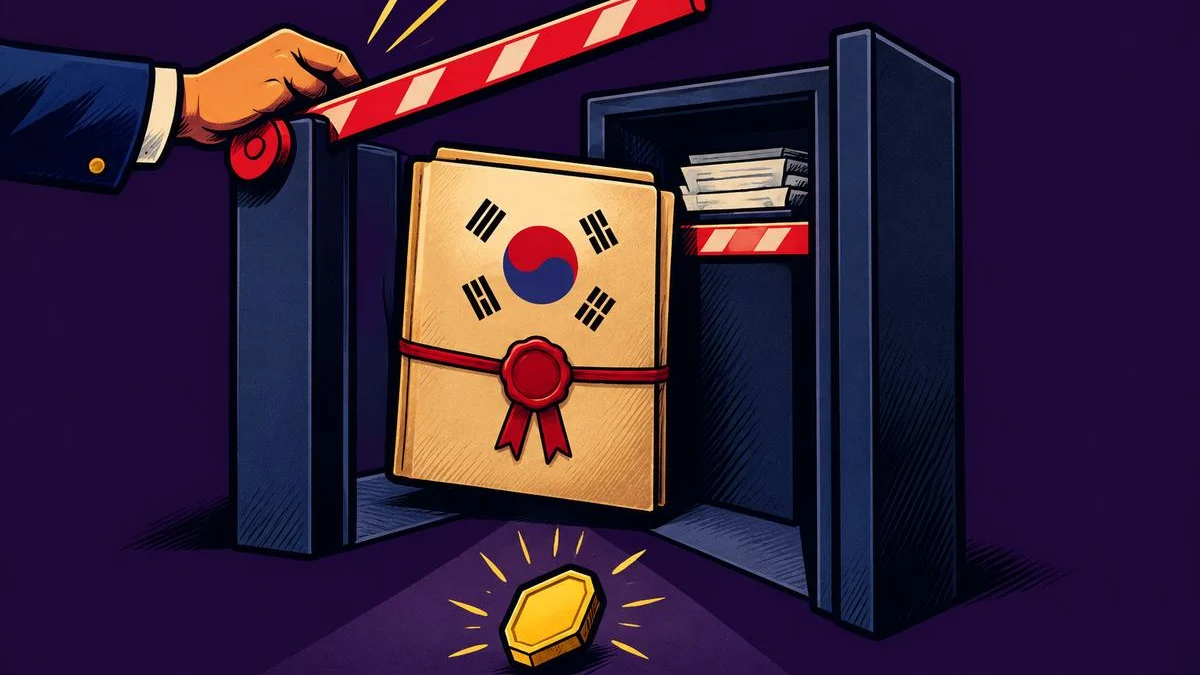
The South Korea ICO proposal would reopen domestic token fundraising for the first time since 2017, but would require issuers to disclose their plans before seeking investors. The Financial Services Commission (FSC) presented the measure on November 24, 2026, as part of the Digital Asset Act, with penalties for misleading buyers.
Summary
Key takeaways
- Domestic ICOs would return under regulatory supervision.
- Token issuers would face disclosure requirements and liability for misleading information.
- The measures need parliament’s approval to take effect.
South Korea ICO proposal follows years of overseas fundraising
The proposal would reverse a ban imposed in September 2017 over fraud, speculation and investor losses. An initial coin offering lets a business raise capital by selling newly created cryptocurrencies.
The prohibition proved difficult to enforce. Korean developers set up businesses and foundations abroad, including in Singapore, then brought their tokens to Korean buyers and exchanges. In 2019, regulators found projects that had collected money from Koreans through overseas ICOs.
The Bank of Korea urged a reversal in 2022, arguing that foreign registrations enabled companies to bypass domestic restrictions.
Digital Asset Act would require disclosures before sales
Crypto firms would have to submit white papers and prospectuses before selling tokens. White papers would explain the project, token supply, intended spending and investment risks; shorter prospectuses would serve retail buyers.
The FSC would examine those filings and have authority to require corrections. Issuers would also face a waiting period before approaching prospective buyers.
False statements or missing information would expose issuers and executives to civil damages, financial penalties and possible criminal prosecution.
Exchanges would have to make information about listed tokens public and report significant developments, including hacks and token-supply changes. The same legislation also proposes limiting won-backed stablecoin issuance to consortiums controlled by banks.
Startup funding and parliamentary approval
According to John Cho, CEO and co-founder of Ratio and chief stablecoin officer at the Kaia DLT Foundation, regulated ICOs could aid capital raising for South Korean startups, he told CoinDesk. South Korea’s ICO proposal aims to encourage jobs and bring crypto investment onshore.
“That won’t make ICOs safe, but it would give retail investors a better basis for deciding which projects deserve their trust,” Cho said.
The measures require parliamentary approval before they can take effect.
Read also: Tether backs SCRYPT’s institutional stablecoin infrastructure for faster payments
Article produced with the assistance of artificial intelligence and reviewed by the editorial team.