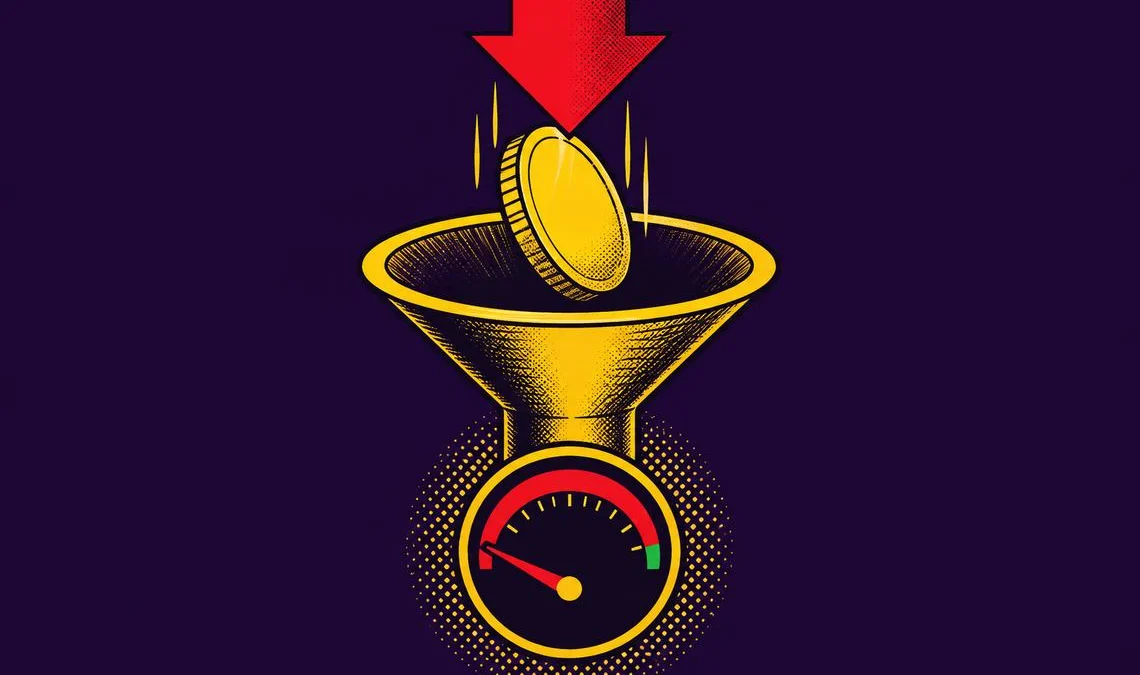
Recent industry findings on the Fidelity 401k IRA cash drag show that lower contribution rates and increased cash withdrawals are actively reducing accumulated account balances across major retirement platforms.
Rising living costs and market fluctuations are forcing many workers to reconsider how they manage their long-term savings.
Summary
What Is the Fidelity 401k IRA Cash Drag?
Cash drag in personal finance refers to the loss of potential portfolio returns when money remains uninvested or is extracted from long-term accumulation vehicles.
In workplace plans and individual retirement accounts, this phenomenon manifests when participants pull liquidity out of their accounts or reduce their regular contributions.
When analyzing the Fidelity 401k IRA cash drag, market analysts highlight how broader economic pressures force households to prioritize immediate liquidity over compound interest.
Retirement account balances faced downward pressure as workers reduced contribution rates and tapped their accounts for immediate cash needs alongside broader market volatility.
Retirement plans rely on consistent contributions and uninterrupted compounding to build wealth over decades.
When cash leaves these tax-advantaged accounts through early distributions or loans, the total earning base of the portfolio shrinks. This structural drain prevents account balances from growing at their full potential even during periods of market recovery.
How Cash Drag and Account Leakage Work
The operational mechanics of retirement balance erosion stem from two primary behaviors: reduced contribution rates and active balance leakage.
Average 401(k) balances at Fidelity dropped 2% in the third quarter of 2026 to $152,500, while average IRA balances fell 1% during the same period to $142,261.
Contribution habits directly impact how quickly balances accumulate over time.
The average 401(k) contribution rate edged down to 14.3% in the third quarter of 2026, slipping from 14.4% in the second quarter. This minor reduction highlights how household budget constraints directly affect retirement plan funding.
Beyond lower contribution rates, account leakage occurs when plan participants withdraw funds prior to retirement age.
An increasing number of savers tapped their workplace accounts for cash amid ongoing affordability challenges, actively pulling capital out of market investments.
Costs, Loans, and Structural Penalties
Borrowing against a retirement plan represents one of the most common mechanisms driving account leakage. The percentage of workers with an outstanding 401(k) loan rose to 19.6% in the third quarter of 2026, up from 19.5% in the second quarter.
Participants frequently view borrowing from a 401(k) as a cost-effective alternative to high-interest debt, as interest payments are returned directly to the participant’s account rather than paid to credit card issuers.
401(k) loans are often described as cheaper than credit cards for short-term financing needs.
However, borrowing from a retirement plan carries distinct structural risks. If an employee changes jobs or fails to repay the loan balance within specified deadlines, the remaining loan amount can be treated as an early distribution, incurring income taxes and potential tax penalties.
Failing to repay 401(k) loans leads directly to tax consequences.
Hardship withdrawals represent another factor eroding balance growth.
Hardship withdrawals rose to 2.17% in the third quarter of 2026, compared to 2.12% in the previous quarter.
A certified financial planner cited by CNBC attributed this increase directly to economic strains faced by account holders. Unlike plan loans, funds removed via hardship withdrawals cannot be re-deposited into the plan, causing permanent loss of future investment returns.
Risks of Balance Decline and Reduced Savings Rates
The gap between recommended savings targets and actual employee contributions underscores growing risks for long-term wealth accumulation. Fidelity maintains a recommended combined annual savings benchmark of 15% for retirement accounts.
The slide to a 14.3% average contribution rate indicates that many workers are currently missing key retirement milestones.
Compounding interest requires both time and consistent capital inputs to generate exponential portfolio growth. When account holders reduce their contributions or remove lump sums, they forfeit future capital gains and dividend reinvestment opportunities.
Persistent affordability pressures have amplified these behavioral shifts across major retirement account platforms.
During periods of market volatility, pulling cash out of retirement funds can lock in paper losses. Extracting capital when asset valuations are depressed prevents portfolios from capturing subsequent market rebounds, widening the wealth gap for workers approaching retirement age.
Strategic Considerations for Retirement Savers
For investors managing tax-advantaged accounts such as 401(k)s and IRAs, navigating short-term cash demands while protecting long-term growth requires careful planning.
Financial frameworks emphasize preserving invested capital whenever possible to avoid compounding cash drag effects over multi-year horizons.
Workers facing tight household budgets often weigh the trade-offs of lower contribution rates against high-cost consumer borrowing.
Evaluating workplace plan rules, loan repayment terms, and potential tax implications helps participants make informed choices when cash flow challenges arise.
Maintaining a dedicated emergency cash reserve outside of tax-advantaged retirement plans remains a foundational strategy to prevent account leakage. Keeping liquid savings in standard bank accounts allows individuals to absorb financial shocks without taking on plan loans or incurring permanent hardship distribution losses.
FAQ
What is cash drag in a retirement account?
Cash drag occurs when retirement assets remain uninvested or are removed through loans and withdrawals, lowering long-term compound growth.
Reduced contribution rates and increased cash withdrawals compressed average balances across workplace 401(k) and IRA accounts.
How much did average 401(k) and IRA balances change in Q3 2026?
Average 401(k) balances at Fidelity fell 2% to $152,500 in the third quarter of 2026. Over the same quarter, average IRA balances decreased by 1% to $142,261.
What is Fidelity’s recommended retirement savings rate?
Fidelity recommends a combined annual savings benchmark of 15% for retirement plan participants. That average 401(k) contribution rates fell slightly below this threshold to 14.3% in the third quarter of 2026.
What are the risks of taking a loan or hardship withdrawal from a 401(k)?
While 401(k) loans can be cheaper than credit cards, failing to repay them can trigger income taxes and tax penalties. Hardship withdrawals permanently remove capital from the account, eliminating future investment returns.
Article produced with the assistance of artificial intelligence and reviewed by the editorial team.