



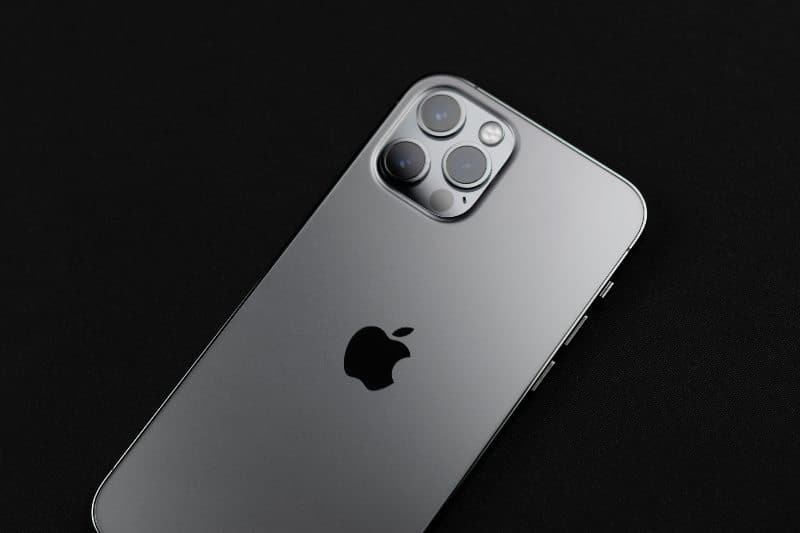
Qi2 is the open wireless charging standard that puts magnets inside the spec itself, and it is the reason magnetic charging is no longer an iPhone privilege. For about five years, snapping a phone onto a charger and walking away was something only Apple users could do reliably. The Wireless Power Consortium changed that by taking the magnetic alignment technology Apple contributed and turning it into a standard any manufacturer can build against.
The practical payoff is easy to describe. One charger, one car mount and one power bank can now serve an iPhone and a Pixel in the same household, with no duplicate purchases and no guessing about which pad works with which phone. The July 2025 release of Qi2 25W raised the ceiling to 25 watts, close to 70 percent more power than the original 15 watt version.
A standard on paper does not charge anything, though. Somebody has to certify products, solve the engineering problems and put hardware on shelves. That is where accessory makers such as ESR come in, and this article covers both halves: what Qi2 changed, and how the company has built its lineup around it since 2020.
What Qi2 Actually Changed
Older Qi pads worked on physics alone. A coil in the charger created a magnetic field, a coil in the phone picked it up, and if those two coils were not lined up, efficiency dropped fast. Anyone who woke up to a phone at 12 percent because it slid two millimetres overnight knows the failure mode.
Qi2 solved alignment with hardware rather than instructions. A ring of magnets pulls the phone into the correct position every time, which removes the guesswork and cuts wasted energy that would otherwise turn into heat.
The Magnetic Power Profile in plain terms
The magnetic side of Qi2 is called the Magnetic Power Profile, usually shortened to MPP. It defines magnet placement, strength and the handshake between charger and phone. Because MPP is published rather than proprietary, an accessory maker and a phone maker who have never spoken can build to the same geometry and expect the parts to fit.
Qi2 25W, formally Qi v2.2.1, keeps that geometry and adds higher power, tighter thermal monitoring and mandatory authentication between charger and device. Backward compatibility is built in, so a 25W charger still powers a 15W phone at 15W.
Qi, Qi2 and Qi2 25W side by side
| Standard | Magnets | Max speed | Released | Works with |
| Original Qi | No | 5W to 15W | 2010 | Almost any wireless charging phone |
| Qi2 (v2.0) | Yes, via MPP | 15W | November 2023 | iPhone 12 and later, Pixel 10, Galaxy S25 and later with a magnetic case |
| Qi2 25W (v2.2.1) | Yes, via MPP | 25W | July 2025 | iPhone 16 and later, Pixel 10 series, Galaxy S26 Ultra, plus certified accessories |
Why the Magnetic Ecosystem Stayed Closed for So Long
Apple launched MagSafe with the iPhone 12 in 2020 and an accessory economy formed around it almost immediately. Wallets, mounts, tripods, battery packs and stands all assumed the same magnet ring, so the parts worked together by default.
Android had nothing equivalent. Manufacturers used their own fast charging protocols, magnet placement varied or did not exist, and accessory makers had no fixed target to design for. The result was a thin Android accessory shelf next to a very deep iPhone one.
Qi2 removes the root cause. When magnet position is written into a standard that everyone certifies against, an accessory stops being brand specific and becomes category specific.
ESR and the Build-Out of the Magnetic Ecosystem
ESR was founded in 2009 and now reports more than 130 million users worldwide, with over 300 patents behind its accessory designs. Its work in this category is worth looking at closely, because the company started building a magnetic accessory system in 2020, the same year MagSafe appeared, rather than waiting for the standard to settle.
HaloLock: an accessory system, not a single product
HaloLock is the name ESR gives to its magnetic platform. Rather than releasing chargers one at a time, the company built a shared magnet ring specification and then designed chargers, car mounts, wallets, kickstands, cases and power banks around it. An iF Design Award went to the HaloLock kickstand charger, and the wider range has picked up Red Dot recognition across several years.
The system approach matters more now than it did then. Because HaloLock uses the same ring geometry that Qi2 later standardised, accessories bought years ago still work with current certified chargers, and a HaloLock ring or case brings magnetic alignment to phones that never shipped with magnets.
CryoBoost: treating heat as the real bottleneck
The insight behind CryoBoost is that wireless charging is limited by temperature rather than by advertised wattage. When a phone gets warm it throttles charging to protect the battery, so a charger rated at 25W often delivers far less in practice. ESR launched CryoBoost in July 2022 as an active cooling system that pulls heat away from the phone itself rather than just the charging pad.
The engineering has been refined over several generations. The second generation added an open duct design for better airflow and cut fan noise from 30 dB to 25 dB. By CES 2026 the fan measured 4 mm thick inside a 15.8 mm charger weighing 117 g, with a reported temperature reduction of up to 10.8 degrees Fahrenheit and a fan-off mode for quiet overnight use.
This is also why cooling shows up in almost every Qi2 25W product now, not only ESR’s. Sustained 25W output creates a heat problem that has to be solved before the speed becomes real, and reviewers have repeatedly pointed out that ESR was early to treat it that way.
Certification and the Qi2 25W first wave
Marketing language moves faster than engineering. Plenty of products are sold as Qi2 compatible without ever going through Wireless Power Consortium testing, and that phrasing does a lot of quiet work. Certified products are tested in independent labs for safety, thermal behaviour and interoperability before they are allowed to carry the logo.
When the WPC opened Qi2 25W certification in July 2025, only fourteen devices completed the limited launch round, with several hundred waiting in the queue behind them. ESR appeared in the WPC certification database during that first period with a 3-in-1 station, a foldable 3-in-1 station and magnetic car chargers, and showed the finished hardware at IFA 2025.
The company had already reached a similar milestone at the 15W tier, releasing what it described as the first Qi2 certified magnetic car charger in January 2025. Its current Qi2 wireless chargers range grew out of that groundwork, and the CES 2026 lineup added the MagSlim power bank at 13.8 mm thick with 10,000 mAh capacity.
How the timeline actually ran
| When | What ESR did | Why it mattered |
| 2020 | Launched HaloLock magnetic accessories, including one of the first MagSafe compatible car chargers | Started building a magnetic accessory system while the category was brand new |
| July 2022 | Introduced CryoBoost active cooling on HaloLock chargers | Treated heat, not wattage, as the real limit on wireless charging speed |
| CES 2024 | First Qi2 15W accessory range announced | Moved from Apple specific accessories to the open standard |
| January 2025 | Released a 15W Qi2 certified magnetic car charger with second generation CryoBoost, plus HaloLock cases for the Galaxy S25 | Extended magnetic accessories to Samsung users for the first time |
| IFA 2025 | Qi2 25W certified 3-in-1 station, foldable 3-in-1 station and magnetic car chargers listed in the WPC database | Placed ESR in the first wave of Qi2 25W certification |
| CES 2026 | Expanded CryoBoost lineup and previewed the MagSlim power bank at 13.8 mm | Pushed 25W charging into pocket sized formats |
What the current lineup covers
The lineup is organised around where charging happens rather than around device brands, which is a direct consequence of the standard being cross-platform.
| Product | Format | Best suited to |
| CryoBoost 3-in-1 Charging Station (25W, Qi2.2) | Desk or nightstand stand with active cooling fan | One spot for phone, watch and earbuds, with StandBy mode support |
| CryoBoost Foldable 3-in-1 Station | Folds flat for a bag or carry-on | Travel and hotel nightstands. Named to TIME Best Inventions 2025 |
| OmniLock Magnetic Car Charger with CryoBoost | Vent mount with 360 degree rotating head | Navigation and calls, where heat from sun and GPS is worst. Received a TIME Special Mention |
| MagSlim Power Bank (10,000 mAh) | 13.8 mm magnetic power bank | Commutes and travel where a wall socket is not available |
| HaloLock cases and Universal Ring | Magnetic ring built into a case, or an adhesive ring | Phones without built in magnets, including Qi2 Ready Samsung models |
Two of these have picked up outside recognition. The foldable 3-in-1 station was named to TIME Best Inventions 2025, and the OmniLock car charger received a TIME Special Mention. Awards are not proof of performance, but they do indicate the category has moved past commodity pads.
Where Android Adoption Stands Right Now
The honest answer is that progress is real but patchy. Google moved first among the large Android names by putting magnets directly into the Pixel 10 series, making it the first mainstream Android family to deliver the full magnetic experience without a case.
Samsung took a different route. Its Galaxy S25 and S26 phones are labelled Qi2 Ready, meaning the magnets live in the case rather than the phone. That works, but it makes the case a critical component, and reports through early 2026 showed that not every magnetic case reliably reaches full 25W speed on the S26 Ultra.
| Phone family | Magnets built in? | What you get today |
| iPhone 12 to 15 | Yes | Magnetic snap and 15W charging |
| iPhone 16, 17 and later | Yes | Magnetic snap and up to 25W with a 30W or higher adapter |
| Google Pixel 10 series | Yes | First Android family with magnets in the phone, up to 25W |
| Samsung Galaxy S25 | No | Qi2 Ready. Needs a magnetic case for alignment, 15W |
| Samsung Galaxy S26 series | No | Qi2 Ready. Case dependent, and 25W has proved inconsistent |
| OnePlus, Xiaomi, Oppo (recent flagships) | Varies | Magnetic support through cases or accessory rings |
This gap is exactly what HaloLock cases and the Universal Ring were designed to close. ESR began shipping magnetic cases for the Galaxy S25 in January 2025, rated at 1,500 g of magnetic strength, which gave Samsung owners access to the same mounts and chargers iPhone owners had been using for years.
What Cross-Platform Compatibility Looks Like at Home
Take a household with an iPhone 17, a Pixel 10 and a Galaxy S26. Before Qi2 that meant three charging habits and usually three sets of hardware. Now a single certified 25W pad can serve all three, giving each phone whatever speed it supports.
The knock-on effect reaches past chargers. Car mounts, wallets, grips, tripod adapters and battery packs share the same magnet ring, so an accessory bought for one phone keeps working when someone in the house switches platforms.
It also changed how cases are designed. MagSafe iPhone cases set the template for a built in magnet ring, and the same construction now appears across Android case lines because the ring position is standardised rather than brand specific.
Prices tend to follow volume. A larger addressable market gives accessory makers a reason to compete on cooling, build quality and design rather than on which phone they happen to support.
What to Check Before You Buy
Speed claims on packaging assume every part of the chain is right. Most disappointing results trace back to one weak link rather than a faulty charger.
| What to check | Why it matters |
| Qi2 or Qi2 25W certification mark | Only certified products pass WPC lab testing for safety and interoperability |
| Your wall adapter rating | 25W wireless needs a 30W or higher USB-C PD adapter, otherwise it falls back to 15W |
| Case thickness and magnet ring | A thick or non magnetic case widens the gap and drops the speed |
| Cooling design | Sustained 25W creates heat, and heat is the main reason charging slows down |
| Accessory shape | A pad, a stand, a car mount and a power bank use the same magnet ring but suit different rooms |
One number worth remembering: a 20W adapter is not enough for 25W wireless charging. Conversion losses eat the headroom, so the system quietly steps down to 15W and nothing tells you it happened.
Where This Goes Next
The spec already allows for more than 25W, and reference designs pushing 30W from single cell power banks appeared in mid 2026. Certified retail products have stayed near 25W so far, mostly because thermal management gets harder quickly above that point.
Two things will decide how fast the ecosystem matures. The first is whether Samsung eventually puts magnets inside its phones instead of relying on cases. The second is whether magnetic charging spreads properly into cars, where fixed magnetic mounts solve a real problem and early adopters like Nissan have already begun shipping it.
Tablets, earbuds and wearables are next in the queue. The magnet ring is a mounting system as much as a charging system, which is why the accessory side keeps expanding faster than the phone side.
Frequently Asked Questions
Is Qi2 the same as MagSafe?
No. MagSafe is Apple proprietary and its accessory certification is closed. Qi2 is an open standard from the Wireless Power Consortium that uses the same magnetic alignment concept and works across brands and operating systems.
Can Android phones use Qi2 wireless chargers?
Yes. Pixel 10 phones have magnets built in and support up to 25W. Samsung Galaxy S25 and S26 phones need a magnetic case for alignment. Older Android phones still charge on a Qi2 pad, just without the magnetic snap.
What is CryoBoost and do I need it?
CryoBoost is ESR’s active cooling system, which uses a thin fan and heat dissipating components to keep the phone cool while it charges. It matters most where heat builds up: in a car running GPS, during video calls, or on any charger holding 25W for a long stretch. For slow overnight charging it is less critical, and the fan can be switched off.
Do I need a new charger for Qi2 25W?
You need a Qi2 25W certified charger and a 30W or higher USB-C PD adapter to reach full speed. Existing Qi2 chargers keep working at 15W, so there is no urgency to replace everything at once.
Will a Qi2 charger work with my case on?
It works with thin cases that have a proper magnet ring, usually up to about 2 mm thick. Thick cases without magnets increase the gap between coils and cut both alignment strength and charging speed.
How can I confirm a charger is genuinely certified?
Look for the Qi2 or Qi2 25W logo on the packaging, then check the product in the WPC certified product database. Wording such as Qi2 compatible on a listing is not the same as certified.
Summary
Qi2 turns magnetic wireless charging into an open standard rather than one company’s feature. Magnets are part of the spec, so phones align correctly every time, and the Qi2 25W revision released in July 2025 raised the ceiling to 25 watts. Google’s Pixel 10 became the first mainstream Android phone with magnets built in, while Samsung continues to place them in cases. On the accessory side, ESR has been building toward this since 2020 through the HaloLock system and CryoBoost cooling, and was among the first to certify Qi2 25W products with the WPC. For buyers the rules are simple: choose certified hardware, pair it with a 30W or higher adapter, and keep the case thin with a proper magnet ring.
*This article was paid for. Cryptonomist did not write the article or test the platform.