A recent study has denied the hypothesis that Tether manipulated the price of bitcoin in 2017.
The study was published on LongHash.com and analysed the impact of USDT on the bitcoin market, from December 2014 until today.
In particular, a metric called “Tether Purchasing Power” (TPP) was calculated, i.e. the market capitalisation of USDT divided by the market capitalisation of BTC.
This metric actually measures over time how many BTC could have been purchased using all the USDTs on the market: the higher the ratio, the higher the potential manipulation.
By associating the TPP curve with the logarithmic scale of bitcoin prices in a graph, it is clear that during the 2017 bullish market the TPP only increased until the summer, while during the year-end bubble it dropped.
Moreover, it increased considerably only during the 2018 bear market, reaching its all-time high at the end of that year.
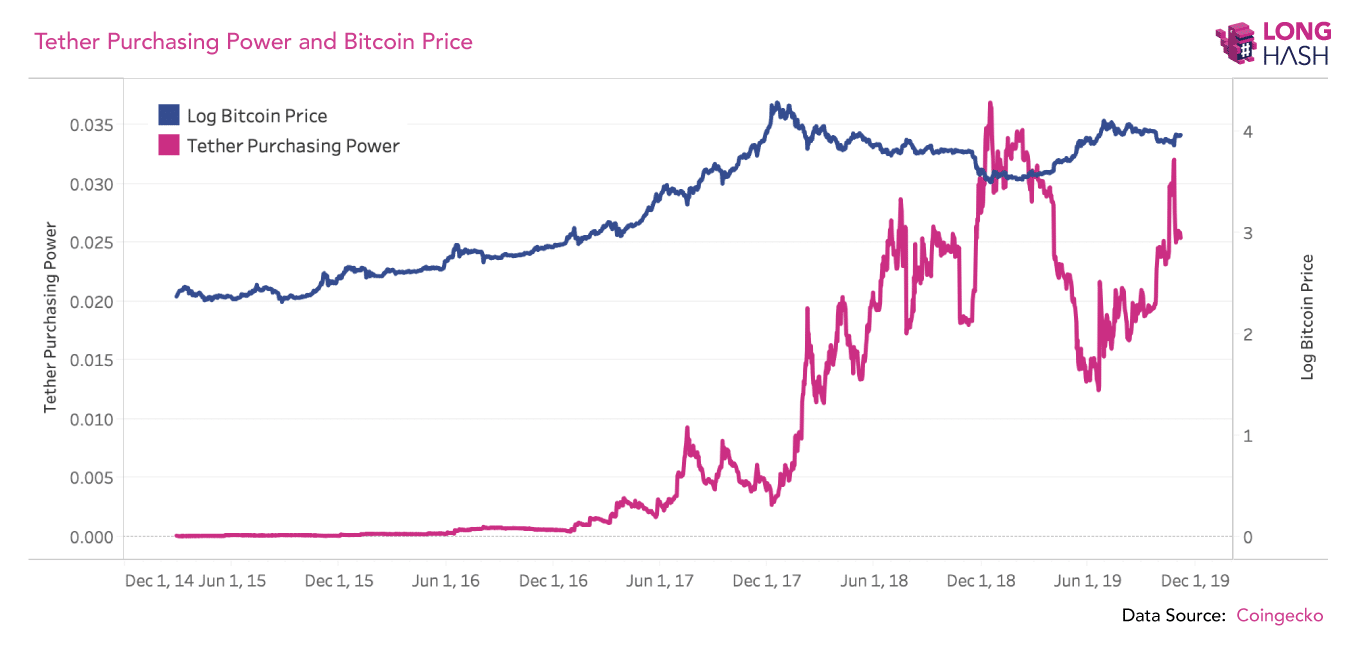
According to analysts, this would suggest that USDT is able to easily manipulate the market when the price of bitcoin drops, which is the exact opposite of what was claimed in the study accusing Tether of having manipulated the price of bitcoin when it went up.
In fact, during the 2017 bull market, USDT’s supply failed to keep pace with the price growth of BTC.
As a result, the authors of the new study conclude that there is little evidence to support the assumption that Tether is manipulating the price of bitcoin, and that the potential influence of USDT on BTC’s prices is greatest during the bear markets, not during the bullish phases.
Moreover, given that USDT’s market share in stablecoins has declined from 100% to the current 82% since December 2017, with a minimum peak of 70% at the beginning of 2019, they argue that some of the disputes concerning Tether may gradually dissolve.