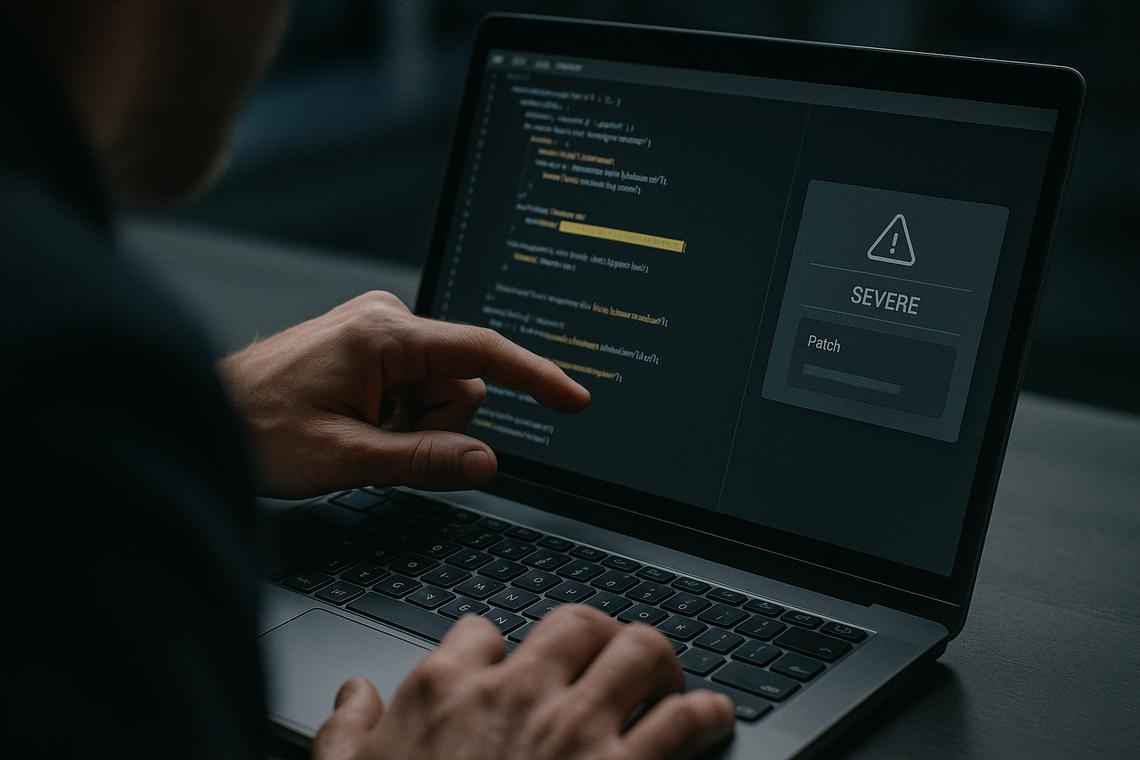
Amid growing concerns about AI-driven cyber threats, Claude Anthropic AI is moving into defensive security with the public beta of its new security platform.
Summary
Anthropic AI expands into enterprise security with Claude Security
Anthropic has introduced Claude Security as a public beta for Claude Enterprise customers, targeting AI-assisted vulnerability scanning, remediation, and code review.
The move reflects a strategic shift to embed Claude Anthropic AI directly into enterprise security workflows, rather than limiting the model to general-purpose productivity or coding tasks.
The beta release, announced on April 30, 2026 and updated May 1, 2026, is focused on real-world security use cases. Consequently, Anthropic is positioning the product as a defender-focused response to increasingly automated exploitation attempts powered by AI tools.
AI-powered vulnerability scanning across full codebases
Claude Security is designed to scan entire repositories, specific directories, or individual branches without requiring additional API integration for existing Claude users.
Because it is built on Anthropic’s Opus 4.7 model, the system can reason about large codebases and complex dependency chains while keeping deployment friction low.
Moreover, Anthropic has removed the need for custom agent deployment, which can be a barrier in tightly controlled enterprise environments.
Instead, Claude Anthropic AI is integrated directly into the Claude Enterprise environment, making it easier for security and development teams to trial the tool in existing workflows.
From detection to remediation in a single workflow
Anthropic emphasizes speed from scan to fix as a core differentiator of Claude Security. Early users are reportedly moving from initial vulnerability detection through to patching in a single sitting, which suggests that the model’s remediation guidance is detailed enough to support rapid iteration by engineers.
To support this, Claude Security generates confidence ratings, severity assessments, and reproduction steps for each finding. It also proposes recommended patches, enabling teams to move quickly from triage to concrete code changes while still maintaining human oversight.
Reducing noise with multi-stage validation
Traditional automated scanners often generate large numbers of false positives, which can overwhelm security teams. In response, Claude Security uses a multi-stage validation pipeline intended to reduce noisy or low-quality alerts before they reach engineers.
This layered validation approach is designed to ensure that the most critical and well-substantiated findings are surfaced first. As a result, organizations can focus their limited security resources on issues more likely to be exploitable, rather than manually filtering extensive reports.
Scheduling, audit integration, and reporting features
The beta includes a series of operational features tailored to enterprise governance and compliance needs. Users can configure scheduled and targeted scans, aligning code reviews with release cycles or regulatory timelines. This scheduling capability helps teams continuously monitor critical services without overburdening developers.
In addition, Claude Security offers audit-system integration and triaged finding tracking, which supports structured remediation programs. Security teams can monitor the lifecycle of vulnerabilities from discovery through closure, improving traceability for internal reviews and external assessments.
For reporting and collaboration, Anthropic provides CSV and Markdown export options. These formats allow findings to be integrated into existing documentation, metrics dashboards, or compliance artifacts with minimal extra work.
Embedding Claude Anthropic AI into collaboration and ticketing tools
To fit into modern DevSecOps practices, Claude Security is compatible with Slack and Jira via webhooks. This allows findings to be pushed directly into team communication channels or ticketing systems, turning AI-generated analysis into actionable work items.
By integrating Claude Anthropic AI outputs into tools that engineers already use daily, Anthropic aims to reduce context switching and speed up response times. This approach further reinforces the company’s focus on shortening the path from discovery to remediation.
Building an ecosystem with security and consulting partners
Anthropic is also signaling a broader ecosystem strategy around Claude Security. Named security partners include CrowdStrike, Microsoft Security, Palo Alto Networks, SentinelOne, TrendAI, and Wiz. Although detailed integration models are not specified, these relationships indicate an effort to align Claude Anthropic AI with established security platforms.
Service partners such as Accenture, BCG, Deloitte, Infosys, and PwC are also mentioned in connection with the offering. Their involvement suggests that Anthropic expects consulting-led deployments, where Claude Security becomes part of larger digital transformation and cybersecurity programs within enterprises.
Defender-first positioning in an AI-accelerated threat landscape
By launching Claude Security as a public beta limited to Claude Enterprise customers, Anthropic is testing how far Claude Anthropic AI can go in augmenting human security teams. The product’s design emphasizes fast remediation, lower false positives, and native integration into existing workflows.
As AI continues to accelerate both offensive and defensive capabilities, this release underscores Anthropic’s intent to position Claude not only as a productivity assistant but also as a core component of enterprise security strategies.