



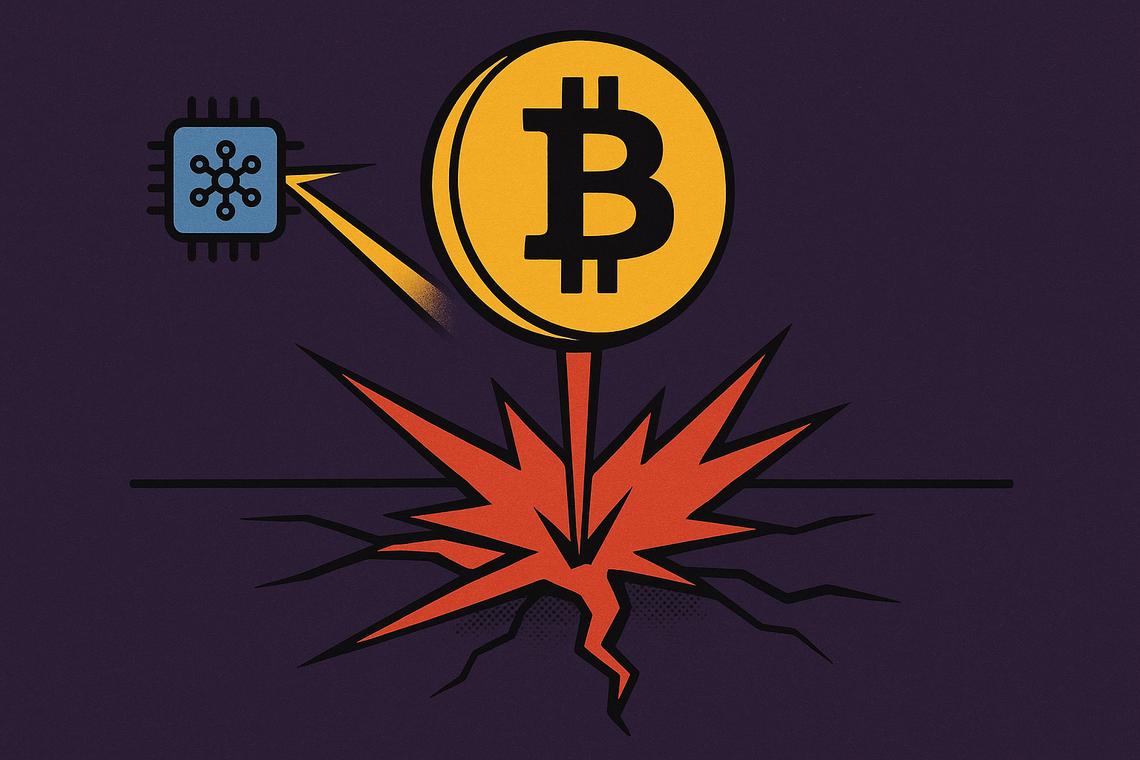
Bitcoin has shed more than half its value from peak to trough in the span of just a few months — and the cryptocurrency market struggles defining 2026 don’t have a single, clean explanation. That’s the core message from Changpeng Zhao, the Binance founder commonly known as CZ, who recently sat down with CoinDesk to walk through what he sees as the overlapping forces dragging digital assets lower.
Summary
Key takeaways
- Bitcoin fell from a peak of $126,000 in October 2025 to around $60,000 in 2026, a decline exceeding 50%.
- CZ identifies three main drivers: capital rotating into AI, geopolitical instability, and Bitcoin’s four-year cyclical pattern.
- Public interest in cryptocurrency has dropped to its lowest point in 12 months, based on search trend data.
- CZ retains majority ownership of Binance and Binance.US but plays no role in daily operations.
- The US CLARITY Act faces a narrowing window for passage, with roughly 20 working days left before the September 1 Senate deadline.
Cryptocurrency Market Performance in 2026
Bitcoin’s Price Collapse
The numbers tell an uncomfortable story. Bitcoin opened 2026 trading near $89,000, briefly rallied above $96,000, then fell apart. It now trades around $60,000 — representing a drop of more than 50% from its October 2025 peak of $126,000. For context, that peak was a historic high, making this correction one of the steeper drawdowns in recent memory.
Bitcoin ETFs have seen significant outflows alongside the price decline, reinforcing the broader pattern of investor retreat from crypto assets. The sell-off isn’t limited to Bitcoin — it reflects a wider contraction across the digital asset space.
Public Interest Trends
Beyond price action, something else is fading: attention. Public engagement with cryptocurrency has declined to its lowest point in twelve months, according to recent search trend analysis. That kind of signal matters because retail sentiment has historically been a leading indicator in crypto cycles — when ordinary people stop searching, liquidity thins and recoveries take longer to gain traction.
Factors Behind the Market Downturn
CZ is clear that the 2026 decline isn’t attributable to one cause. Instead, three forces have converged at the same time, each reinforcing the others.
Capital Shift Toward Artificial Intelligence
The most structurally significant factor, in CZ’s view, is the massive reallocation of investment capital toward artificial intelligence. Semiconductor manufacturing, cloud computing platforms, and robotics development have absorbed enormous flows of speculative and institutional capital that might otherwise have stayed in crypto.
CZ characterizes this as “hot money” moving toward the next big thing — a short-term reallocation rather than a permanent goodbye to digital assets. That framing matters for investors: it suggests the pressure could ease once the AI investment wave matures or consolidates, though the timing of that shift remains genuinely uncertain.
Geopolitical Instability Impact
The second driver is harder to time and predict. Global political instability has pushed investors across all asset classes toward more conservative positions, and crypto — perceived as a higher-risk, higher-volatility bet — has absorbed disproportionately heavy selling pressure as a result. When uncertainty rises, risk assets get cut first, and Bitcoin has long sat near the top of that list.
Bitcoin’s Four-Year Cyclical Pattern
The third factor is more contested. CZ acknowledges that Bitcoin’s four-year cycle, historically tied to halving events and subsequent price action, remains part of his analytical framework — but he’s careful not to treat it as gospel. Some market observers argue that the rise of Bitcoin ETFs, institutional adoption, and corporate treasury allocations have fundamentally changed the asset’s dynamics, potentially making old cycle models less reliable as predictive tools. CZ acknowledges that debate without dismissing the pattern entirely.
What’s analytically striking about the current downturn is precisely this convergence. In past cycles, Bitcoin typically faced one dominant headwind at a time. In 2026, geopolitical risk, a competing investment narrative in AI, and cyclical fatigue have all arrived simultaneously — which helps explain why the selling pressure has been so sustained and why recovery signals have been slow to emerge.
CZ’s Current Role and Regulatory Environment
CZ’s Legal History and Operational Role
CZ’s public return to prominence comes with an important caveat. He completed a four-month incarceration in 2024 following a guilty plea related to Bank Secrecy Act violations. Since his release, he has resumed public activity — traveling to the United States and engaging in conversations with policymakers and media — but he has been explicit about the boundaries of his current role.
He retains majority ownership stakes in both Binance and Binance.US, but he is not involved in day-to-day operations at either exchange. He has also ruled out running another cryptocurrency exchange, expressing a preference for serving as an informal strategic advisor to companies in his investment portfolio.
Efforts to Address Misunderstandings in Washington
During his Washington engagements, CZ has described his objective as correcting what he calls “misunderstandings” about his own conduct and Binance’s business practices. The framing is deliberate: rather than distancing himself from the exchange, he is actively working to rehabilitate the narrative around both his personal legal history and Binance’s reputation with US regulators and lawmakers.
Status of the US CLARITY Act
On the regulatory front, the picture is tense. The CLARITY Act — a bill that would provide clearer rules for the US crypto industry — is stalled in the Senate, held up primarily by a dispute over an ethics clause. With approximately 20 working days remaining before the September 1 deadline, the window for a floor vote is closing fast.
CZ has characterized the legislation as constructive overall, while noting it’s just one piece of a much larger puzzle. But the stakes of its failure are real: without a clear regulatory framework, institutional participants face ongoing compliance uncertainty, which adds another layer of friction to any recovery in crypto market sentiment. The bill’s fate over the next few weeks may say as much about Washington’s appetite for crypto clarity as about the industry’s own trajectory.
FAQ
What factors does CZ identify as causing the cryptocurrency market decline in 2026?
CZ cites three primary factors: capital shifting to AI projects such as semiconductors and cloud platforms, geopolitical tensions pushing investors toward safer assets, and Bitcoin’s four-year cyclical pattern following its halving events.
How much did Bitcoin’s price drop in 2026 compared to its peak in late 2025?
Bitcoin’s price dropped over 50%, falling from a peak of $126,000 in October 2025 to around $60,000 in 2026. The coin began 2026 near $89,000 and briefly rallied above $96,000 before the sustained decline.
What is CZ’s current role in Binance and his public activities after his legal issues?
CZ retains majority ownership of Binance and Binance.US but is no longer involved in daily operations. After completing a four-month incarceration in 2024 for Bank Secrecy Act violations, he has resumed public engagements and acts as an informal advisor to portfolio companies, while also engaging with US policymakers in Washington.
What is the status of US cryptocurrency regulation regarding the CLARITY Act?
The CLARITY Act faces delays due to a dispute over an ethics clause, with roughly 20 working days remaining before the September 1 Senate deadline. Its near-term passage is uncertain, leaving the US crypto regulatory framework without a clear resolution for now.
Article produced with the assistance of artificial intelligence and reviewed by the editorial team.
