
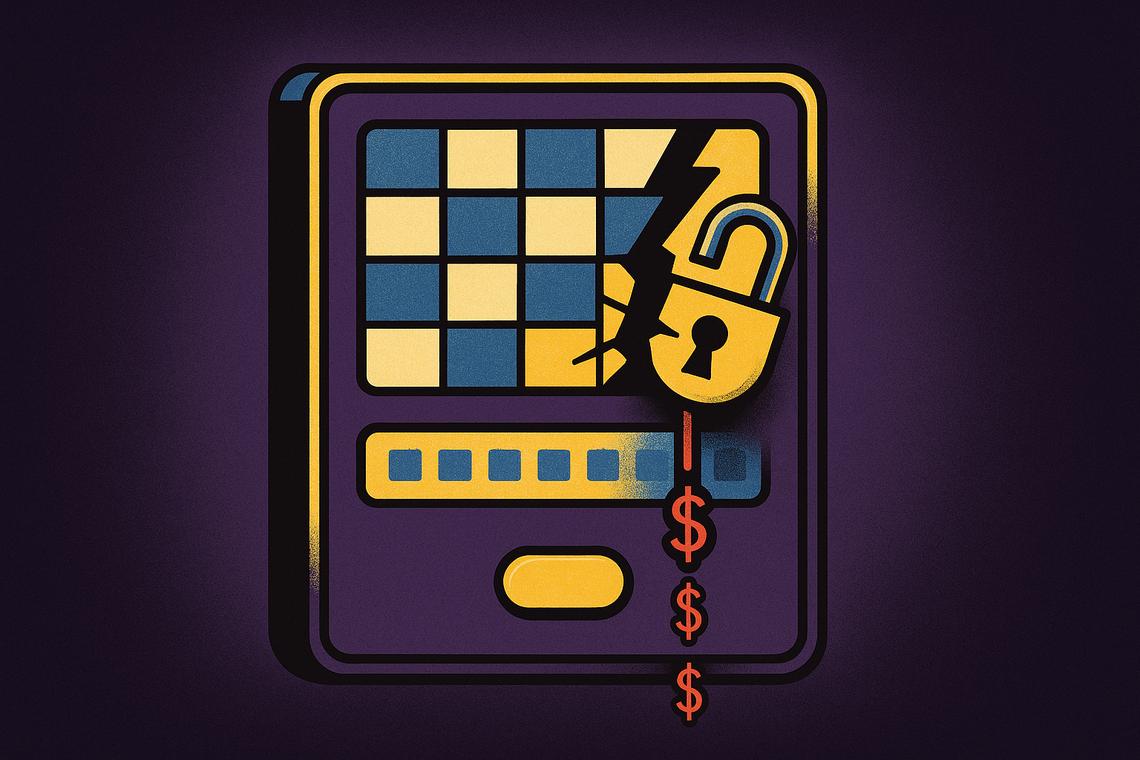
A security flaw with a deceptively quiet name is quietly draining crypto wallets around the world. The Ill Bloom vulnerability — a weakness rooted in how some wallets generate recovery phrases — has already enabled attackers to steal approximately $5 million from affected accounts as of late May 2026, with hundreds of incidents reported across self-custodial wallets relying on defective random number generators.
Summary
Key takeaways
- The Ill Bloom vulnerability exploits weak recovery phrase generation, allowing attackers to predict wallet seed phrases and gain unauthorized access.
- Approximately $5 million has been stolen from affected crypto wallets as of late May 2026, with hundreds of reported incidents.
- Self-custodial wallets using defective random number generators (RNGs) are the primary targets.
- Cybersecurity firms CertiK and PeckShield are expected to release further investigations into the flaw.
- The vulnerability threatens thousands of blockchain accounts worldwide and is shifting market risk perception for crypto hacks in 2026.
Understanding the Ill Bloom Vulnerability
At its core, the Ill Bloom vulnerability is a failure in randomness. When a crypto wallet is created, it generates a recovery phrase — a string of words that acts as the master key to all funds held in that wallet. That process is supposed to be mathematically unpredictable. When the random number generator (RNG) responsible for that process is defective, the output becomes far easier to guess than it should ever be.
That predictability is exactly what attackers are exploiting. By targeting wallets built on weak recovery phrase generation, bad actors can systematically predict or reconstruct seed phrases without ever needing the user’s password, device, or consent. Once a recovery phrase is known, full access to the wallet follows.
Susceptibility to Brute-Force Attacks in Self-Custodial Wallets
The flaw makes affected wallets particularly vulnerable to brute-force attacks — automated attempts to cycle through possible recovery phrase combinations until the correct one is found. In a properly secured wallet, the sheer number of possible combinations makes brute-forcing computationally impossible. When the RNG is defective, however, the effective search space collapses dramatically, turning what should be an unbreakable lock into a manageable puzzle for a determined attacker.
Self-custodial wallets — where users hold their own keys rather than relying on an exchange — are the wallets most exposed here. That’s a painful irony. Self-custody is widely promoted as the safest way to hold crypto, giving users full control and removing reliance on third parties. But that independence cuts both ways: when the underlying security mechanism fails, there is no institutional backstop to absorb the loss.
Impact and Scope of the Exploitation
The financial damage is real and measurable. Roughly $5 million has been stolen from affected wallets, according to reporting by Cointelegraph, with the bulk of incidents clustering in late May 2026. Hundreds of individual cases have been documented, and the threat extends to thousands of blockchain accounts worldwide.
Financial Losses Estimated at $5 Million
Five million dollars is not the largest crypto theft on record — not even close. But the nature of this loss is what makes it significant. These are not exchange hacks exploiting institutional vulnerabilities. These are individual users losing personal funds held in wallets they believed were secure. The attack surface is distributed, the victims are scattered, and the damage accumulates quietly rather than in a single high-profile breach.
That distributed quality also makes the full scale harder to measure. The $5 million figure reflects reported incidents as of late May 2026, but the actual number of compromised wallets — and total value drained — may be higher. Many users do not immediately detect unauthorized access, particularly if funds are moved gradually or if the affected wallet was not actively monitored.
Reported Incidents Affecting Hundreds of Wallets
Hundreds of confirmed incidents signal that this is not an isolated case or a one-off exploit. It represents a systematic pattern targeting a specific architectural weakness. The defective RNG problem is not unique to one wallet brand or application — it is a category of flaw that could appear across multiple implementations, depending on which underlying libraries or code bases developers chose when building their products.
Market and Security Community Responses
The Ill Bloom vulnerability is already reshaping how market participants think about crypto security risk in 2026. Elevated risk perception around crypto hacks is being priced into market sentiment, reflecting a broader awareness that wallet-level vulnerabilities represent a meaningful and underappreciated attack vector.
Heightened Market Risk Perception for Crypto Hacks in 2026
Security incidents of this nature tend to have a compounding effect on market confidence. Each confirmed theft reinforces doubts about the reliability of self-custody tools, which in turn affects the willingness of less technical users to hold assets outside of exchanges. For the broader ecosystem, that dynamic matters — the push toward self-custody has been one of the defining narratives of recent crypto adoption cycles, and high-profile failures chip away at its credibility.
Ongoing Investigations by CertiK and PeckShield
Blockchain security firms CertiK and PeckShield are expected to release deeper technical analyses of the flaw. Their findings will be critical in identifying exactly which wallet implementations are affected, how severe the RNG weakness is at a cryptographic level, and whether patches or mitigations are already feasible. Both firms have a track record of producing forensic-grade post-mortems on major vulnerabilities, and their reports are typically the point at which the industry moves from awareness to coordinated response.
Potential Influence of Exchange and Regulatory Announcements
What happens next in the regulatory and exchange space could shape how quickly this vulnerability gets contained. If major exchanges begin issuing formal guidance — warning users about potentially affected wallet types or recommending migration steps — that could accelerate both awareness and remediation. Similarly, any formal statement from financial regulators treating this as a systemic risk rather than an isolated security incident would likely shift the urgency of industry-wide responses considerably.
The deeper question the Ill Bloom vulnerability forces into the open is whether the infrastructure underpinning self-custody crypto has kept pace with the scale of assets it now holds. Randomness is not a glamorous component of cryptographic security — it rarely headlines conference talks or product announcements — but its failure can unravel protections that everything else in the security stack takes for granted. Until the full scope of affected wallets is identified and audited, users holding funds in self-custodial wallets have good reason to examine exactly how their recovery phrases were generated.
FAQ
What is the Ill Bloom vulnerability in crypto wallets?
It is a security flaw caused by weak recovery phrase generation that allows attackers to predict wallet recovery phrases and gain unauthorized access. The weakness originates in defective random number generators used during wallet creation, making seed phrases mathematically predictable rather than truly random.
How much money has been stolen due to the Ill Bloom vulnerability?
Approximately $5 million has been stolen from affected wallets as of late May 2026, with hundreds of individual incidents reported during that period.
Which wallets are most at risk from this vulnerability?
Self-custodial wallets that rely on defective random number generators for recovery phrase creation are most at risk. These are wallets where users hold their own private keys rather than keeping funds on an exchange.
What are the broader market implications of the Ill Bloom vulnerability?
Market pricing reflects increased risk perception around crypto hacks in 2026. Ongoing investigations by cybersecurity firms CertiK and PeckShield, along with potential announcements from exchanges and regulators, are expected to influence future market sentiment and shape how the industry responds to wallet-level security failures.
Article produced with the assistance of artificial intelligence and reviewed by the editorial team.