



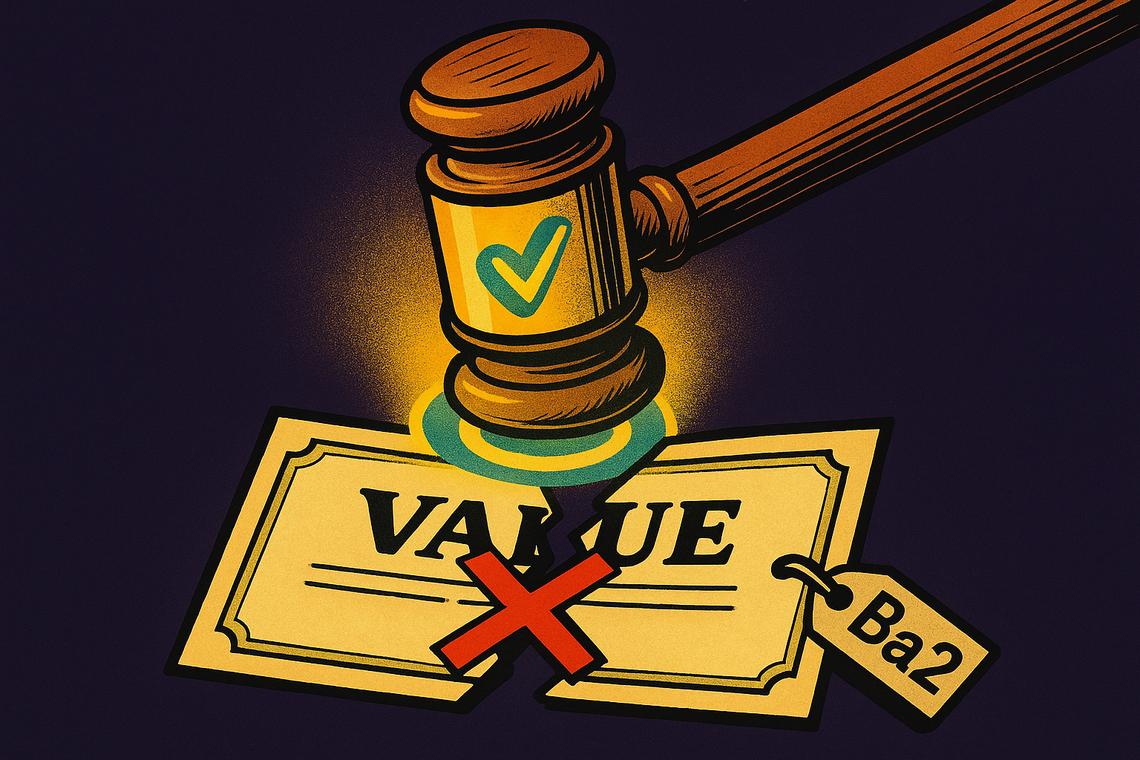
New Hampshire just killed what would have been a genuinely groundbreaking experiment in state-government crypto finance. The New Hampshire bitcoin bond — a $100 million instrument that had already cleared a formal credit rating from one of Wall Street’s most recognized agencies — died at the final hurdle when the state’s Executive Council voted 3-2 to reject it, siding with members who raised concerns about the state’s financial reputation.
Summary
Key takeaways
- The New Hampshire Executive Council rejected a $100 million bitcoin bond project in a 3-2 vote, ending the effort at its final approval stage.
- The bond had received a Ba2 rating from Moody’s Ratings, making it the first rated, bitcoin-backed bond issued under a state’s authority.
- The Business Finance Authority of the State of New Hampshire was set to issue the bond, backing a private-sector instrument tied to bitcoin mining firm CleanSpark.
- Crypto advocate and state majority floor leader Keith Ammon called the decision “extremely short-sighted” and said the effort is not over.
- With council members facing an election year, Ammon believes a single vote shift could reverse the outcome at a future meeting.
A pioneering bond project cut down at the finish line
The council vote didn’t just reject a financial instrument — it shut the door on something that had no direct precedent in American public finance. This was set to be the first rated, bitcoin-backed bond issued under a state government’s authority, a structure that pushed well beyond anything other U.S. states had attempted with crypto.
The mechanics were straightforward enough on paper. The Business Finance Authority of the State of New Hampshire was to issue the bond, providing state-level backing for a private-sector instrument worth up to $100 million tied to CleanSpark, a bitcoin mining and data center company. The Executive Council’s approval was the last gate it needed to pass through.
It didn’t make it.
What the Moody’s rating meant — and why the rejection stings
Perhaps the most striking detail in this story is the timing. Just months before the council vote, Moody’s Ratings assigned the bond a Ba2 rating — a below-investment-grade but formally recognized credit assessment that nevertheless represented a landmark moment for bitcoin entering the public bond market. Getting a major ratings agency to evaluate a crypto-linked state bond at all was itself a signal that the project had moved well past the theoretical stage.
That makes the council’s rejection harder to read purely as a risk-management call. The bond had passed scrutiny that most experimental financial instruments never reach. Whatever concerns about financial reputation drove the three dissenting votes, they arrived after Moody’s had already put its analytical framework to work on the deal.
The political arithmetic behind the 3-2 vote
The council’s split decision leaves the door open — just barely. A 3-2 vote is not a landslide, and crypto supporters inside the New Hampshire statehouse know it.
Keith Ammon, the majority floor leader in the New Hampshire House of Representatives and a longtime advocate for digital asset policy, didn’t soften his reaction. “It was an extremely short-sighted decision,” he posted on X. “They should gather all relevant facts and information and reconsider their vote at a future meeting.”
Ammon went further in comments to CoinDesk, pointing out that council members are up for election — and that flipping a single vote is all it would take to change the outcome. “We’re not giving up,” he said.
That political framing matters. The Executive Council’s composition can shift, and the electoral calendar gives crypto advocates a specific lever to pull. Whether Ammon and others can sustain enough pressure to bring the bond back for a second look remains the open question.
New Hampshire’s complicated crypto identity
There’s an irony worth noting here. New Hampshire has positioned itself as one of the most crypto-forward states in the country — it became the first state to establish a crypto reserve law, moving ahead of any federal effort on that front. The rejection of the bitcoin bond doesn’t erase that record, but it does complicate the narrative of New Hampshire as a reliably friendly jurisdiction for digital asset innovation.
For CleanSpark, the direct consequences of the vote remain unclear. The bitcoin mining and data center firm had been tied to a financing structure that would have given it access to state-authority-backed capital — a meaningful advantage in an industry where financing costs matter. That opportunity, at least in this form, is now gone.
More broadly, the outcome carries a signal for other states watching from the sidelines. If even New Hampshire — with its crypto reserve law and its appetite for digital asset experimentation — can’t get a bitcoin bond past its own executive council, the path for other jurisdictions attempting similar structures looks considerably more complicated. The Ba2 rating from Moody’s showed the market that it was possible to formally evaluate these instruments. The political rejection showed that financial credibility and institutional approval aren’t always the same thing.
FAQ
Why did the New Hampshire Executive Council reject the bitcoin bond project?
The council voted 3-2 against the bond, with the deciding members citing concerns about the state’s financial reputation. The vote was the final required approval step for the project.
What company was the bitcoin bond backing related to?
The bond was linked to CleanSpark, a bitcoin mining and data center firm. The Business Finance Authority of the State of New Hampshire was set to back a private-sector bond of up to $100 million tied to CleanSpark’s operations.
Did the bitcoin bond have a credit rating?
Yes. Moody’s Ratings assigned the bond a Ba2 rating — a formal below-investment-grade credit assessment that was notable for being among the first of its kind applied to a bitcoin-backed state bond.
Is there a possibility the bond decision will be reconsidered?
Crypto advocate and New Hampshire House majority floor leader Keith Ammon has called on the council to gather more information and bring the vote back at a future meeting. He noted that council members face an election year and that a single vote change would be enough to reverse the outcome, adding: “We’re not giving up.”
Article produced with the assistance of artificial intelligence and reviewed by the editorial team.
