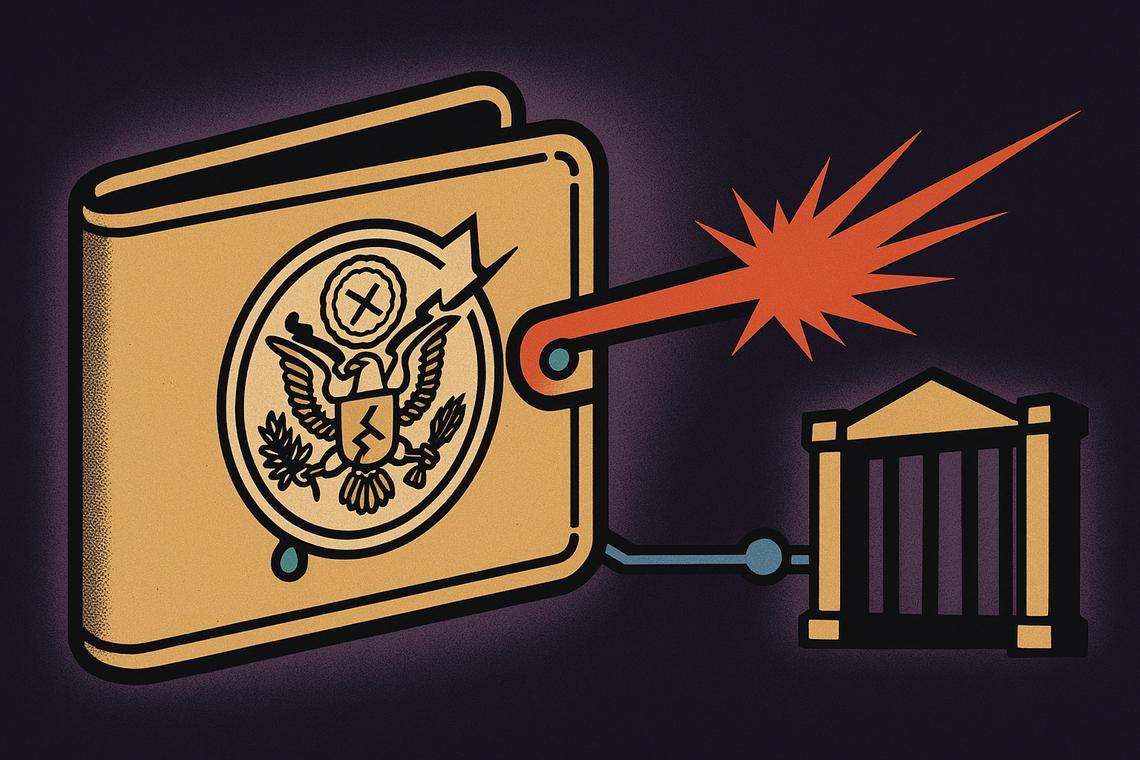
The US government quietly moved $288 million in seized bitcoin and ether to Coinbase Prime on Monday — and the transfers are raising uncomfortable questions about whether Washington is following its own rules on cryptocurrency seizures.
Summary
Key takeaways
- US government wallets sent approximately $288 million in seized bitcoin and ether to Coinbase Prime, according to blockchain data from Arkham.
- Bitcoin was routed through fresh intermediary wallets before reaching Coinbase Prime; ether was transferred directly.
- The movements may conflict with a March 2025 executive order directing seized bitcoin into the Strategic Bitcoin Reserve and banning its sale.
- Routing assets to Coinbase Prime does not confirm a sale — the platform also provides custody, financing, and staging services.
- Government wallets still hold roughly $20.65 billion in crypto, including 324,552 BTC, 28,394 ETH, and 145.549 million USDT.
US Government Transfers $288 Million in Seized Crypto to Coinbase Prime
On-chain data published by Arkham shows the transfers involved two distinct asset classes handled in noticeably different ways. The bitcoin took a detour — moving first through newly created intermediary wallets before landing at Coinbase Prime deposit addresses. The ether skipped that step entirely and arrived directly.
That structural difference matters. It suggests the movements were not a single automated action but a deliberate, multi-step process — which makes the lack of any public explanation from the government all the more striking.
Details of Bitcoin Movements via Intermediary Wallets
Two separate government-linked bitcoin wallets drove the bulk of the transfer. A wallet tied to Ryan Farace — connected to the so-called “xanaxman” case — sent 2,875 BTC worth roughly $178 million to a new intermediary address, which then forwarded the full amount to a Coinbase Prime deposit wallet within minutes. Both the intermediary wallets were emptied after the forward, leaving no residual balance.
A second wallet linked to the defunct exchange BTC-e followed the same pattern: 925.512 BTC worth approximately $57 million moved in from a seizure address and straight out to Coinbase Prime. According to Galaxy Research head Alex Thorn, both bitcoin tranches were comprised of coins seized from the Farace and BTC-e cases specifically.
Separately, 140.214 BTC moved between government Coinbase Prime addresses and a Coinbase cold wallet — a pattern consistent with internal asset shuffling rather than any external transfer.
Direct Transfer of Ether to Coinbase Prime
The ether side of the operation was more straightforward. A wallet connected to Brian Krewson — an Oracle employee implicated in a $54 million crypto storage and money laundering scheme — sent 30,007 ETH worth $53.09 million directly to a Coinbase Prime deposit address, bypassing the intermediary routing used for bitcoin entirely.
Potential Conflict with the 2025 Executive Order on Bitcoin Seizures
The transfers sit uneasily alongside a March 2025 executive order signed by President Trump, which directed that bitcoin seized by the US government be deposited into the Strategic Bitcoin Reserve and explicitly banned its sale. On their face, transfers of seized bitcoin to a major exchange platform appear to run counter to that directive.
This is the tension that makes Monday’s movements worth watching closely. The executive order was framed as a long-term commitment to holding bitcoin as a national asset — not liquidating it. If government wallets are now routing seized BTC through exchange infrastructure, even for legitimate custodial reasons, the optics are difficult to manage without a clear public accounting of intent.
Cointelegraph noted that Monday’s transfer was among the largest from government-linked wallets this year. For context, in June a US government wallet moved 98,589 Chainlink tokens to Coinbase Prime, traced to assets seized from FTX and Alameda Research. In April, around 8.2 BTC tied to the 2016 Bitfinex hack was sent to the same platform. The pattern suggests Coinbase Prime has become a regular operational touchpoint for seized crypto management — whether or not sales are involved.
Custody Versus Sale: What the Transfers Actually Mean
Routing coins to Coinbase Prime does not confirm a sale. The platform serves institutional clients with a full suite of services — custody, trading, financing, and staking — meaning these transfers could reflect nothing more than a consolidation of assets under professional custodial management.
That said, the distinction between custody and sale is invisible from on-chain data alone. Blockchain analysis can confirm that assets moved to a Coinbase Prime deposit address; it cannot confirm what instructions accompanied them. Without a statement from either the US government or Coinbase, the purpose of these transfers remains genuinely open.
What blockchain data does make clear is that government wallets still hold an enormous position: roughly $20.65 billion in total, comprising 324,552 BTC, 28,394 ETH, and 145.549 million USDT. Against that backdrop, the $288 million moved on Monday represents a small fraction of the overall reserve — but it is the optics and the legal context, not the size, that are generating scrutiny.
Overall Government Seized Crypto Holdings Remain Substantial
Even after Monday’s transfers, the scale of what the US government continues to hold is significant. The remaining 324,552 BTC alone represents one of the largest single bitcoin concentrations on earth. How Washington ultimately manages, stores, or deploys that position — and whether future movements align with the Strategic Bitcoin Reserve mandate — will remain one of the more consequential questions in crypto policy for the foreseeable future.
The March 2025 executive order created a clear standard. Whether Monday’s transfers comply with it, or quietly test its limits, may ultimately come down to documentation that has not yet been made public.
FAQ
Did the US government sell seized bitcoin and ether by transferring them to Coinbase Prime?
The transfers to Coinbase Prime do not confirm a sale. The platform provides custody, financing, and staging services to institutional clients, meaning the assets may have been moved for management purposes rather than liquidation.
How were the bitcoin and ether transferred differently to Coinbase Prime?
Bitcoin was routed through newly created intermediary wallets before reaching Coinbase Prime, while ether was sent directly to a Coinbase Prime deposit address without any intermediate step.
Does the transfer to Coinbase Prime comply with the March 2025 executive order on seized bitcoin?
The movements appear to conflict with the March 2025 executive order directing seized bitcoin into the Strategic Bitcoin Reserve and banning its sale. However, exact legal compliance remains unclear without an official statement from the government or Coinbase.
What is the scale of the US government’s remaining cryptocurrency holdings?
Government wallets still hold roughly $20.65 billion in cryptocurrencies, including 324,552 BTC, 28,394 ETH, and 145.549 million USDT — making Monday’s transfer a small fraction of the total reserve.
Article produced with the assistance of artificial intelligence and reviewed by the editorial team.