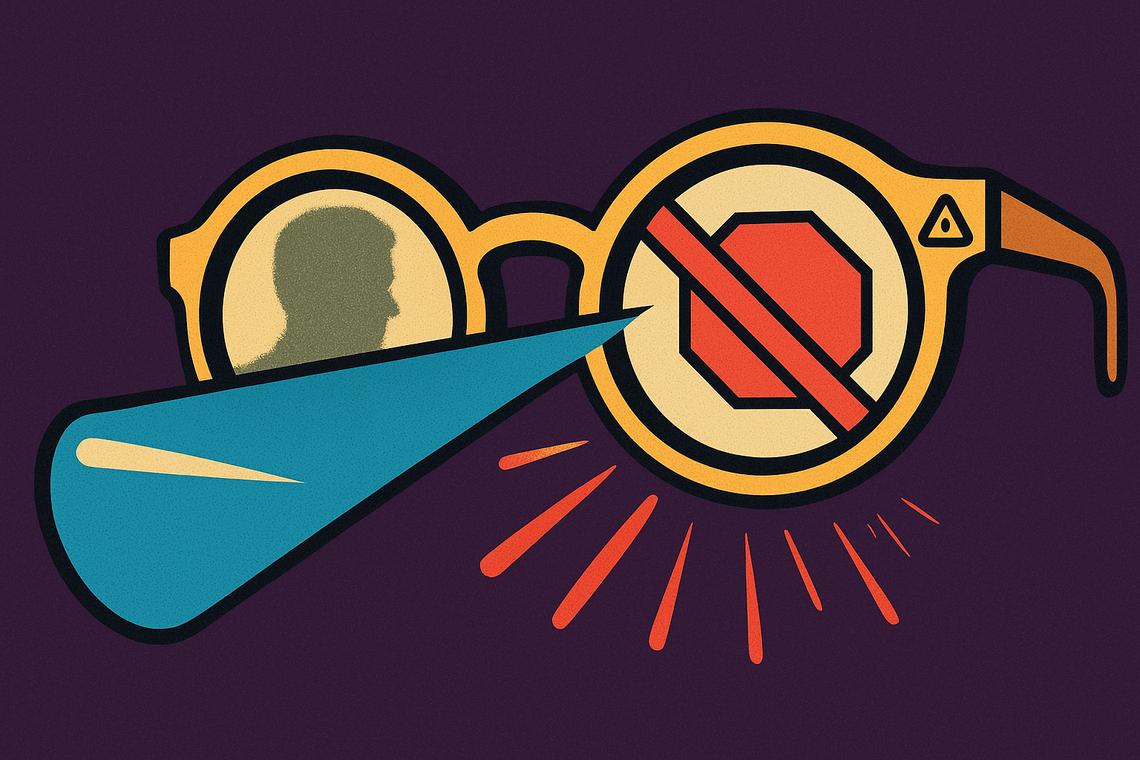
There was a moment at Madrid’s Real Cool Festival on Thursday when Lorde stopped mid-set, thanked the crowd for being part of “something real,” and then went off. Her target: AI smart glasses. The singer’s criticism of AI glasses spread quickly across social media, resonating far beyond the festival crowd — and landing right in the middle of one of tech’s most uncomfortable conversations about privacy, surveillance, and what it means to feel watched.
Summary
Key takeaways
- Lorde called AI smart glasses “not sexy” during her Real Cool Festival performance in Madrid, urging fans not to buy them.
- She did not name brands directly, but Ray-Ban — a festival sponsor that collaborated with Meta on AI glasses — was the implied target.
- Blackpink’s Jennie, a Ray-Ban Meta AI ambassador, performed at the same festival and appeared in promotional videos screened between sets.
- Meta is facing multiple investigations and lawsuits over privacy concerns tied to its AI glasses, while reportedly developing “super-sensing” glasses that continuously record audio and take photos.
- Meta recently announced a camera safety update disabling recording when the glasses’ LED indicator is tampered with — an admission that some users had already been covering the light to record covertly.
Lorde’s Critique of AI Smart Glasses at the Real Cool Festival
“Increasingly in our world it gets harder and harder to know what is real,” Lorde told the Madrid crowd, building toward her point. Then came the unambiguous conclusion: “Fuck the glasses. Don’t get the glasses. Not sexy.”
The comments were captured on video and circulated widely on social media. In her remarks, Lorde described the discomfort of not being able to tell whether someone nearby is simply wearing sunglasses or quietly recording everything in sight through an AI-enabled device. It was a visceral, blunt articulation of something many people feel but rarely say out loud at a music festival — with a microphone in hand.
The Ray-Ban Connection She Never Named
Lorde did not name any company directly. But the context made the implication hard to miss. Ray-Ban is a sponsor of the Real Cool Festival, and the brand has worked with Meta to produce a line of AI-enabled smart glasses that have attracted both commercial buzz and significant controversy. When a performer at a Ray-Ban-sponsored event tells thousands of people not to buy “the glasses,” the math is not complicated.
What followed made the irony even sharper. According to Stereogum, Lorde was followed on stage by Jennie from Blackpink, who serves as a Ray-Ban Meta AI ambassador. Jennie has appeared in advertising campaigns on Instagram promoting the glasses and was featured in a promotional video that played between sets at the very same festival. Two consecutive acts, same stage, diametrically opposed messages about the same product.
Meta’s AI Smart Glasses and the Privacy Problem That Won’t Go Away
Lorde’s comments landed at a genuinely difficult moment for Meta. The company is facing renewed scrutiny over its smart glasses — not just public skepticism, but actual legal and regulatory pressure.
Meta is currently dealing with multiple investigations and lawsuits tied to AI glasses privacy concerns. One lawsuit arose after Meta canceled a contract with an outsourced tech firm whose Kenyan workers alleged they were required to review graphic content — including sex, nudity, and people using the toilet — while training Meta’s AI systems using footage captured through the glasses.
The LED Fix That Confirmed the Problem
Earlier this month, Meta announced a new safety feature: the glasses will disable their camera if the LED indicator light is tampered with. The update was framed as a consumer protection measure. But the reasoning behind it told its own story. Meta acknowledged that users had been covering the LED with tape to record covertly — and that some had even gone further, using what Meta described as “sophisticated efforts to modify or destroy the capture LED.”
In other words, Meta confirmed that a segment of people using AI glasses had been deliberately hiding the fact that they were recording, often targeting women without their consent. An LED fix addresses the symptom. The underlying dynamic it reveals is harder to patch.
Plans for ‘Super-Sensing’ Glasses That Record Continuously
Even as the company moves to address these concerns publicly, Meta is reportedly testing a prototype of AI glasses that would continuously collect audio while taking photos every few seconds, according to reporting by the Financial Times. The device — referred to internally as “super-sensing” glasses — represents an escalation, not a retreat, from the direction that critics find most alarming.
Meta’s broader data posture reinforces that concern. The company’s privacy policy allows any image shared with Meta AI to be used for AI training. On the same day it announced the LED camera safeguard, Meta separately announced that its AI could now use anyone’s public Instagram photos to generate AI images — unless users actively opt out. The pattern is consistent: a narrow concession on one front, while advancing on several others.
Celebrity Endorsements and the Tension They Create
The festival dynamic in Madrid illustrated something worth paying attention to. Jennie’s role as a Ray-Ban Meta AI ambassador places one of the most recognizable faces in global pop music directly in the promotional machinery behind these glasses. She has appeared in Instagram campaigns and in video content screened at live events — exactly the kind of aspirational, fashion-forward framing that Meta needs to normalize the product.
Lorde’s intervention, accidental or not, punctured that framing in real time. The singer’s objection was not technical — she did not cite surveillance law or data retention policies. She called the glasses “fucked up” and “not sexy,” which is precisely the kind of cultural verdict that no amount of influencer marketing easily reverses. Authenticity arguments, especially from artists known for them, tend to travel far.
The broader implication is that Meta’s strategy of pairing AI glasses with celebrity credibility may be running into a ceiling. As privacy concerns become more tangible — documented by lawsuits, reported by journalists, demonstrated by the company’s own safety disclosures — the gap between the aspirational image and the actual product experience becomes harder to paper over, regardless of who is wearing them on stage.
FAQ
What exactly did Lorde say about AI smart glasses?
During her performance at the Real Cool Festival in Madrid, Lorde said it was increasingly hard to know what is real, and that you can no longer tell if someone is wearing ordinary sunglasses or an AI-enabled recording device. She then said directly: “Fuck the glasses. Don’t get the glasses. Not sexy.”
Did Lorde name Ray-Ban or Meta directly in her criticism?
Lorde did not explicitly name Ray-Ban or Meta. However, Ray-Ban is a festival sponsor and has collaborated with Meta on AI smart glasses, making the implied target clear given the context of the event.
What privacy concerns is Meta facing with its AI smart glasses?
Meta is under renewed scrutiny for surveillance and privacy risks linked to its AI glasses. These include multiple active investigations and lawsuits, reports that some users covered the glasses’ LED indicator to record people covertly, and plans to develop “super-sensing” glasses that would continuously collect audio and take photos. Meta’s privacy policy also permits images shared with Meta AI to be used for AI training.
Who is Jennie and what is her connection to Ray-Ban Meta AI glasses?
Jennie is a member of Blackpink and serves as a Ray-Ban Meta AI ambassador. She has appeared in advertising campaigns on Instagram promoting the glasses and in a promotional video screened between sets at the Real Cool Festival — the same event where Lorde criticized the product.
Article produced with the assistance of artificial intelligence and reviewed by the editorial team.