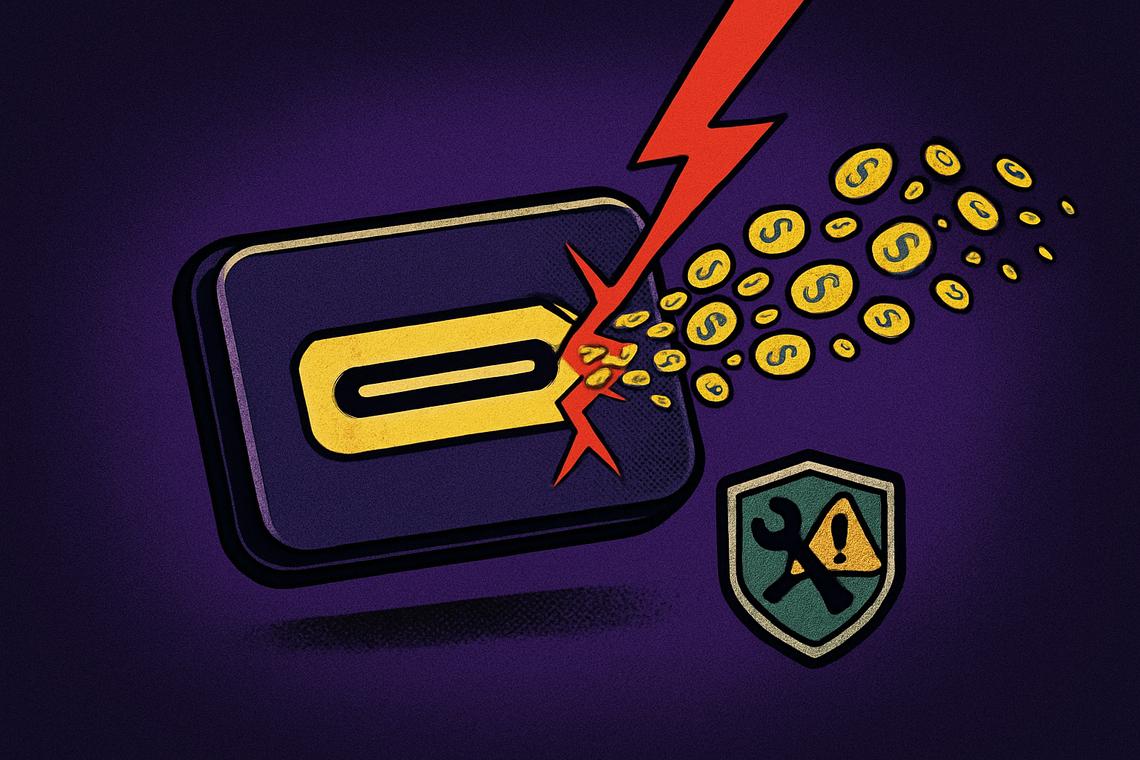
Changpeng Zhao says even the most trusted names in hardware storage can’t guarantee full protection, and a newly discovered Coldcard flaw is proving his point. “Nothing is 100%,” the Binance founder wrote on X on August 1, urging crypto holders to stop relying on a single device or seed phrase. His warning followed a Bitcoin theft that exploited predictable key generation inside some Coldcard wallets, a case that has reopened a hard conversation about crypto wallet security and whether offline storage alone is enough to keep funds safe.
The incident didn’t involve stolen devices, phishing links, or careless owners handing over recovery phrases. Instead, it traced back to a flaw buried in firmware that generated wallet seeds using predictable data instead of true randomness. That distinction matters: the failure happened at the moment a wallet was created, long before any transaction was ever signed.
Summary
Key takeaways
- Changpeng Zhao said no crypto wallet is fully safe after a Coldcard seed flaw was exposed, urging users to split funds across multiple wallets.
- A firmware bug caused some Coldcard devices to generate predictable seeds instead of using true hardware randomness.
- Attackers stole roughly 594 BTC from about 500 wallets in a 25-minute window; Across 1,196 addresses, Galaxy Research subsequently increased the aggregate amount to 1,082.65 BTC over 41 minutes.
- Coinkite released patched firmware, but seeds already generated under vulnerable versions remain compromised and cannot be fixed by an update.
- Security experts say multi-wallet self-custody can reduce concentration risk, though it isn’t a flawless solution.
Coldcard Seed Flaw Exposes a Critical Crypto Wallet Security Weakness
The core problem was simple to describe but devastating in effect: some Coldcard devices skipped their own hardware randomness generator and fell back on predictable software-based seed creation. That single design flaw turned what should have been an unguessable secret into something an attacker could reconstruct.
Predictable Seed Generation Enabled Silent BTC Theft
According to a technical breakdown from Block’s Bitcoin engineering and security teams, a build setting instructed affected devices to bypass hardware-based randomness. A flawed check in a supporting library only verified whether that setting existed, not whether it was actually switched on. As a result, key generation quietly fell back to a basic software substitute seeded from the device’s chip serial number and clock registers, neither of which is secret. Block traced the change to a code commit dated March 1, 2021, which shipped inside firmware version 4.0.0 that same month.
Because the flaw sat at the seed-creation stage, an attacker didn’t need to steal a device or trick an owner into revealing a recovery phrase. They could reconstruct possible private keys remotely, well before any transaction was ever signed. That is the part of this story that unsettles security researchers most: the wallet looked completely secure right up until the moment funds disappeared.
Scale and Timing of the Bitcoin Theft
The numbers moved fast. Early reporting from CoinDesk put the initial haul at roughly 594 BTC, worth about $38 million at the time, pulled from around 500 single-signature wallets in a 25-minute sweep between 01:31 and 01:56 UTC. Every affected wallet held more than 0.15 BTC, and many had sat untouched for years, with coins dating back to 2021, almost exactly when the flawed firmware first shipped.
Galaxy Research later widened the scope considerably, raising the confirmed total to 1,082.65 BTC pulled from 1,196 addresses over a 41-minute period, a figure that pushed the estimated losses toward roughly $70 million. That escalation underscores why this wasn’t an isolated, opportunistic hack: it was a systematic sweep across every wallet whose seed had been generated under the vulnerable process.
Coldcard’s Response and Required User Action
Coinkite, the Canadian firm behind Coldcard, moved to patch the flaw once it was disclosed, but a firmware update can’t undo a seed that was already generated insecurely. Anyone whose wallet was created under the flawed process is still exposed, patch or no patch.
Firmware Patches Can’t Fix Already-Compromised Seeds
Coinkite warned that seeds produced on affected Mk3 firmware, along with some older Mk4, Mk5, and Q releases, may be vulnerable. The company pushed out corrected firmware, but stressed that the update only prevents new seeds from being generated insecurely going forward. It does nothing to protect Bitcoin already sitting behind a seed created before the fix. As Coinkite put it in its own advisory, existing weak seeds simply cannot be repaired through an update.
That leaves affected users with one option: generate a brand-new seed under patched firmware and move their Bitcoin to it, treating the old private keys as permanently discoverable. Anyone unsure whether their wallet falls into the affected window is being advised to migrate anyway, since the cost of inaction is total loss of funds rather than a minor inconvenience.
Multi-Wallet Security: A Partial Fix, Not a Guarantee
Zhao’s response to the exploit wasn’t a call to abandon hardware wallets altogether. It was a push toward spreading exposure, so that a single flaw, bug, or mistake can’t wipe out an entire portfolio at once.
Why Diversifying Across Devices and Seeds Helps
Multi-wallet security works by separating funds across independent seeds, devices, vendors, and use cases, so a compromised wallet only exposes part of a person’s holdings rather than everything at once. In practice, that can mean keeping smaller amounts for everyday spending in a hot wallet, larger reserves on a hardware device, and the biggest balances locked behind multisig arrangements that require more than one key to move funds.
One Seed on Many Devices Isn’t Real Diversification
There’s a common mistake worth flagging here: copying a single seed phrase across several devices doesn’t actually create the protection people think it does. If that one seed is ever exposed, whether through a flaw like Coldcard’s or through theft, every device holding it is compromised at the same time. True diversification requires genuinely separate seeds, not backups of the same secret spread across more hardware.
The tradeoff is real, though. Spreading funds across multiple wallets and seeds also multiplies the number of things a person has to track, back up, and remember, and poor recordkeeping can turn a security upgrade into a self-inflicted loss if balances get forgotten or heirs can’t locate the right backups.
Institutional-Grade Practices vs Retail Simplicity
Institutions handling far larger sums typically go further than any individual would. Multisig setups, multi-party computation, separate approvers, geographically distributed keys, formal withdrawal policies, and regularly tested recovery procedures are standard practice once serious money and multiple decision-makers are involved. The U.S. National Institute of Standards and Technology (NIST) frames this the same way, identifying backup, authorization, inventory, recovery, and compromise response as the core pillars of sound cryptographic key management.
That level of structure is realistic for exchanges, custodians, and funds. It’s a much heavier lift for an everyday retail holder managing a few wallets on their own. The Coldcard episode makes the tension clear: the same complexity that protects institutions from catastrophic loss can become a liability for individuals if it isn’t paired with reliable recordkeeping and a habit of checking on backups regularly.
What the incident ultimately shows is that Bitcoin private key risk doesn’t disappear just because a device is offline. It shifts to wherever the weakest link in the process sits, whether that’s a firmware bug, a forgotten backup, or a single point of failure spread across too many devices holding the same secret.
FAQ
Why did the Coldcard hardware wallet fail to provide complete security?
A firmware bug caused affected devices to rely on predictable software-based key generation instead of true hardware randomness. That let an attacker reconstruct private keys remotely, before any transaction was ever signed.
How much Bitcoin was stolen due to the Coldcard seed flaw?
Early estimates put the theft at around 594 BTC from roughly 500 wallets within a 25-minute window. Galaxy Research later raised that figure to 1,082.65 BTC across 1,196 addresses over about 41 minutes.
What should affected Coldcard users do to secure their funds?
They need to generate a fresh seed under patched firmware and move their Bitcoin to it, since the original private keys tied to the vulnerable seed generation process may still be discoverable.
Does using the same seed on multiple devices improve security?
No. Copying one seed across several devices doesn’t create real diversification, and it carries the risk of permanent loss if backups are misplaced or forgotten down the line.
Article produced with the assistance of artificial intelligence and reviewed by the editorial team.