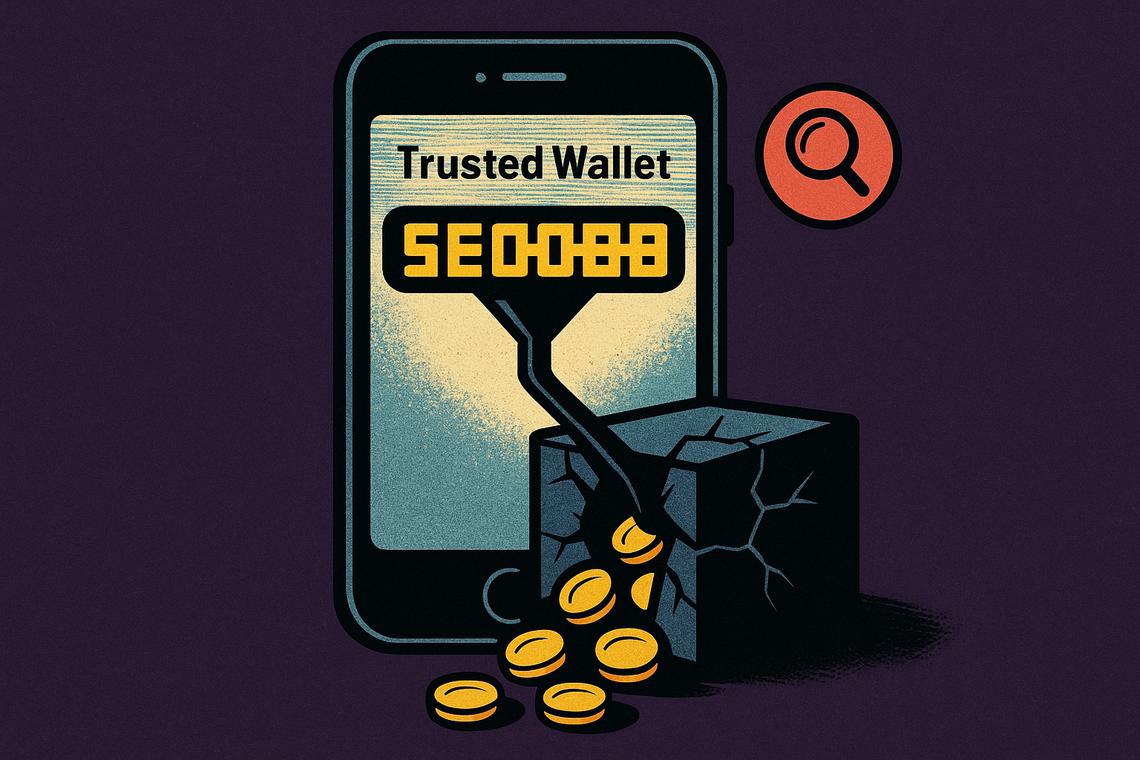
Three Apple customers are suing the company over an Apple Bitcoin wallet lawsuit that could expose one of the tech giant’s most valuable competitive arguments: that its App Store is the safest place to download software. The case, filed Friday in the US District Court for the Northern District of California, claims the plaintiffs collectively lost more than $1.8 million after downloading a fraudulent cryptocurrency wallet app that slipped through Apple’s review process.
Summary
Key takeaways
- Plaintiffs James Ramirez, Christopher Ellis, and Jalen Delgado lost a combined $1.8 million — approximately $875,000, $840,000, and $120,000 respectively — to a fake Sparrow Wallet app on the App Store.
- The victims entered their seed phrases into the fraudulent app, which allowed scammers to drain their Bitcoin holdings.
- Sparrow Wallet has no official iOS app; it is only available on Windows, macOS, and Linux, making it a prime target for impersonation.
- Apple told MacRumors it removed the impersonating apps and terminated the associated developer accounts, and stated there are currently no Sparrow Wallet copycats on the App Store.
- The lawsuit challenges Apple’s long-standing claim that its exclusive App Store control provides users with a uniquely safe environment.
Lawsuit Details and Financial Losses
The three plaintiffs — James Ramirez, Christopher Ellis, and Jalen Delgado — each downloaded what appeared to be Sparrow Wallet, a legitimate Bitcoin storage application. What they got instead was a carefully crafted fake, designed to harvest the one piece of information that gives anyone full control over a crypto wallet: the seed phrase.
Once they entered those phrases, the scammers moved quickly. Ramirez lost approximately $875,000; Ellis lost around $840,000; Delgado lost roughly $120,000. All losses occurred during 2025, according to the complaint obtained by MacRumors and reported by TechCrunch.
The filing, lodged in federal court in Northern California, accuses Apple of negligence, fraudulent and negligent misrepresentation, fraudulent concealment, and failure to warn users about the risks of fake cryptocurrency apps in its marketplace. The plaintiffs also allege that Apple violated consumer protection laws in California, Louisiana, and Massachusetts. They are asking for a jury trial, full reimbursement of their Bitcoin losses, additional damages, and a court order requiring Apple to strengthen its App Store review process and issue clearer warnings about fraudulent crypto apps.
Nature of the Fake Bitcoin Wallet App
Impersonating Sparrow Wallet
The fraudulent app impersonated Sparrow Wallet, a well-known Bitcoin wallet that does not have an official iOS version — it runs only on Windows, macOS, and Linux. That gap in the market created an opening that scammers exploited. By listing a fake Sparrow Wallet app on the App Store, bad actors could target Bitcoin users searching for a mobile version of software they already trusted.
Craig Raw, Sparrow Wallet’s developer, had previously and publicly criticized Apple over fake versions of the app appearing in the App Store. That public record forms part of the complaint’s argument that Apple had been put on notice about the problem well before these three users were defrauded.
Why Seed Phrase Theft Is So Devastating
A seed phrase is essentially a master key to a cryptocurrency wallet. Anyone who holds it gains complete, irrevocable access to the funds inside. Unlike a stolen password, a compromised seed phrase cannot be reset or cancelled. Once the scammers had the phrases these three users entered, the Bitcoin transfers were irreversible. This is what makes seed phrase-harvesting apps so dangerous — and so financially catastrophic for victims.
Apple’s Response and the App Store Security Argument
Apple declined to comment on the lawsuit itself. But the company did defend its platform, telling both MacRumors and TechCrunch that apps impersonating others violate its guidelines and that it takes swift action to remove them. Apple confirmed it had removed the Sparrow Wallet impersonators and terminated the developer accounts linked to those apps. It added that there are currently no Sparrow Wallet copycats on the App Store.
Apple also pointed to its own ecosystem analysis, which found that in 2025 it rejected more than 371,000 app submissions that copied other apps, were spam, or otherwise misled users — and that the App Store prevented more than $9 billion in fraudulent transactions that year, according to the company’s own newsroom figures cited by TechCrunch.
That data matters as context, but it also sharpens the central tension in this case. Apple’s entire defense of its closed App Store model rests on the premise that exclusive control translates into superior safety. The complaint quotes the company’s own marketing language back at it: “Apple has positioned itself, its products and services, as offering a level of security and trustworthiness superior to any competing technology company.” When a fake app causes nearly $2 million in losses, that promise becomes the liability.
Industry Reactions and a Pattern Apple Can’t Easily Dismiss
Craig Raw’s Public Criticism
The involvement of Craig Raw’s prior complaints adds a layer of legal weight to this lawsuit. The filing alleges that Apple knowingly hosted fraudulent apps — pointing specifically to Raw’s public statements that Apple had allowed fake Sparrow Wallet apps to persist on the App Store even after being flagged. That accusation of prior knowledge, if substantiated, could make Apple’s liability argument considerably harder to deflect.
This is also not an isolated incident. According to reporting by 9to5Mac, a fake Trezor wallet app reached the top of App Store search results in 2023 before being removed. A fraudulent Rabby Wallet app was linked to stolen funds in 2024. A fake Ledger Live app distributed through the App Store reportedly stole at least $9.5 million from more than 50 victims as recently as April 2026. And in mid-2025, an iPhone user filed a proposed class action after losing more than $80,000 to a fake trading app called Swiftcrypt — also downloaded from the App Store.
That recurring pattern is the lawsuit’s most powerful subtext. Individual incidents can be dismissed as edge cases. A documented series of them, stretching across multiple years and wallet brands, starts to look like a systemic problem rather than a one-off failure.
What This Means for Apple’s App Store Narrative
Apple has consistently used its App Store review process as a competitive moat — and as a political argument against regulators pushing for third-party app stores and sideloading. The logic has always been: our walled garden keeps you safe. That argument becomes considerably harder to sustain when the company is defending itself in federal court over a fake Bitcoin app that allegedly cost three users nearly $2 million.
The plaintiffs aren’t just asking for money. They’re asking a court to compel Apple to overhaul how it reviews apps and warn users about cryptocurrency fraud risks. If a judge agrees, the consequences could reshape how Apple operates its App Store far beyond this specific case — at precisely the moment when regulators in multiple jurisdictions are already scrutinizing the company’s platform control.
FAQ
What is the basis of the lawsuit against Apple?
Three customers allege they lost a combined $1.8 million by downloading a fake Bitcoin wallet app on the App Store, claiming Apple failed to properly review and monitor apps despite marketing the App Store as a trusted and safe marketplace.
How did the plaintiffs lose their Bitcoin funds?
The plaintiffs entered their seed phrases — master keys that grant full access to a crypto wallet — into the fraudulent app. The scammers then used those phrases to transfer the victims’ Bitcoin to private wallets, with no way to reverse the transactions.
Does Sparrow Wallet have an official iOS app?
No. Sparrow Wallet has no official iOS app and is only available on Windows, macOS, and Linux. The absence of an official mobile version made it easier for scammers to create convincing fakes on the App Store.
What has Apple done about the fake apps?
Apple stated it removed all apps impersonating Sparrow Wallet and terminated the developer accounts associated with those apps. The company also said there are currently no Sparrow Wallet copycats on the App Store and that users can report suspicious apps through its official reporting tool.
Article produced with the assistance of artificial intelligence and reviewed by the editorial team.