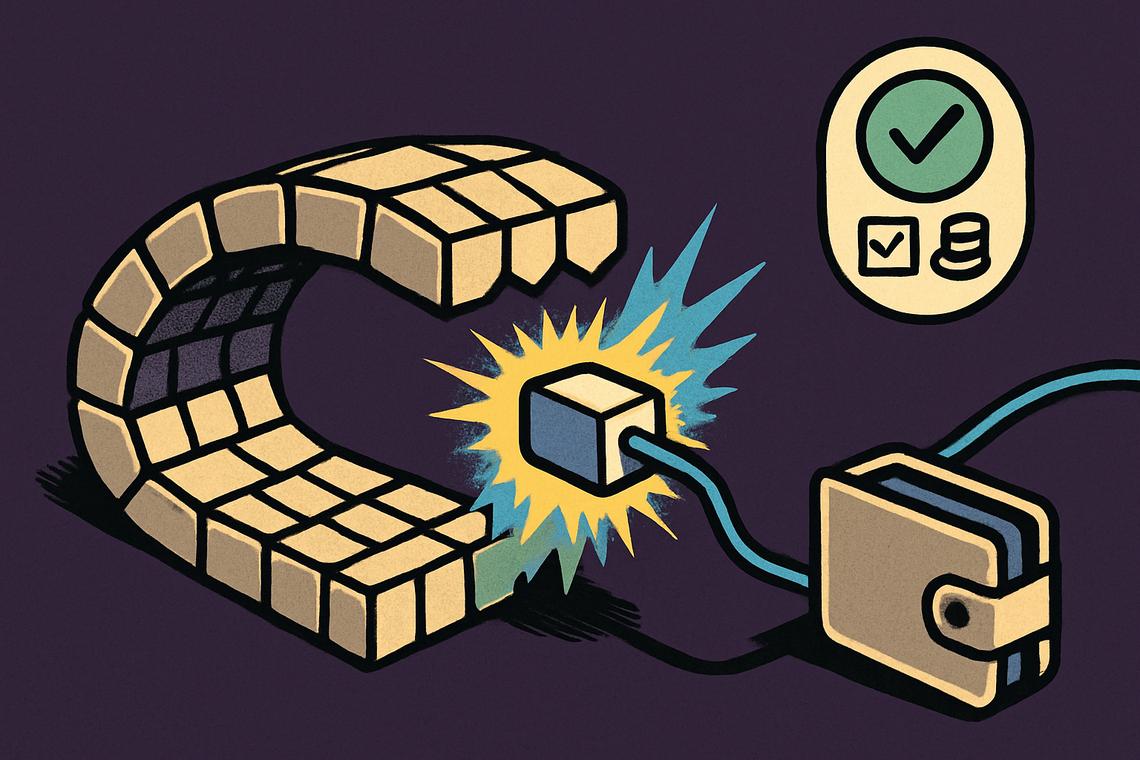
For as long as most Americans have owned stocks, buying a share of Apple or Amazon meant opening a brokerage account, waiting for a trade to clear, and working within market hours set decades ago. Dinari says that era of friction is starting to crack. The fintech announced on Tuesday, August 4, 2026, that it is opening tokenized stock trading to eligible U.S. investors across all 724 companies in the S&P 500, letting them buy and sell shares directly from self-custody crypto wallets using the stablecoin USDC.
Summary
Key takeaways
- Dinari now lets eligible U.S. investors trade tokenized versions of all 724 S&P 500 companies through self-custody wallets funded with USDC.
- The launch runs on a partnership with Circle, removing the need for a traditional brokerage account to buy or sell equities onchain.
- Tokenized shares, called dShares, are backed by real stock held in qualified custody and preserve voting rights, dividends and corporate actions.
- dShares currently trade on Ethereum, Avalanche, Arbitrum and Base, with Sei and Solana support expected soon.
- Dinari’s own disclosures warn that tokenized securities markets can be illiquid and remain subject to evolving regulation.
The rollout builds on regulatory groundwork Dinari had already put in place for its tokenized-equity platform. It pairs a U.S. equities market the company values at more than $75 trillion with a stablecoin sector it says has surpassed $307 billion, framing the launch as a bridge between two financial worlds that, according to Dinari, have operated separately for decades.
Dinari Launches Tokenized Stock Trading for U.S. Investors
Eligible U.S. investors can now access equity exposure to every company in the S&P 500 without ever touching a traditional brokerage screen. That is the headline change behind Dinari’s announcement, and it marks what the company describes as an industry first: a single U.S. platform offering tokenized shares of all 724 index companies through self-custody wallets.
According to Dinari, anyone already holding crypto in a personal wallet can now gain stock exposure using the funds they already have, funding trades instantly with USDC instead of wiring money into a separate account. Crypto Briefing, which also covered the launch, confirmed that eligible investors can buy and sell the full set of 724 tokenized stocks through self-custody wallets, positioning the release as a meaningful expansion of onchain access to U.S. equities.
The practical shift is straightforward: no waiting for a brokerage login, no separate paperwork tied to a specific platform, and no lock-in to a single custodian. That is a real departure from how most Americans have accessed the stock market up to now.
dShares and the Circle Partnership Power Onchain Equity Trading
The mechanism behind the launch is Dinari’s tokenized equity product, dShares, issued in partnership with Circle, the company behind USDC. That partnership is what allows individuals and businesses to buy and sell equities directly onchain rather than routing every trade through a conventional broker.
Each dShare is tied to a corresponding underlying stock held in qualified custody, a structure Dinari says is designed to preserve rights that traditional shareholders expect, including NBBO execution, voting rights, dividends and corporate actions. In practical terms, holding a tokenized share is meant to carry the same protections as holding the real security, just wrapped in a blockchain-native format.
Structure and Rights Behind dShares
Initial launch partners supporting the rollout include Monaco, Eldora and Privy, alongside native USDC dividend support that lets eligible investors receive dividend proceeds directly in USDC and keep that capital onchain for faster reinvestment. That dividend feature matters because it keeps the entire lifecycle of an equity position — buying, holding, earning payouts, and reinvesting — inside the same onchain environment, without investors needing to cash out to a bank account first.
Circle itself declined to comment on the partnership, according to Fortune, citing a quiet period ahead of its upcoming earnings report.
Blockchain Support and the Roadmap Ahead
dShares currently run across four blockchain networks, and two more are on the way. That expansion matters because it determines where and how easily investors can actually hold and move their tokenized equities.
Current Networks and Sei, Solana Plans
Dinari currently supports dShares on Ethereum, Avalanche, Arbitrum and Base, with the company saying support on Sei and Solana is expected soon, though no exact date has been set. Dinari has framed this multi-chain expansion as part of a longer roadmap that could eventually bring continuous, 24/7 trading and faster settlement to tokenized equities — capabilities like T+0 settlement, collateralized lending and margin, and automated portfolio management — all subject to applicable regulatory requirements and further product development.
That roadmap signals where the bigger opportunity may sit. Traditional equity markets settle trades over days and close for nights, weekends and holidays. If Dinari’s onchain infrastructure eventually supports around-the-clock trading with near-instant settlement, it would represent a structural change to how retail investors interact with U.S. equities, not just a new wrapper around the same old market hours.
Risks and Limitations of Tokenized Securities Markets
Dinari’s own disclosures make clear this is not a like-for-like substitute for a brokerage account, and that framing matters for anyone considering the product. The company warns that markets for tokenized securities may be limited, which could make dShares harder to sell at a desired time or price compared with shares trading on a traditional exchange.
Regulatory treatment of tokenized securities also continues to evolve, adding a layer of uncertainty around how the underlying technology will be treated over time. Tokenized stock trading remains an emerging category rather than an established one, and Dinari has been explicit that its own product should be treated as a new access point into equities, not a replacement for the infrastructure and market depth that traditional brokerages have built over decades.
This caution lines up with the broader trajectory of the sector: tokenized stocks are growing fast from a small base, and access is expanding well ahead of the liquidity and regulatory clarity that mature markets typically require.
Gabriel Otte on Bridging Investing and Digital Assets
Dinari co-founder and CEO Gabriel Otte has framed the launch as the moment two financial systems that operated separately for decades finally converge. In the company’s official announcement, Otte said Dinari is “the first platform to let U.S. investors buy and sell tokenized U.S.-listed stocks directly from their own self-custody wallets using USDC,” adding that after years of investing and digital assets existing apart, “this launch brings them together, allowing investors to move seamlessly between stablecoins and U.S. equities while preserving the protections of traditional capital markets.”
Bringing Financial Systems Together
Speaking to Fortune, Otte went further, describing where he sees the technology heading: “One day, I’m predicting … the token itself will be the trusted ledger of the stock. The beauty of that is, then we truly own it.” That comment gets at the deeper thesis behind Dinari’s bet on tokenized equities — not just faster trading, but a shift in who actually controls the record of ownership.
Why this matters for everyday investors is fairly direct: a self-custody wallet and some USDC are now enough to gain exposure to companies across the S&P 500, without a separate brokerage relationship standing in the way. Why it matters for the broader market is less settled — tokenized equities are still a small, developing corner of finance, and their long-term liquidity, regulatory footing, and reliability under stress have yet to be tested at scale.
FAQ
What are dShares and how do they work?
dShares are tokenized equities backed by corresponding stocks held in qualified custody, preserving rights such as voting, dividends, and corporate actions.
Who can trade tokenized stocks through Dinari?
Eligible U.S. investors can trade tokenized stocks of all 724 S&P 500 companies using USDC via self-custody wallets.
What blockchain networks currently support Dinari’s tokenized stocks?
dShares currently run on Ethereum, Avalanche, Arbitrum, and Base, with support for Sei and Solana planned soon.
What are the risks associated with trading tokenized stocks on Dinari?
Risks include limited liquidity, evolving regulatory frameworks, potential operational risks, and the fact that tokenized stocks are an emerging product not equivalent to traditional brokerage holdings.
Article produced with the assistance of artificial intelligence and reviewed by the editorial team.