



A new experiment from the Federal Reserve Bank of Cleveland suggests something markets have long suspected but rarely proven with hard data: simply telling people how much bitcoin has gained in the past is enough to push them toward buying it. The finding sheds fresh light on the bitcoin impact on crypto buyers, showing that past performance alone, not fundamentals or new technology, can be enough to pull new money into digital assets.
Summary
Key takeaways
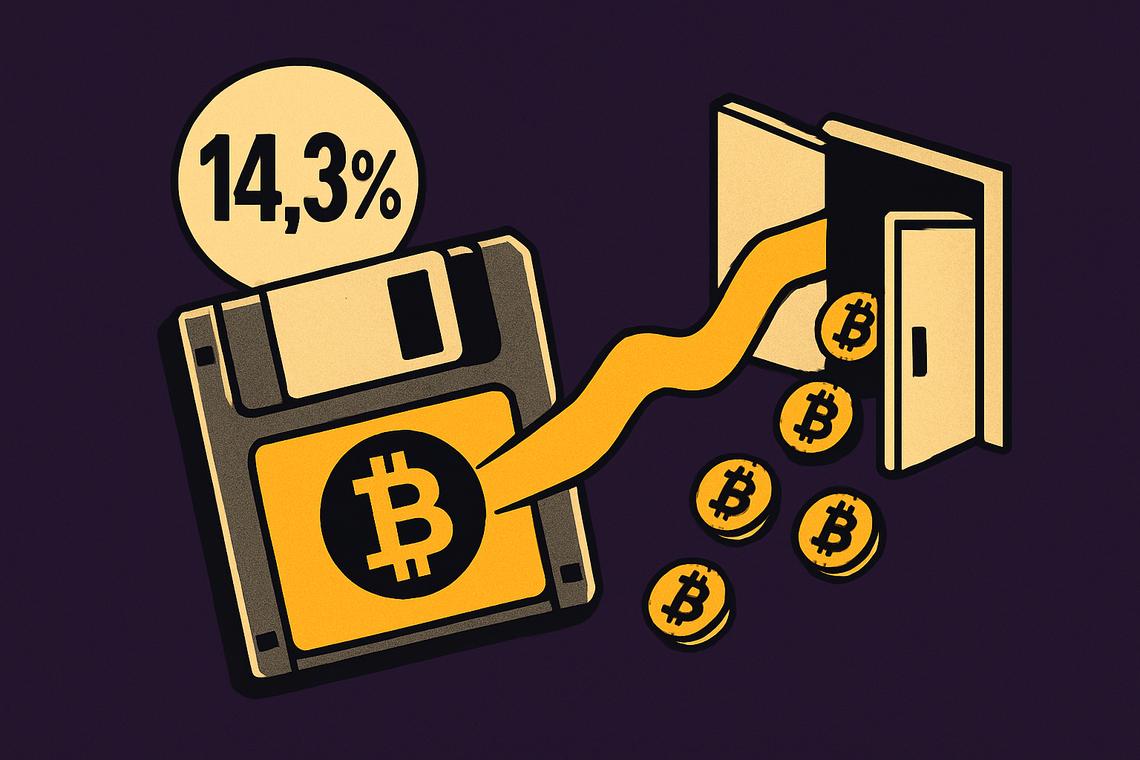
- Showing households bitcoin’s 14.3% one-year return raised later crypto ownership by about 2.5 percentage points, a 23% relative increase.
- Desired crypto allocation rose roughly 2 percentage points, mostly by cutting cash and bank account holdings.
- The response was strongest among people who said they lacked crypto knowledge, and nearly absent among those who already viewed crypto negatively.
- The study covered 5,352 respondents in a 2025 survey wave, controlling for whether they already owned crypto.
- Researchers say the pattern helps explain how speculative bubbles can form, as gains attract buyers who push prices higher still.
Federal Reserve Study Demonstrates Bitcoin Returns Boost Crypto Ownership
Telling people about bitcoin’s recent gains measurably increases the odds they end up owning crypto later on. That is the headline result of a working paper from the Federal Reserve Bank of Cleveland, titled “Do You Even Crypto, Bro? Cryptocurrencies in Household Finance” and released on July 14, 2026, according to reporting from crypto.news. The paper was authored by a group of economists including Michael Weber and Bernardo Candia, with Cointelegraph reporting that Olivier Coibion and Yuriy Gorodnichenko also contributed to the research.
Experimental Design and Sample
Researchers randomly divided participants in a 2025 survey into a control group and six treatment groups. Each treatment group received different information: bitcoin’s price history or recent return, the S&P 500’s performance, data tied to GameStop, or the Federal Reserve’s inflation forecast. One group was told bitcoin’s return over the previous 12 months, which came out to 14.3%, while another was simply shown a price chart with no accompanying return figure.
The ownership portion of the analysis drew on 5,352 respondents surveyed across the second through fourth quarters of 2025. Crucially, the researchers controlled for whether each person already owned crypto before receiving the information, isolating the effect of the new data itself rather than pre-existing interest.
Impact on Crypto Ownership and Allocation
The numbers were striking. Exposure to bitcoin’s return data raised the probability that respondents reported owning crypto in a later survey wave by 2.41 percentage points for one treatment and 2.48 percentage points for the other, depending on how the information was presented. Since roughly 11% of respondents already owned crypto before the experiment, that translates into a 23% relative increase in crypto ownership.
The effect wasn’t limited to ownership rates. Respondents who received bitcoin’s return information immediately raised their desired crypto allocation increased by approximately 2 percentage points relative to the 4.3% figure observed in the control group, according to the Cleveland Fed data. Cointelegraph reported that figure as roughly a 47% jump relative to that baseline. Households largely made room for the extra crypto exposure by trimming their planned cash, checking and savings account holdings while also nudging up their stock allocations.
Notably, a chart of the S&P 500’s own performance also increased subsequent crypto ownership among respondents who saw it, even though stock return information did not change how people wanted to allocate their portfolios. That detail suggests the effect isn’t purely about bitcoin specifically, but points to a broader dynamic in which any evidence of strong returns can nudge people toward crypto.
Bitcoin Returns Influence Return Expectations and Investor Behavior
Beyond changing what people buy, bitcoin’s performance data reshaped what people expected to earn going forward, and that expectation gap looks central to understanding crypto ownership increase patterns more broadly.
Effects on Return Expectations
Being told about bitcoin’s positive performance raised respondents’ expected crypto returns rose by 3.2 percentage points in the subsequent twelve months when measured against the control group. The price chart treatment, without an explicit return figure attached, still increased expectations, but by a smaller 1.2 percentage points.
That gap in expectations mirrors a broader pattern the researchers documented across their household surveys. Crypto owners in the study expected roughly 22% average returns over the coming year, while people without crypto holdings expected just 7%, according to figures reported by crypto.news and Cointelegraph. The researchers also found that expected returns explained more variation in who owns crypto than demographic factors like age, income or gender, an unusual pattern compared with how people invest in stocks, bonds or gold.
Behavioral Responses by Knowledge Level
Not everyone reacted the same way. The response to bitcoin’s return information was strongest among people who said they avoided crypto simply because they didn’t know enough about it. For that group, a single data point about past performance was enough to shift both expectations and actual buying behavior.
By contrast, the combined bitcoin treatments had no statistically significant effect on respondents who already believed crypto was a bad investment. Their skepticism, in other words, wasn’t something a headline return figure could easily undo. That split matters for anyone trying to gauge how much further a rally could pull in new demand: the pool of persuadable buyers appears to be people who are uninformed rather than people who are already convinced crypto is a poor bet.
Implications for Speculative Bubbles in Cryptocurrency Markets
The pattern the Cleveland Fed researchers uncovered offers a plausible mechanical explanation for how a speculative bubble bitcoin cycle can build momentum on itself. Rising prices generate return data. That data, once seen by uninformed or on-the-fence households, increases both expectations and actual purchases. Those purchases add fresh demand, which can push prices higher again, generating the next round of impressive return figures.
Authors’ Conclusions on Feedback Loops and Market Dynamics
The authors put it directly: “Positive returns attract new participants, which raises the price further.” They also noted that people don’t appear to expect their gains to fade. “The experience of high returns in the past does not seem to lead individuals to expect any mean reversion; extrapolation of past returns into future returns seems to be the rule,” the paper states.
That extrapolation instinct, paired with the fact that crypto remains poorly understood by a large share of the population, is what gives the feedback loop its staying power. The researchers concluded that the disconnect in beliefs across investors, rather than fundamentals alone, helps explain why cryptocurrency price swings have been so persistent, and why they are likely to remain a defining feature of the asset class going forward. This broader Federal Reserve bitcoin study effectively formalizes a dynamic traders have described anecdotally for years: rallies don’t just reward existing holders, they recruit new ones.
For markets, the implication is straightforward but uncomfortable. The next wave of retail demand for bitcoin may hinge less on any single catalyst and more on how loudly its past gains get repeated back to people who haven’t yet bought in.
FAQ
How does showing bitcoin’s past returns affect crypto ownership?
Showing households bitcoin’s 14.3% return increased later crypto ownership by about 2.5 percentage points, a 23% relative increase, according to the Federal Reserve Bank of Cleveland’s working paper.
What portfolio changes occur after seeing bitcoin performance data?
Desired crypto allocation rose about 2 percentage points, mostly by reducing cash, checking, and savings account holdings, with some households also adjusting their planned stock exposure.
Does bitcoin past performance information influence all potential investors equally?
No. The effect was strongest among people who lacked crypto knowledge, and it had no statistically significant effect on those who already considered crypto a bad investment.
What do the authors conclude about bitcoin price movements and speculative bubbles?
The authors concluded that high past returns attract new buyers, which raises prices further and potentially fuels speculative bubbles, since gains generate expectations that pull in additional demand.
Article produced with the assistance of artificial intelligence and reviewed by the editorial team.
