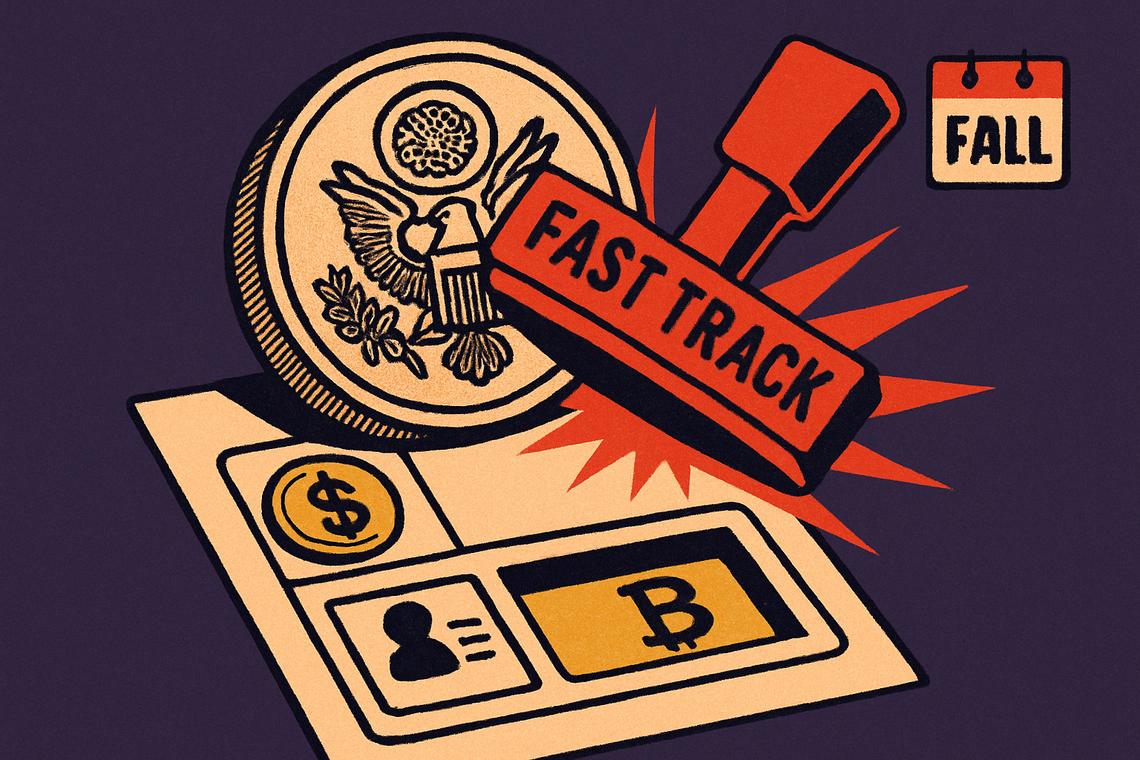
South Korea’s financial watchdog says it’s done waiting. The country’s top financial regulator has signaled it will accelerate discussions on South Korea crypto legislation, setting the stage for one of the most closely watched digital asset bills in Asia. According to The Block, the regulator now aims to introduce its version of the Digital Asset Basic Act sometime this fall, a timeline that would put South Korea on a faster track toward a full regulatory framework for stablecoins, exchanges, and crypto investment products.
Summary
Key takeaways
- South Korea’s top financial regulator plans to speed up talks on a comprehensive crypto bill.
- The Digital Asset Basic Act is targeted for introduction in the fall.
- The bill is expected to set rules for stablecoin issuance, VASP licensing, and bitcoin ETFs.
- The move would give South Korea one of the more detailed digital asset frameworks in the region.
South Korea Moves to Fast-Track Its Digital Asset Basic Act
South Korea’s regulator is speeding up work on legislation that has been in the pipeline for some time, according to a report by The Block. The push signals that officials no longer want piecemeal oversight of the crypto sector and are instead aiming for a single, unified law that spells out the rules for issuers, exchanges, and investment products all at once.
A Fall Deadline for Comprehensive Crypto Rules
The regulator’s stated goal is to bring its version of the Digital Asset Basic Act forward in the fall. That timeframe gives lawmakers and industry players a concrete window to prepare, even though the exact date within the season hasn’t been specified. For a market that has spent years operating under fragmented guidance, a firm legislative target — even a seasonal one — marks a shift toward more predictable crypto regulation in South Korea.
What the New Bill Would Regulate
The Digital Asset Basic Act is expected to touch three areas that have long needed clearer rules: how stablecoins are issued, who qualifies to operate as a licensed crypto business, and how bitcoin-linked investment products fit into the country’s financial system.
Stablecoin Issuance Rules
At the center of the bill are new stablecoin rules for South Korea, which would establish who can issue a stablecoin and under what conditions. Stablecoins have become a central piece of global crypto infrastructure, and putting formal issuance standards in place would give both domestic and foreign issuers a clearer path to operate legally inside the country.
VASP Licensing and Bitcoin ETF Provisions
The legislation is also set to cover Virtual Asset Service Provider, or VASP, licensing — the framework that governs which exchanges and crypto businesses can legally serve South Korean users. On top of that, the bill is expected to include provisions specifically addressing bitcoin ETFs, an area that has drawn growing interest from investors seeking regulated exposure to digital assets without holding the tokens directly.
Why This Matters for South Korea’s Crypto Market
Taken together, these three pillars — stablecoin issuance, VASP licensing, and bitcoin ETF provisions — would give South Korea one of the more comprehensive digital asset laws to emerge from a major Asian economy this year. A clear legal foundation tends to reduce the guesswork that discourages larger financial institutions from entering a market, so formalizing these rules could open the door to more regulated products and services down the line.
It also puts South Korea in step with a broader global pattern: regulators from the United States to the European Union have been moving toward defined stablecoin and licensing regimes rather than relying on case-by-case enforcement. If the Digital Asset Basic Act lands as described, it would give issuers, exchanges, and investors a rulebook to plan around instead of a patchwork of informal guidance — and that kind of clarity is often what separates a market that attracts institutional capital from one that keeps it on the sidelines.
None of this changes the underlying uncertainty that comes with any bill still in the drafting stage. The fall target is a goal, not a guaranteed date, and the specifics of enforcement, licensing thresholds, and consumer safeguards will only become clear once draft text is published. Still, the direction is unmistakable: South Korea’s regulator wants a single, coherent framework for crypto legislation rather than a slow accumulation of separate rules.
FAQ
What is South Korea’s financial regulator planning regarding crypto legislation?
South Korea’s top financial regulator plans to accelerate discussions and introduce the Digital Asset Basic Act by fall.
Which key areas will the Digital Asset Basic Act cover?
The bill is expected to regulate stablecoin issuance, VASP licensing, and include provisions for bitcoin ETFs.
When is South Korea expected to introduce the Digital Asset Basic Act?
The introduction is targeted for the fall, according to the regulator’s stated timeline.
Article produced with the assistance of artificial intelligence and reviewed by the editorial team.