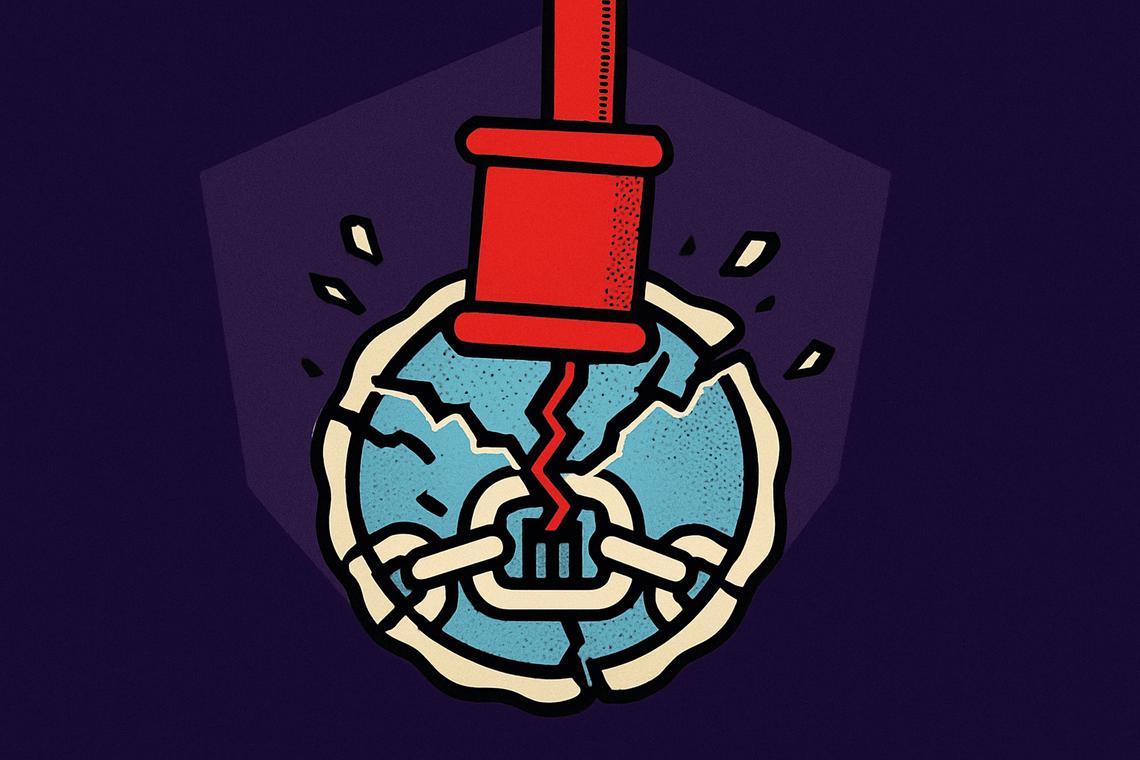
A federal judge has delivered a sweeping rebuke to the Pentagon, ruling that its attempt to blacklist Anthropic as a national security threat was unconstitutional. The Pentagon AI blacklist ruling, handed down by U.S. District Judge Rita Lin in California, found that the Department of War violated Anthropic’s First Amendment right to free speech and its Fifth Amendment right to due process when it labeled the AI company a “supply chain risk” earlier this year. The decision marks one of the first major legal tests of how far the government can go in punishing AI companies for pushing back on military demands.
Summary
Key takeaways
- Judge Rita Lin ruled the Pentagon’s “supply chain risk” designation against Anthropic was illegal, violating the First and Fifth Amendments.
- Anthropic became the first U.S. company ever publicly hit with the supply chain risk label, a status typically reserved for foreign firms like Huawei or Kaspersky Lab.
- The designation followed Anthropic’s refusal to let its Claude models be used for autonomous weapons or domestic mass surveillance.
- The ruling blocks federal agencies from enforcing the blacklist, but a separate case over a related designation is still pending before an appeals panel in Washington, D.C.
- Anthropic says it “welcomes” the decision, even as the company weighs a reported IPO that could value it near $2 trillion.
Federal Court Invalidates Pentagon’s AI Blacklist Against Anthropic
Judge Lin’s 59-page order concluded that the Pentagon had no legitimate basis for branding Anthropic a threat to military supply chains, and that the move looked far more like retaliation than risk management. That finding is the heart of the Pentagon AI blacklist ruling, and it effectively strips the designation of its legal force across the federal agencies named in Anthropic’s lawsuit.
What the “Supply Chain Risk” Label Actually Means
The “supply chain risk” status is normally applied to foreign entities suspected of exposing U.S. military systems to sabotage or infiltration — companies like Huawei or Kaspersky Lab have carried the label in the past. When Defense Secretary Pete Hegseth applied it to Anthropic, an American firm, it marked the first time in U.S. history that designation had been used against a domestic company. The label barred federal agencies and defense contractors from doing business with Anthropic, including use of its Claude-based systems such as Mythos and Fable.
Judge Rita Lin’s Legal Reasoning
Lin, sitting on the U.S. District Court for the Northern District of California, didn’t mince words in her ruling. “The empty invocation of national security is not a blank check to punish and retaliate against government critics,” she wrote. She also found that the Pentagon had failed to give Anthropic meaningful notice or a chance to respond before slapping on the designation — a procedural failure that, on its own, violated the company’s due process rights under the Fifth Amendment. “Though the Department of War is undisputedly free to select the AI vendor of its choice,” Lin added, “the evidence demonstrates that the broad measures imposed on Anthropic were illegal and baseless.”
Why Anthropic Ended Up on the Blacklist
The blacklist traces back to a monthslong standoff between Anthropic and Pentagon leadership over how far military AI should be allowed to go. Anthropic refused to let its Claude models be used in fully autonomous lethal weapons or for domestic mass surveillance — conditions the Pentagon would not accept.
Refusing Autonomous Weapons and Mass Surveillance
Anthropic has consistently argued that current AI models aren’t reliable enough to be trusted with autonomous weapons systems, and that using its technology for surveillance of American citizens would cross a rights-based line the company wasn’t willing to hold. Hegseth responded by accusing Anthropic of “arrogance and betrayal,” and in February, Donald Trump directed federal agencies to stop using the company’s technology altogether. That standoff escalated into the supply chain risk designation and, ultimately, Anthropic’s March 9 lawsuit against the Department of War.
A Reputational Hit That Outlasts the Courtroom Win
Winning in court hasn’t erased the damage. Anthropic executives had warned that the blacklist could cost the company billions of dollars in lost business, and even with the designation now overturned, the firm may have permanently lost the Pentagon as a customer. That’s a striking reminder that legal victories don’t automatically repair market relationships — a reputational scar from being publicly branded a national security risk doesn’t disappear just because a judge calls the label unlawful.
The stakes go beyond one contract dispute. Anthropic is reportedly preparing for an IPO later this year that could value the company near $2 trillion and raise $100 billion, a figure that would top the record set by SpaceX in June. A cloud over its relationship with the federal government — even a legally discredited one — is the kind of thing investors watch closely.
Constitutional Stakes and What Changes for the AI Industry
The ruling draws a hard line against using national security labels as a political weapon, and it does so in a way that could reshape how AI companies think about pushing back on government demands. This matters because, until now, firms had little legal cover if they refused military requests and got punished for it through procurement power instead of open debate.
First Amendment Protections Meet Government Contracting Power
Anthropic’s case leaned heavily on the “unconstitutional conditions doctrine” — the Supreme Court principle that the government can’t force companies to trade away constitutional rights in exchange for contracts or benefits. Judge Lin’s decision effectively affirms that AI companies can voice concerns about military use of their technology without automatically forfeiting access to federal business. That’s a meaningful signal for an industry where nearly every major player has some kind of government relationship on the line.
A Precedent Against Retaliation — But Not a Full Shield
The Justice Department had countered that the designation stemmed from Anthropic’s refusal to accept certain contractual terms, not its views on AI safety, arguing that the restrictions could create uncertainty in how the Pentagon uses Claude and risk disabling military systems during operations. Lin rejected that framing, but the fight isn’t fully over. A second, related lawsuit over a separate supply chain risk designation is still pending in Washington, D.C., where a three-judge appeals panel — two of them Trump appointees — has reportedly expressed skepticism toward Anthropic’s arguments. The original designation, notably, remains technically on the books while that case plays out, even though enforcement of it has now been blocked.
An Anthropic spokesperson said the company “welcomes the court’s ruling that this supply chain risk designation was unlawful.” The Pentagon, for its part, maintains that private companies shouldn’t be able to constrain military decision-making — a tension that this ruling settles for now, but likely not for good.
FAQ
Why did the Pentagon blacklist Anthropic?
Anthropic was labeled a supply chain risk after publicly opposing the use of its AI for autonomous weapons and mass surveillance, conditions the Pentagon refused to accept.
What constitutional rights did the blacklist violate?
The blacklist violated Anthropic’s First Amendment right to free speech and its Fifth Amendment right to due process, according to Judge Rita Lin’s ruling.
What precedent does the ruling set for AI companies?
The ruling limits the government’s ability to use national security labels and procurement power to retaliate against AI companies that criticize government policy, potentially shaping how future disputes between tech firms and the Pentagon play out.
Does Anthropic remain blacklisted after the ruling?
The supply chain risk label technically remains on the books pending a related appeal in Washington, D.C., but the court has barred federal agencies from enforcing the blacklist against Anthropic.
Article produced with the assistance of artificial intelligence and reviewed by the editorial team.