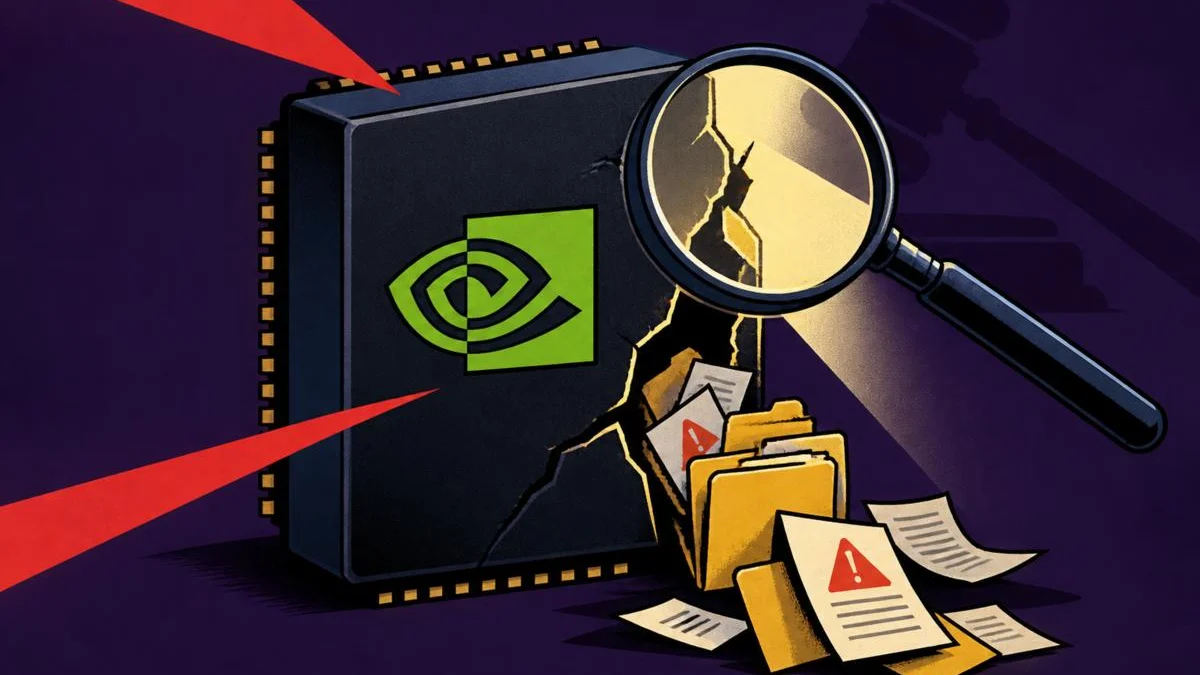
Jensen Huang regained Nvidia’s top job on November 23, but the Nvidia CEO controversy extends well beyond his reinstatement: federal agencies, congressional committees and California authorities are still investigating Huang, the company and its customers. Nvidia’s board unanimously restored him as president, chief executive and director, effective immediately, after intervention from President Donald Trump.
Summary
Key takeaways
- Huang’s reinstatement leaves multiple investigations active.
- Trump urged Nvidia’s directors to bring Huang back.
- Nvidia shares closed 31% higher following the decision.
- Congressional appearances are scheduled for early December.
Huang resigned on November 12 following revelations of extramarital affairs, including a relationship with a woman U.S. intelligence agencies believed was a Chinese spy. His return ended an 11-day absence and reversed the board’s earlier position that it would not reinstate him.
Investigations continue amid the Nvidia CEO controversy
Huang, Nvidia and its customers remain subject to investigations involving the SEC, FBI, Commerce Department and Justice Department, alongside three House committees and one Senate committee. Nvidia’s outside counsel is conducting an internal corporate probe, and the California attorney general’s office is also investigating. Civil litigation adds another source of legal exposure.
California Attorney General Rob Bonta’s office confirmed that its inquiry would continue despite the reinstatement, focusing on whether Nvidia misled investors and the public.
The SEC investigation includes scrutiny of Nvidia’s accounting practices. Serving as Nvidia’s longtime chief financial officer and briefly as interim CEO, Colette Kress had internally questioned the company’s financial backing of loans extended to AI startups purchasing its chips, probing issues such as borrower selection criteria and the valuation of guarantees.
On Nvidia’s November 17 earnings call, Kress said: “We are rigorously evaluating future investments, commitments, and guarantees.” She added that the company would be “disciplined and selective in our support.”
Huang also disclosed additional affairs to directors on Sunday night, beyond the two previously reported.
Huang is scheduled for a closed-door interview with the House Intelligence, Foreign Affairs and Chinese Communist Party committees on December 1. Nvidia’s general counsel is scheduled to appear on December 2, followed by Huang’s public appearance before the Senate Banking Committee on December 3.
Trump’s intervention and the board’s reversal
Trump personally urged Nvidia’s directors to reinstate Huang, calling into a board meeting. Nvidia said the unanimous decision followed discussions with Huang and input from senior U.S. government officials.
The board had previously begun searching for a replacement but found few candidates willing to take the job. On November 17, chairman Harvey Jones had said directors did not intend to bring Huang back.
Kress was excluded from Sunday’s board meeting, which was kept secret from her. She has served as Nvidia’s CFO for 13 years and returned to that role after Huang’s reinstatement. Nvidia thanked her for serving as interim chief executive alongside her finance responsibilities.
The reversal also produced a sharp market response. After Huang’s reinstatement, Nvidia shares surged 31% higher, recovering from a nearly 33% decline that began when he admitted to an affair on November 8. As the stock bounced back, Trump personally pocketed $15 million in gains.
Competing national security assessments
Nvidia’s board said it was confident Huang’s return posed no national security risk. Trump likewise said the federal government had no reason to believe his reinstatement presented such a risk.
Senator Kevin Cramer challenged the decision in a Facebook statement, warning about potential espionage and export-control violations and the possibility of extortion by a Chinese asset. He argued that Nvidia’s directors would bear the legal and reputational exposure, while national security consequences would fall on the U.S. military and citizens.
Political lobbying extended beyond Trump. During his absence, Huang held a 45-minute phone call with Vice President J.D. Vance. Huang’s Silicon Valley allies also portrayed him to Trump as a victim of the “deep state,” drawing on the president’s mistrust of U.S. intelligence agencies.
Nvidia established a national security and export-control oversight panel following the revelations. Senator Elizabeth Warren said the reinstatement did not remove the obligation of Huang, company executives and directors to answer Congress’s questions about export-control compliance.
Employees welcome Huang back to headquarters
Huang returned to Nvidia’s headquarters in Santa Clara, California, on November 23 to a standing ovation from employees. In a statement, he thanked employees, shareholders, industry leaders and partners for their support.
“This is my first day of work,” he told employees. “I don’t have a computer, so the I.T. department is going to give me a new P.C.”
Read also: Nvidia shares in free fall: the Chinese model DeepSeek changes the rules of the AI sector
Article produced with the assistance of artificial intelligence and reviewed by the editorial team.