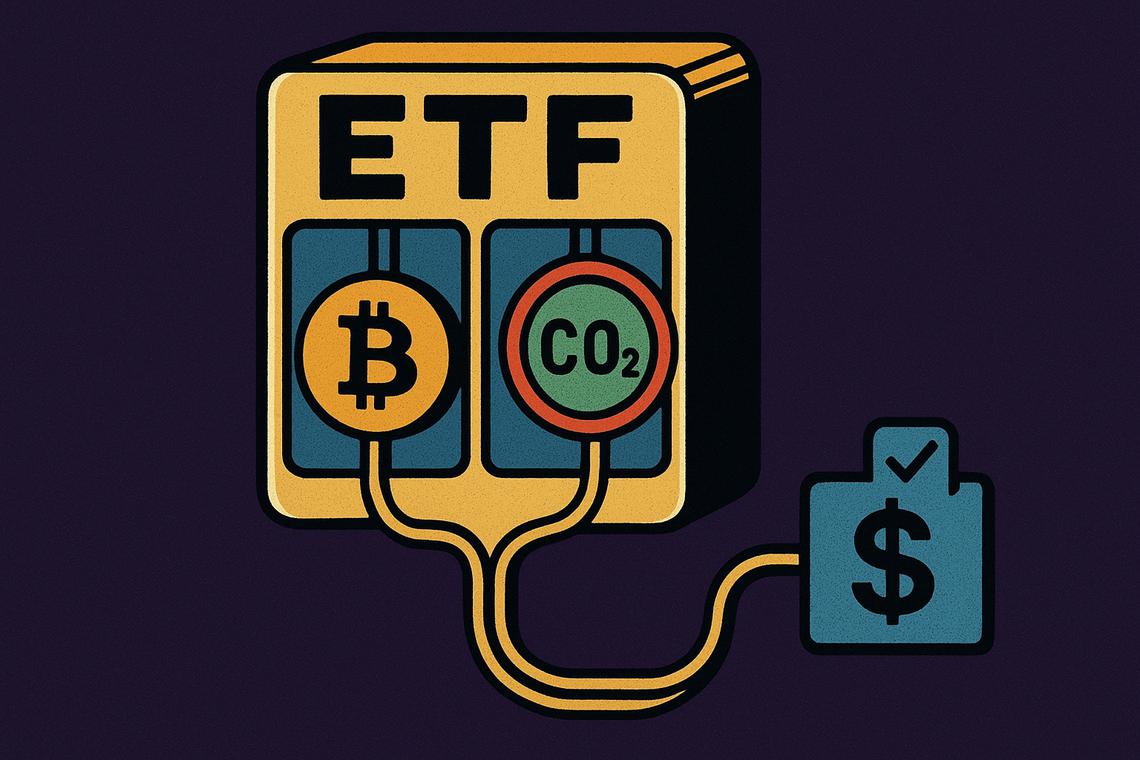
A new 7RCC Bitcoin carbon credit ETF has started trading on NYSE Arca, pairing Bitcoin with regulated carbon credit futures in one of the most unusual crypto fund launches yet.
7RCC Global’s BTCK, the 7RCC Bitcoin carbon credit ETF, began trading this week under that ticker. The fund gives investors simultaneous exposure to two asset classes that rarely appear in the same investment vehicle, with 80% of assets allocated to Bitcoin and the remaining 20% tied to carbon credit futures from some of the world’s largest regulated emissions markets.
It has taken nearly two and a half years to reach the market. In 2023, 7RCC filed its plans with the U.S. Securities and Exchange Commission, making it one of the earliest proposals to add an ESG dimension to a Bitcoin-backed fund structure. Now, the product is live.
Summary
7RCC launches a Bitcoin and carbon credit ETF on NYSE Arca
What the BTCK ETF actually holds
The BTCK ETF is simple to describe, but it is still unusual in practice. Most crypto ETFs launched in the U.S. over the past couple of years have offered pure Bitcoin exposure, including spot Bitcoin ETFs that track the asset directly. BTCK takes a different path. While most of the fund follows Bitcoin price movements, a significant portion goes into carbon credit futures linked to three regulated programs: the European Union Emissions Trading System, California’s Cap-and-Trade program, and the Regional Greenhouse Gas Initiative.
These are not niche markets. The EU ETS is one of the largest carbon pricing systems in the world, while California’s program remains a central part of North American climate policy. As a result, the fund connects Bitcoin with a corner of environmental finance that has usually been kept separate from crypto investing.
The fund began trading on NYSE Arca, one of the main U.S. exchanges for ETF listings. That gives the 7RCC Bitcoin carbon credit ETF access to investors through standard brokerage platforms.
How the index and fund structure work
BTCK tracks the 7RCC Kaiko Bitcoin Carbon Credit Index, which reflects daily changes in the combined value of both asset classes, minus expenses. Kaiko administers the index, while Solactive AG calculates it. Both are established names in financial data, and that adds a level of institutional credibility to the product.
Structurally, BTCK is a series of Teucrium Commodity Trust and is sponsored by Teucrium Trading LLC. PINE Distributors LLC serves as the fund’s marketing agent. Bitcoin custody is handled by Gemini Trust Company, while U.S. Bank serves as cash custodian and administrator.
That lineup matters because it combines crypto and traditional market infrastructure. Teucrium has experience with commodity-linked ETFs, Gemini is a regulated U.S. crypto custodian, and U.S. Bank provides the back-office support that many institutional investors expect.
Why the Bitcoin carbon credit ETF stands out
Carbon credit futures tied to regulated emissions markets
The 20% carbon allocation is what makes BTCK especially notable. Instead of buying carbon credits directly or using tokenized instruments, the fund accesses these markets through regulated futures contracts. In practice, that keeps the product within familiar regulatory territory while still linking it to price movements driven by emissions policy, compliance demand, and climate regulation.
The three markets tied to the fund — EU ETS, California Cap-and-Trade, and RGGI — operate under different legal frameworks and serve different purposes. EU ETS covers a broad range of industrial emitters across Europe. California’s program targets the state’s economy. RGGI focuses on power sector emissions across a coalition of northeastern U.S. states. Together, they create a diverse set of environmental market exposures.
Two asset classes with different drivers
That difference is central to the fund’s pitch. Rali Perduhova, co-founder and CEO of 7RCC Global, said the product brings together “two asset classes driven by distinct market forces.” Bitcoin is shaped by adoption trends, monetary dynamics, halving cycles, and investor sentiment. Carbon credit prices, meanwhile, respond to emissions policy shifts, regulatory compliance requirements, energy market conditions, and international climate agreements.
In theory, that means the two parts of the portfolio should not move in lockstep. Bitcoin may rise in a risk-on market, while carbon credits react to changes in regulation in Brussels or Sacramento. Still, whether that low-correlation idea holds over time is the key question for investors considering BTCK.
“We started 7RCC because we believed digital assets would become a permanent part of the global financial system and that investors would want them in familiar, regulated structures built for the long term,” Perduhova said. She added that the 80/20 structure offers transparent access to exposures that have historically been difficult to hold in a single investment vehicle.
What investors get from BTCK
One of BTCK’s biggest selling points is access. Investors do not need a cryptocurrency exchange account, a digital wallet, or direct Bitcoin custody. Instead, they can buy and hold the fund through a standard brokerage account, just as they would with any listed ETF.
That matters for institutional buyers. Pension funds, registered investment advisers, and wealth managers often face internal or regulatory limits on direct crypto ownership. A listed ETF that combines Bitcoin and carbon credit futures can clear many of those hurdles in one product.
ETF analyst Nate Geraci noted the original SEC filing in 2023 and described it as one of the first serious attempts to merge spot Bitcoin exposure with environmental market investment. Since then, both Bitcoin ETF demand and institutional interest in carbon-related products have grown.
For example, JPMorgan’s blockchain division, Kinexys, partnered with S&P Global Commodity Insights, EcoRegistry, and the International Carbon Registry in July 2025 to test blockchain-based tokenization of carbon credits. That is a separate approach from BTCK, but it points to the same broader trend: carbon markets are drawing more institutional attention.
BTCK now places 7RCC at the intersection of that momentum. For investors looking at climate finance and Bitcoin in the same wrapper, the 7RCC Bitcoin carbon credit ETF offers a regulated, exchange-listed option at a time when both markets are attracting interest on their own terms.
FAQ
What is the asset allocation of the BTCK ETF?
BTCK allocates 80% of its assets to Bitcoin and 20% to regulated carbon credit futures.
Which regulated carbon markets are linked with BTCK’s carbon credit futures?
The fund’s carbon credit futures are linked to the European Union Emissions Trading System (EU ETS), California’s Cap-and-Trade program, and the Regional Greenhouse Gas Initiative (RGGI).
How does BTCK provide investor access to Bitcoin without needing crypto wallets?
BTCK is a listed ETF traded on NYSE Arca, so investors can buy and hold it through a standard brokerage account without opening a cryptocurrency exchange account or managing a digital wallet.
Who holds custody and administers the BTCK ETF?
Gemini Trust Company holds the fund’s Bitcoin, while U.S. Bank serves as cash custodian and administrator. The fund is sponsored by Teucrium Trading LLC.
What index does BTCK track?
BTCK tracks the 7RCC Kaiko Bitcoin Carbon Credit Index, which reflects daily changes in the combined value of both asset classes, minus expenses. Kaiko administers the index, and Solactive AG calculates it.