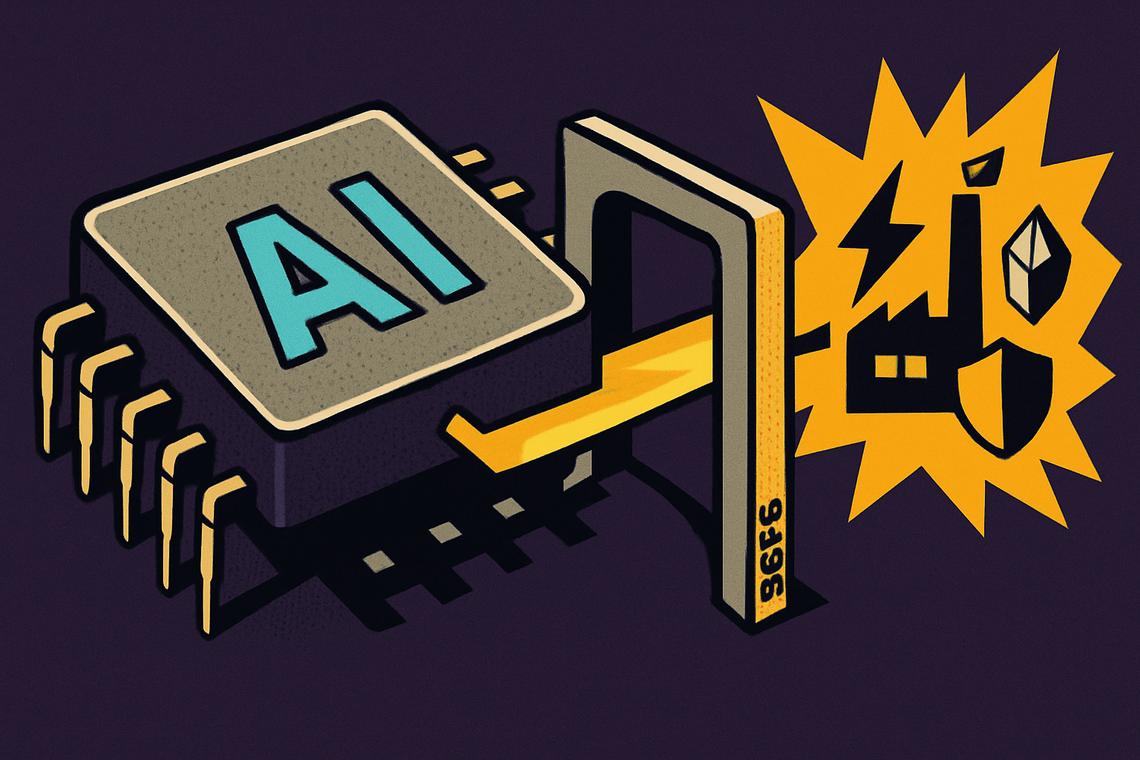
Venture capital firms rarely announce a $10 billion bet in a single breath, but that’s exactly what Sequoia Capital just did. The Sequoia Capital AI investment, unveiled around August 6, 2026, marks the firm’s largest commitment ever, pairing traditional artificial intelligence bets with a parallel push into what Sequoia calls “reindustrialization” — a mix of manufacturing, defense technology, energy, and critical minerals. It’s a signal that one of Silicon Valley’s most storied investors no longer sees AI as a purely digital story.
Summary
Key takeaways
- Sequoia Capital committed roughly $10 billion to AI and reindustrialization investments, its largest bet ever.
- The commitment builds on a $7 billion expansion fund Sequoia closed earlier in 2026.
- Reindustrialization targets include domestic manufacturing, energy infrastructure, defense technology, and critical minerals.
- Co-leaders Alfred Lin and Pat Grady are now accepting higher-valued deals than the firm previously would.
- Sequoia increased its stake in Anthropic, adding to existing exposure in OpenAI and xAI.
Sequoia Capital’s record $10 billion investment
Sequoia Capital’s decision to commit roughly $10 billion to artificial intelligence and reindustrialization is, by the firm’s own framing, its biggest bet in its history. That scale alone sets it apart from previous funding rounds and signals a strategic pivot toward what the firm describes as higher-conviction AI investing — a shift away from the cautious, wait-and-see posture that had defined its approach to the sector until now.
Largest-ever strategic pivot to AI
The size of the commitment matters less as a number and more as a statement of intent. Sequoia is essentially telling the market that it believes the next phase of AI growth won’t be won by software alone, and that firms sitting on the sidelines of physical infrastructure risk missing the bigger opportunity.
Foundation laid by a $7 billion 2026 expansion fund
This didn’t happen overnight. Earlier in 2026, Sequoia closed a $7 billion expansion fund that was already considered an aggressive move at the time. The fresh $10 billion commitment builds directly on top of that fund, effectively doubling down on a strategy the firm had only just begun to test.
Focus areas: AI technologies and physical infrastructure
Sequoia’s thesis rests on a simple idea: the most valuable opportunities in AI right now sit not just in chatbots and language models, but in the physical systems that keep those models running. The firm describes this approach as investing “where bits meet atoms.”
Linking digital AI models to physical assets
In practice, that means Sequoia is chasing deals in chips, data centers, power plants, and the supply chains that make advanced AI systems possible. Training and running large AI models consumes enormous amounts of energy, and deploying AI across manufacturing, logistics, and defense requires actual hardware — robots, sensors, and materials that don’t exist as lines of code. This is the core reason the reindustrialization venture capital angle can’t be separated from the AI story; one depends on the other.
Reindustrialization targets: manufacturing, energy, defense, and critical minerals
Beyond AI models themselves, Sequoia is directing capital toward domestic manufacturing, defense technology, energy infrastructure, and critical minerals. This is the reindustrialization piece of the commitment, and arguably the more revealing part of the strategy. While the AI side of the bet draws the headlines, the reindustrialization thesis points to where Sequoia thinks the next bottlenecks — and the next big returns — will actually form.
Why this matters: if AI adoption keeps accelerating without matching investment in energy grids, chip supply, and raw materials, the entire industry could hit a wall regardless of how advanced the underlying models become. Sequoia’s bet suggests the firm sees infrastructure, not algorithms, as the next constraint worth solving.
Leadership and investment strategy shift
Under new co-leaders Alfred Lin and Pat Grady, Sequoia is showing a clear appetite for risk that wasn’t there before. The firm is now pursuing deals at valuations it would have previously avoided, a change in posture that reflects broader confidence in where the AI market is heading — and perhaps some urgency not to be priced out of the biggest names in the space.
Higher-valued deal acceptance under new co-leaders
This willingness to pay up for access marks a departure from Sequoia’s historically measured style. Accepting steeper valuations carries obvious risk if growth slows, but it also reflects a bet that the AI infrastructure buildout is still in its early innings, and that waiting for prices to cool could mean missing the window entirely.
Diversifying AI bets with an increased Anthropic stake
One concrete move illustrates the new approach: Sequoia recently increased its stake in Anthropic, the developer behind the Claude model family. That’s notable because Sequoia has historically been a prominent backer of OpenAI and xAI. Expanding Anthropic AI funding exposure alongside those existing positions suggests Sequoia prefers to spread investments across multiple frontier models instead of putting all risk into one AI platform winner.
Sequoia’s portfolio already spans numerous AI companies at different growth stages, giving the firm an unusually broad view of where technical and infrastructure bottlenecks are forming across the sector. That vantage point may be exactly what’s driving this shift from cautious spectator to aggressive AI manufacturing reshoring backer — a firm that once picked winners in software now appears determined to also own a piece of the machinery, energy, and materials that make those winners possible.
FAQ
What is the scale of Sequoia Capital’s new investment in AI and reindustrialization?
Sequoia Capital committed roughly $10 billion to artificial intelligence and reindustrialization investments, making it the firm’s largest bet on record.
How does Sequoia Capital’s new investment strategy differ from prior approaches?
The firm shifted from a measured, cautious approach to a higher-conviction pivot, with co-leaders Alfred Lin and Pat Grady now accepting higher-valued deals than Sequoia previously would.
What areas does Sequoia target beyond digital AI technologies?
Sequoia is targeting physical infrastructure that includes domestic manufacturing, defense technology, energy infrastructure, and critical minerals — the core of its reindustrialization thesis.
How has Sequoia diversified its AI model investments?
Sequoia increased its stake in Anthropic, adding to its existing investments in OpenAI and xAI, spreading its exposure across leading AI model developers rather than concentrating on a single platform.
Article produced with the assistance of artificial intelligence and reviewed by the editorial team.