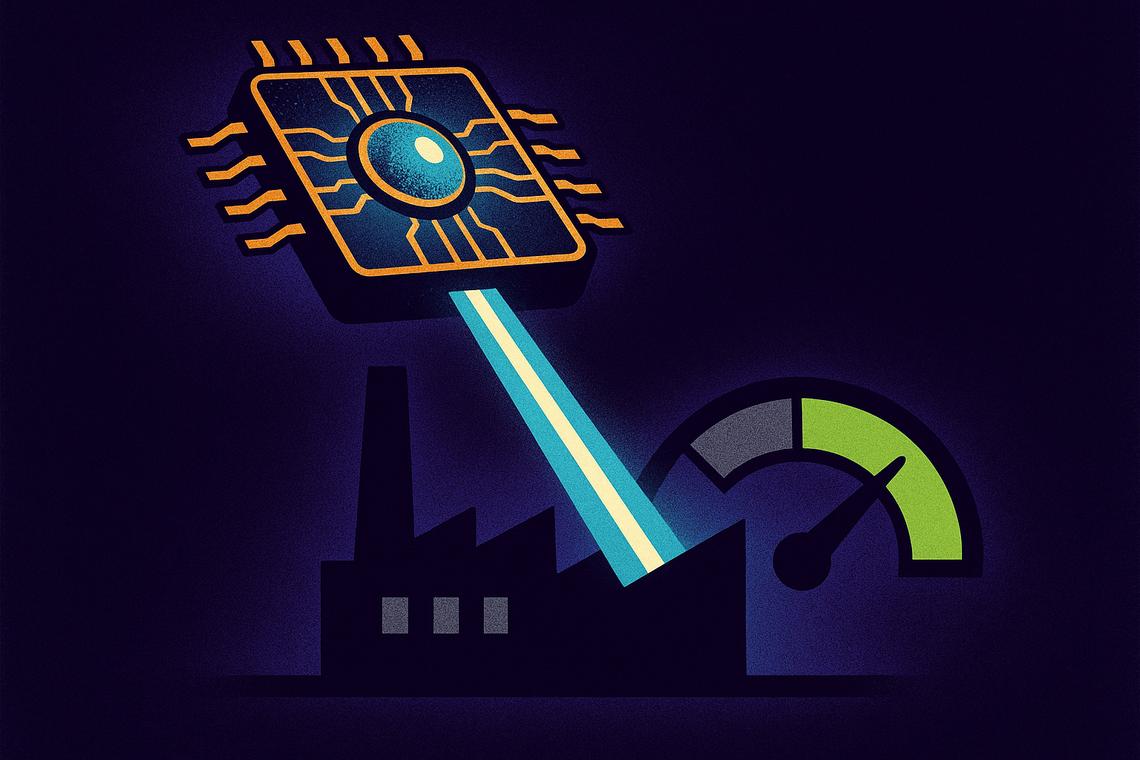
China’s manufacturing sector posted its strongest expansion in months at the end of June 2026 — and the engine behind it isn’t construction cranes or consumer spending. It’s chips, servers, and robots. The official Purchasing Managers’ Index climbed to 50.3 in June from a flat 50.0 in May, beating the 50.1 consensus forecast from a Reuters poll and confirming that China manufacturing growth is real, if uneven.
Summary
Key takeaways
- China’s official manufacturing PMI rose to 50.3 in June 2026, up from 50.0 in May, beating economist forecasts of 50.1.
- High-tech manufacturing PMI surged to 53.5, far above the overall reading, driven by AI hardware demand.
- Overall output hit 51.4, new orders reached 51.2, and foreign orders returned to expansion at 50.1.
- External demand — not domestic consumption — is the primary growth engine, according to Capital Economics analyst Julian Evans-Pritchard.
- Traditional sectors tied to property and domestic retail are lagging badly, deepening a structural bifurcation in China’s industrial base.
China’s Manufacturing Sector Shows Modest Expansion in June 2026
In PMI terms, 50.3 isn’t fireworks. But context is everything. China’s economy is navigating a prolonged property downturn, retail sales that fell in May for the first time in more than three years, and domestic consumers who are spending cautiously. Against that backdrop, a return to factory expansion matters.
The data, published by the National Bureau of Statistics on June 30, showed supply and demand improving in tandem. The output sub-index reached 51.4 and new orders came in at 51.2, both solidly above the expansion threshold. Foreign orders ticked up to 50.1, marking a recovery in overseas demand after months of wobbling — partly aided by easing tensions in the Middle East, which had raised fears of an energy and growth shock.
High-tech vs. Overall Manufacturing Performance
The headline number tells part of the story. The real signal is the spread. High-tech equipment manufacturing posted a PMI of 53.5 in June — more than three points above the overall reading and well into expansion territory. Consumer goods production, by contrast, came in at just 50.2. Construction activity remained in contraction, with its business activity index edging up only 0.2 percentage points to 49.0.
That divergence isn’t a blip. It reflects a structural reorientation of China’s industrial base, where AI-linked supply chains are thriving while sectors dependent on domestic demand stagnate.
AI Hardware Demand Drives Growth in High-tech Manufacturing
The factories benefiting most right now aren’t making steel or sofas. They’re producing the physical infrastructure of the AI revolution — semiconductors, server components, robotics parts. Demand for this hardware is arriving from outside China’s borders, and factories plugged into the global AI supply chain are running in a fundamentally different economy than everyone else.
Key Drivers: Chips, Servers, and Robotics Components
The surge in high-tech manufacturing PMI to 53.5 is directly tied to global AI investment. Cloud computing buildouts, data center expansions, and the rollout of AI-powered industrial systems are all pulling demand toward Chinese manufacturers with the capacity to produce at scale. Chips, servers, and robotics components are the categories at the center of that demand wave.
Separate industrial profits data released the same week showed AI-related and renewable energy industries posting sharp gains, while downstream manufacturers exposed to weak domestic demand remained under pressure — another layer of evidence that the divergence is deepening.
Impact of External Demand on Sector Expansion
Julian Evans-Pritchard, head of China economics at Capital Economics, identified external demand and AI-related tech demand as the main engines of China’s growth momentum in June, noting that “real estate services were still struggling.” The foreign orders sub-index returning to 50.1 is a small but meaningful number — it signals that overseas buyers are back at the table after a shaky few months.
Some of that export momentum also reflects U.S. importers rushing to front-load shipments following a steadier tone in U.S.-China relations after President Donald Trump’s meeting with Chinese leader Xi Jinping in May. That dynamic — importers pulling forward purchases ahead of a potential 10% levy expiry under Section 122 in July — added extra momentum to the foreign orders recovery.
Challenges and Divergence Within China’s Manufacturing Economy
The overall PMI reading masks serious stress beneath the surface. Manufacturing employment remains subdued. Rising input costs are squeezing margins for producers who can’t easily pass price increases to cautious domestic buyers. The property sector continues to drag, and new home prices fell at a faster pace in May.
Domestic Constraints: Employment, Input Costs, and Property Market
China’s retail sales contracted in May for the first time in over three years — a stark reminder that domestic demand isn’t pulling its weight. Helen Qiao, China economist at Bank of America Global Research, said the hope of economic rebalancing “is dashed,” with stronger exports running alongside weaker domestic consumption. The imbalance between resilient supply and muted demand is likely to renew downward pressure on inflation in the second half of 2026 as the temporary boost from higher energy costs fades.
Chinese policymakers have so far refrained from meaningful stimulus. Economists are largely ruling out near-term policy rate cuts. Goldman Sachs expects rising fiscal pressures to produce incremental support through faster government borrowing in coming months — but the door to further easing stays open only if third-quarter GDP disappoints.
Economic Bifurcation Between High-tech and Traditional Manufacturing
The 3.2-point spread between the high-tech PMI at 53.5 and the headline manufacturing PMI at 50.3 is an indicator worth watching closely. Bank of America upgraded its forecast for China’s export growth this year to 15%, citing strong AI-related investment, global demand for renewable energy equipment, and electric vehicles as the main drivers. That upgrade only widens the gap between sectors riding the global tech cycle and those exposed to domestic weakness.
If this divergence persists, it signals something structural rather than cyclical — a two-speed industrial economy where the high-tech tier decouples from broader conditions. That creates its own complications for employment, regional economic balance, and long-term domestic demand recovery.
Investment Implications and Risks Amid China’s Manufacturing Shift
For investors tracking Chinese equities or supply chain exposure, the high-tech PMI of 53.5 is the operative number. Sectors positioned to benefit include semiconductor packaging, server assembly, advanced robotics, and AI infrastructure components — all sitting at the intersection of strong global demand and established Chinese manufacturing capacity.
Attractive Sectors: Semiconductor Packaging and AI Infrastructure
Bank of America’s 15% export growth upgrade underscores the scale of the opportunity for firms in China’s AI-adjacent manufacturing ecosystem. The private China Beige Book survey, which covers 1,321 Chinese businesses, also showed signs of broader recovery in June, with manufacturing activity and retail sales rebounding — though the high-tech tilt in the official data suggests that recovery is concentrated rather than broad-based.
Risks from Global AI Investment Shifts and Trade Restrictions
The reliance on external AI demand is a structural vulnerability. Any shift in capital allocation by major cloud providers — a slowdown in data center spending, a rotation in investment priorities, or tightening margins that delay hardware refreshes — would hit China’s manufacturing sector disproportionately. New trade restrictions represent another pressure point: the U.S. has not yet imposed additional duties from its Section 301 probes targeting countries identified for overcapacity and forced labor practices, but that risk hasn’t gone away.
The spread between the high-tech PMI and the overall reading isn’t just an economic curiosity — it’s a direct measure of how dependent China’s manufacturing recovery has become on a single global theme. If the global AI investment cycle moderates faster than expected, the headline PMI could quickly retest the 50.0 flatline.
FAQ
What does the PMI figure of 50.3 indicate about China’s manufacturing sector in June 2026?
A PMI above 50 signals expansion. A reading of 50.3 indicates modest growth in China’s manufacturing sector, according to official data published by the National Bureau of Statistics on June 30, 2026. It also beat the Reuters economist consensus forecast of 50.1.
Which segment of China’s manufacturing is driving the growth?
High-tech manufacturing is the clear outperformer, posting a PMI of 53.5 in June 2026. The primary growth driver is demand for AI hardware, including chips, servers, and robotics components, fueled by the global artificial intelligence investment boom.
How is external demand impacting China’s manufacturing sector?
External demand is the primary growth engine for China’s manufacturing sector, according to Capital Economics analyst Julian Evans-Pritchard. The foreign orders sub-index returned to expansion territory at 50.1 in June, reflecting recovering overseas demand after months of uncertainty.
What risks could affect China’s manufacturing growth moving forward?
Key risks include a slowdown or shift in global AI investment patterns, potential new trade restrictions from ongoing U.S. Section 301 probes, rising input costs squeezing domestic margins, and continued weakness in the property market dragging traditional manufacturing sectors.
Article produced with the assistance of artificial intelligence and reviewed by the editorial team.