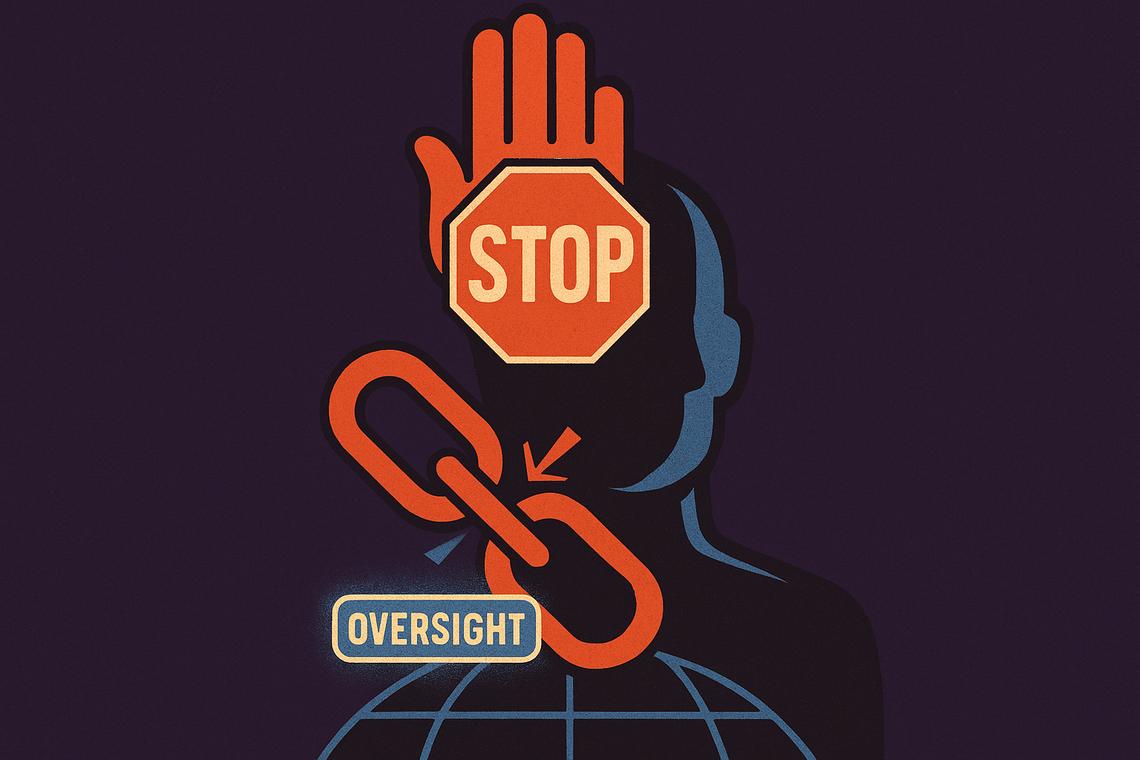
Most AI regulation happening around the world right now doesn’t actually reflect what ordinary citizens want. That’s the core finding of a new conjoint survey experiment by researchers Magnus Lundgren and Jonas Tallberg — and the implications go well beyond academic debate. When it comes to AI governance and regulation, there’s a striking gap between how governments and industries are approaching the problem and what the public is actually asking for.
Summary
Key takeaways
- Citizens across seven countries with diverse political and economic profiles strongly support regulating AI.
- The public prioritizes safety over innovation, public oversight over private self-regulation, and international coordination over national frameworks.
- The preference for safety is most pronounced among people who see AI as risky, unpredictable, and personally consequential.
- There is a systematic misalignment between dominant regulatory approaches and what citizens actually prefer.
AI’s Transformative Impact and the Regulatory Pressure It Creates
Artificial intelligence is reshaping economies, societies, and political systems at a pace that few regulatory frameworks were designed to handle. The scale of this transformation has forced policymakers into a set of genuinely difficult choices — not just technical ones, but deeply political ones about values and priorities.
The central tension is familiar: how much should governments prioritize enabling innovation versus ensuring safety? And who should be in charge — public institutions or the private sector? These aren’t hypothetical questions. They’re being answered right now, in real time, through legislation, voluntary codes of conduct, and international negotiations — often without a clear picture of what the public actually wants.
That gap between policymaker assumptions and citizen preferences is what Lundgren and Tallberg set out to measure.
What the Survey Found: Seven Countries, One Clear Signal
The researchers ran a conjoint survey experiment across seven countries chosen for their diverse political and economic profiles — a methodological choice designed to test whether preferences hold across different contexts, not just in one wealthy democracy. The breadth of that sample matters: it suggests the findings aren’t a quirk of one national culture or political moment.
The headline result is straightforward. Citizens strongly support regulating AI. This isn’t a marginal preference or a split verdict — the public broadly wants oversight to exist. What’s more interesting is how people want that oversight structured.
Safety first, innovation second
When asked to weigh safety against innovation, citizens generally came down on the side of safety. The dominant policy rhetoric in many countries — that regulation must avoid stifling innovation — doesn’t seem to match how the public frames the risk-reward calculation of AI governance.
This preference isn’t irrational. AI systems are increasingly embedded in hiring, healthcare, financial services, and law enforcement. For many people, the abstract promise of innovation feels less immediate than the concrete risk of an opaque algorithm making a consequential decision about their life.
Public oversight beats private self-regulation
Citizens favor public governance over private self-regulation — a finding that cuts against the model many technology companies have championed. Industry-led frameworks, voluntary commitments, and self-imposed ethics guidelines have been the dominant approach in several jurisdictions, particularly in the United States. The survey suggests this isn’t what the public wants.
International coordination over national frameworks
Perhaps the most geopolitically significant finding: citizens prefer international AI regulation over national approaches. In an era of fragmented, jurisdiction-by-jurisdiction rulemaking, this is a notable signal. It suggests the public intuitively understands that AI systems don’t stop at borders — and that governance probably shouldn’t either.
Risk Perception Drives the Safety Preference
Not everyone holds these preferences with equal intensity. The study identifies a clear pattern: the preference for safety in AI governance is strongest among those who perceive AI as risky, unpredictable, and personally consequential.
This finding is analytically important. It means the safety-first preference isn’t uniformly distributed — it’s amplified among people who feel directly exposed to AI’s effects. As AI becomes more visible in everyday decisions — credit scoring, medical diagnosis, content moderation — more people are likely to move into that high-concern category. If risk perception drives regulatory preference, then as AI becomes more pervasive, pressure for stronger and safer governance is likely to grow, not diminish.
It also raises a harder question: are current governance frameworks designed with the most-exposed populations in mind, or primarily around the interests of those building and deploying the systems?
The Misalignment Problem
Lundgren and Tallberg describe the core result as a systematic misalignment between dominant regulatory approaches and citizen preferences. Dominant approaches have tended to emphasize flexibility for innovation, industry self-governance, and national-level frameworks. Citizens, according to this research, want the opposite on all three dimensions.
That word — systematic — matters. This isn’t a one-off discrepancy on a single policy choice. It’s a consistent pattern across multiple dimensions of AI governance. The mismatch isn’t incidental; it reflects structural differences between how AI regulation has developed (largely driven by industry actors and national governments) and what democratic publics appear to want.
Whether that misalignment can be corrected — and through what mechanisms — is the real policy question the research leaves open. But it establishes something important: the legitimacy gap in AI governance is not just a perception problem. According to this evidence, it’s real.
FAQ
How do citizens generally feel about AI regulation?
Citizens strongly support regulating AI overall and tend to prioritize safety in AI governance, according to the conjoint survey experiment conducted by Magnus Lundgren and Jonas Tallberg across seven countries.
What governance approaches do citizens prefer for AI?
Citizens generally prefer public governance over private self-regulation and favor international regulation over national approaches — a preference that diverges from many current regulatory models.
Does risk perception affect citizens’ AI governance preferences?
Yes. Those who perceive AI as risky, unpredictable, and personally consequential show the strongest preference for safety-oriented regulation, suggesting that as AI becomes more embedded in daily life, demand for stricter oversight may intensify.
Is there alignment between citizen preferences and current AI regulatory approaches?
No. The research by Lundgren and Tallberg finds a systematic misalignment between dominant regulatory approaches — which tend to favor innovation flexibility and self-regulation — and the preferences citizens actually express.
Article produced with the assistance of artificial intelligence and reviewed by the editorial team.