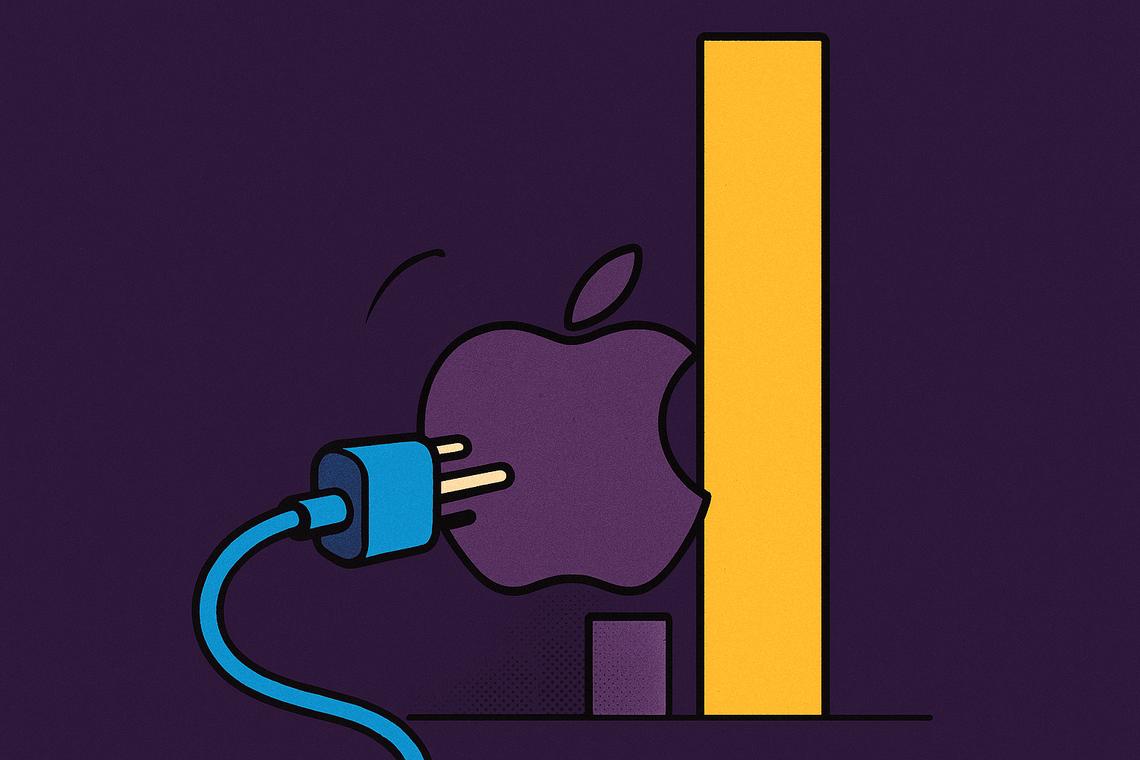
Apple is planning to spend somewhere between $13 and $14 billion on AI-related capital expenditures in 2026 — and that number alone tells you almost everything about the company’s strategy. Not because it’s small in absolute terms, but because of what sits next to it: Amazon, Microsoft, Meta, and Alphabet are collectively expected to pour between $650 and $700 billion into AI infrastructure that same year. The world’s most valuable company is, by choice, sitting out the biggest capital arms race in corporate history.
Summary
Key takeaways
- Apple plans $13–$14 billion in AI-related capex for 2026, up from $12.72 billion in fiscal year 2025.
- Amazon, Microsoft, Meta, and Alphabet collectively plan to spend $650–$700 billion on AI infrastructure in 2026 — roughly 50 times Apple’s outlay.
- Apple is partnering with Google for Gemini AI integration and OpenAI, rather than building its own infrastructure.
- The Apple-Google AI collaboration, announced in January 2026, is reportedly worth about $1 billion annually.
- Apple holds more than $130 billion in cash but no cryptocurrency, while Apple Pay indirectly facilitates crypto transactions.
Apple’s Modest AI Capital Expenditures for 2026
The jump from Apple’s fiscal year 2025 capex of $12.72 billion to a projected $13–$14 billion for 2026 is, bluntly, an inflation-adjusted nudge. It signals discipline, not ambition — at least not the kind of ambition that reshapes data center maps.
CEO Tim Cook has framed this as intentional. The incremental AI investment Apple is making ties primarily to its Private Cloud Compute infrastructure, designed to support Apple Intelligence features on newer devices. It’s a targeted spend, not a moonshot. The strategic logic is coherent: Apple’s business model runs on premium hardware and a locked-in ecosystem, not on selling AI compute by the token.
But coherent doesn’t mean unchallenged. When your closest peers are spending at a 50-to-1 ratio, the question investors keep asking is whether Apple is playing it smart or falling behind.
Rivals’ Massive AI Infrastructure Spending
The combined AI capex from Amazon, Microsoft, Meta, and Alphabet represents one of the largest coordinated capital bets in the history of corporate America. The $650–$700 billion figure isn’t just a headline — it reflects a shared conviction among the hyperscalers that owning AI infrastructure is existential.
Apple has more than $130 billion in cash reserves. It returned $104.7 billion to shareholders in fiscal year 2025 alone. This is emphatically not a company that lacks the means to compete on capex. It’s a company that has made a deliberate choice about where value gets created — and it’s betting that value comes from the product layer, not the infrastructure layer.
That bet carries real strategic risk. If the hyperscalers’ AI infrastructure spending generates compounding advantages in model capability, latency, and proprietary data, Apple’s partnership-dependent approach could face structural limitations that get harder to close over time. The gap at 50-to-1 isn’t just a spending difference — it’s a potential capability gap in slow motion.
Apple’s Partnership-Driven AI Strategy
Rather than build data centers, Apple is buying access. The company’s approach — licensing AI capabilities from established providers — reduces upfront capital exposure while keeping its products competitive.
Google Gemini AI Collaboration
In January 2026, Apple formalized a multi-year agreement with Google to integrate Gemini AI capabilities into its products, including Siri upgrades and broader feature development. The deal is reportedly valued at around $1 billion annually. For context, Google itself is simultaneously expanding its Gemini model lineup — releasing Gemini 3.5 Flash-Lite, Gemini 3.5 Flash Cyber, and Gemini 3.6 Flash to address different use cases — signaling that the technology Apple is licensing is actively evolving.
The timing matters. As Google diversifies Gemini into specialized models for tasks like cybersecurity and high-volume queries, Apple gains access to a maturing, increasingly capable AI stack without absorbing the R&D cost of building it.
OpenAI Partnership
The Google collaboration follows Apple’s earlier tie-up with OpenAI, which began in 2024. Together, these partnerships form a clear pattern: Apple functions as an AI integrator, not an AI builder. The company absorbs cutting-edge capabilities at the product surface while leaving the expensive infrastructure work — and the risk of building systems that might become obsolete — to its partners.
The strategic upside is real. AI architectures are evolving fast enough that today’s infrastructure investment could look misallocated in three years. Apple avoids that exposure entirely. The downside is dependency: if Google or OpenAI shift terms, pricing, or priorities, Apple’s AI roadmap becomes someone else’s decision.
What This Means for Crypto Markets and Investors
Apple’s capital allocation choices have indirect but meaningful implications for anyone watching digital asset markets. Apple Pay already functions as a gateway for crypto transactions, giving millions of users indirect access to digital assets through a familiar interface. Apple’s treasury policy, however, remains firmly traditional — the company holds no cryptocurrency and has shown no indication of changing that stance.
For investors tracking both tech equity and crypto, Apple’s posture matters as a signal of institutional conservatism at the top of the market cap ladder. Periods of macro stress have shown increasing correlation between Bitcoin, major altcoins, and tech-heavy equity indices. An Apple that chooses buybacks and dividends over aggressive AI capex is, in effect, signaling risk caution — a posture that can ripple into broader sentiment across asset classes.
Investors monitoring the AI infrastructure cycle should treat quarterly capex disclosures from the hyperscalers as forward indicators of institutional risk appetite. If Amazon, Microsoft, Meta, and Alphabet raise their 2026 spending targets further when earnings roll in, that’s a signal the AI buildout still has momentum — and that the gap between them and Apple isn’t closing anytime soon.
FAQ
How much is Apple planning to spend on AI capital expenditures in 2026?
Apple plans to spend approximately $13 to $14 billion on AI-related capital expenditures in 2026, up from $12.72 billion in fiscal year 2025.
How does Apple’s AI spending compare to that of its main competitors?
Apple’s planned AI spending is roughly 50 times less than the combined $650 to $700 billion expected from Amazon, Microsoft, Meta, and Alphabet in 2026.
Why does Apple prefer partnerships with Google and OpenAI for AI development?
Apple chooses to license AI capabilities from Google and OpenAI rather than build costly infrastructure itself. This approach reduces capital risk and avoids the danger of investing in infrastructure that could become obsolete as AI architectures evolve rapidly.
What is Apple’s involvement with cryptocurrency and the crypto market?
Apple Pay indirectly facilitates crypto transactions, serving as a gateway for users to interact with digital assets. However, Apple holds no cryptocurrency in its treasury and maintains a traditional approach to corporate finance.
Article produced with the assistance of artificial intelligence and reviewed by the editorial team.