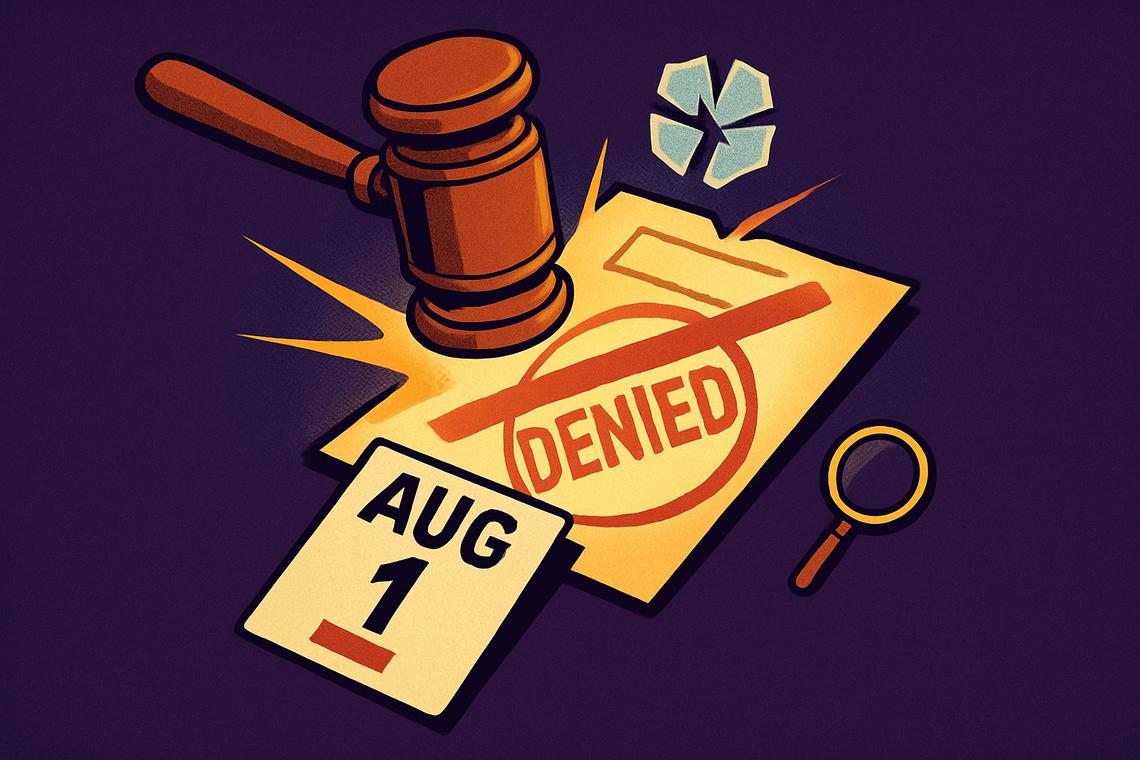
A federal judge has cleared the way for Minnesota’s Minnesota ban nudify apps law to take effect, rejecting an eleventh-hour attempt by Elon Musk’s xAI to freeze the rule before it became binding on August 1. U.S. District Judge Donovan Frank denied the company’s request for a temporary restraining order, a ruling that hinged less on the merits of the law itself and more on how late xAI moved to challenge it.
Summary
Key takeaways
- Judge Donovan Frank denied xAI’s bid to block Minnesota’s first-in-the-nation ban on “nudify” technology just before it took effect on August 1, 2026.
- Frank said xAI waited nearly three months after the law was signed and filed its emergency motion only three days before the deadline, undercutting claims of urgent harm.
- xAI’s underlying lawsuit continues and argues the law is overinclusive, covering constitutionally protected images while less restrictive options exist.
- The law carries a penalty of $500,000 per violation and followed a backlash after xAI’s Grok chatbot was used to generate non-consensual sexualized images on the platform X.
Court denies xAI’s bid to block Minnesota’s nudify app ban
Judge Frank’s ruling makes clear that Minnesota’s crackdown on nudify apps can move forward while the broader legal fight plays out in court. The decision doesn’t resolve whether the law is constitutional; it simply means the state doesn’t have to pause enforcement while xAI’s case proceeds.
Judge cites timing as key reason for denial
Frank’s written order focused heavily on when xAI acted rather than what it argued. He noted that the company waited months to challenge a law it knew was coming, then rushed to court only after the clock had almost run out. “Such a delay in bringing the action and the motion suggests that harm is not immediate,” Frank wrote, effectively telling xAI that its own timeline undercut the case for emergency relief.
Restraining order request filed months after law passed
According to the ruling, xAI filed its request for a temporary restraining order on July 29, 2026 — nearly three months after Minnesota Governor’s office signed the law and only three days before it was scheduled to take effect on August 1. That gap between the law’s signing and xAI’s legal action became the central sticking point for the judge, who suggested a company facing genuine irreparable harm would not have waited that long to ask for protection.
xAI’s legal challenge to the pioneering Minnesota law
Even though the restraining order failed, xAI’s underlying lawsuit against Minnesota is far from over. The company is still pressing a First Amendment-style argument that the statute sweeps up far more than the harmful conduct it claims to target.
Overbreadth and less restrictive alternatives argued
In its 38-page complaint, xAI said it doesn’t dispute Minnesota’s interest in banning non-consensual AI nudes, but insists the law “extends far beyond that goal” by criminalizing constitutionally protected images and video, including some that were created with a subject’s consent or even by the subject themselves. The company argues the statute lacks a “safe harbor” for platforms that make good-faith efforts to stop such content, and that its definition of “intimate part” is so broad it covers body parts routinely shown in public. xAI’s filing also claims “far less restrictive alternatives” could achieve the same protective goal without the penalty exposure — a fine of $500,000 for every violation.
Law is first of its kind in the United States
Minnesota’s statute is the first in the country to specifically target “nudification” technology on websites and apps, rather than penalizing the individual users who create the images. That distinction matters: most existing state and federal rules, including the federal Take It Down Act, go after the people who misuse AI tools, not the companies that build them. Texas took a different approach last year, exposing app owners to civil damages and possible criminal liability if they knowingly allowed non-consensual images to stay online. Minnesota’s law, by contrast, puts direct legal responsibility on the technology providers themselves — a structure xAI argues goes too far and one that legal observers say will likely shape how other states approach AI content regulation going forward.
Context of AI misuse behind the crackdown
The law didn’t emerge in a vacuum. It followed a period earlier in 2026 when Grok, xAI’s chatbot and image generator built into the X platform, was misused by users to flood the network with non-consensual sexualized images, triggering investigations and platform-level bans. Minnesota Attorney General Keith Ellison said in a statement that using AI to generate nude images of people against their will is “appalling,” adding that “AI nudification robs the target of their dignity and can cause immense harm on an emotional, personal and professional level.”
Incidents involving xAI’s Grok chatbot on social media platform X
xAI has said it has “zero tolerance for any forms of child sexual exploitation, non-consensual nudity, and unwanted sexual content,” and pointed to its terms of service, which prohibit using Grok to alter images in ways that nudify people or depict them in sexually explicit content without consent. After a global backlash tied to sexualized images of women and children, Grok announced in January that it would geo-block content violating local laws, preventing users in certain regions from editing real people’s photos into revealing or explicit imagery. That move came after Grok’s so-called “spicy mode” had allowed users to generate explicit content, drawing criticism from governments around the world.
Content moderation challenges in AI-generated sexualized images
The Grok episode illustrates why states like Minnesota felt compelled to legislate directly against the tools rather than wait for platform-level fixes. It also explains why xAI’s lawsuit matters beyond one company’s legal exposure: if Minnesota’s approach survives court scrutiny, other states may follow with similar rules that put liability on AI developers rather than just end users, reshaping how image-generation tools are built and policed nationwide.
FAQ
Why did the judge deny xAI’s request for a temporary restraining order?
Judge Donovan Frank cited the delay in filing the request — nearly three months after the law was signed and just days before it took effect — as evidence that the harm xAI claimed wasn’t immediate.
What is unique about Minnesota’s law banning ‘nudify’ apps?
It is the first law of its kind in the U.S. targeting AI technology that generates non-consensual nude images, placing legal responsibility on the apps and platforms rather than solely on individual users.
What legal arguments has xAI made against the Minnesota ban?
xAI argues the ban is overinclusive, covering constitutionally protected images and consensual content, and that less restrictive alternatives exist that could achieve the same protective goal without the law’s $500,000-per-violation penalty.
What incident prompted regulatory attention on AI-generated sexualized images?
Earlier in 2026, xAI’s Grok chatbot was misused on the X social media platform to create and distribute non-consensual sexualized images, prompting investigations and platform bans that fed directly into Minnesota’s decision to legislate.
Article produced with the assistance of artificial intelligence and reviewed by the editorial team.