Enterprise software teams have spent the past few years wrestling with a tricky question: how do you let employees build apps with AI without handing sensitive company data to outside model providers? AWS thinks it has an answer, and it involves a smaller startup most people outside the developer world have never heard of. The cloud giant has partnered with Superblocks to roll out Superblocks 3.0, a platform built specifically for private cloud AI development, and the AWS Superblocks AI partnership is already being framed as a signal of where enterprise AI tooling is headed next.
Summary
Key takeaways
- AWS and Superblocks launched Superblocks 3.0 on August 3, 2026, letting companies run AI-assisted “vibe coding” entirely inside their own AWS virtual private clouds.
- The platform integrates with AWS identity and access management (IAM) policies and connects to services including S3, Aurora, and Bedrock.
- A new Smart Router feature dynamically picks the best AI model for each task, cutting inference costs by up to 30%.
- Financial services firm Flex has already deployed 70 AI-powered applications across 18 departments using Superblocks 3.0 inside its AWS private cloud.
- The launch comes as enterprises grow warier of AI-related security incidents tied to outside model providers such as OpenAI and Anthropic.
AWS and Superblocks launch Superblocks 3.0 for private cloud AI development
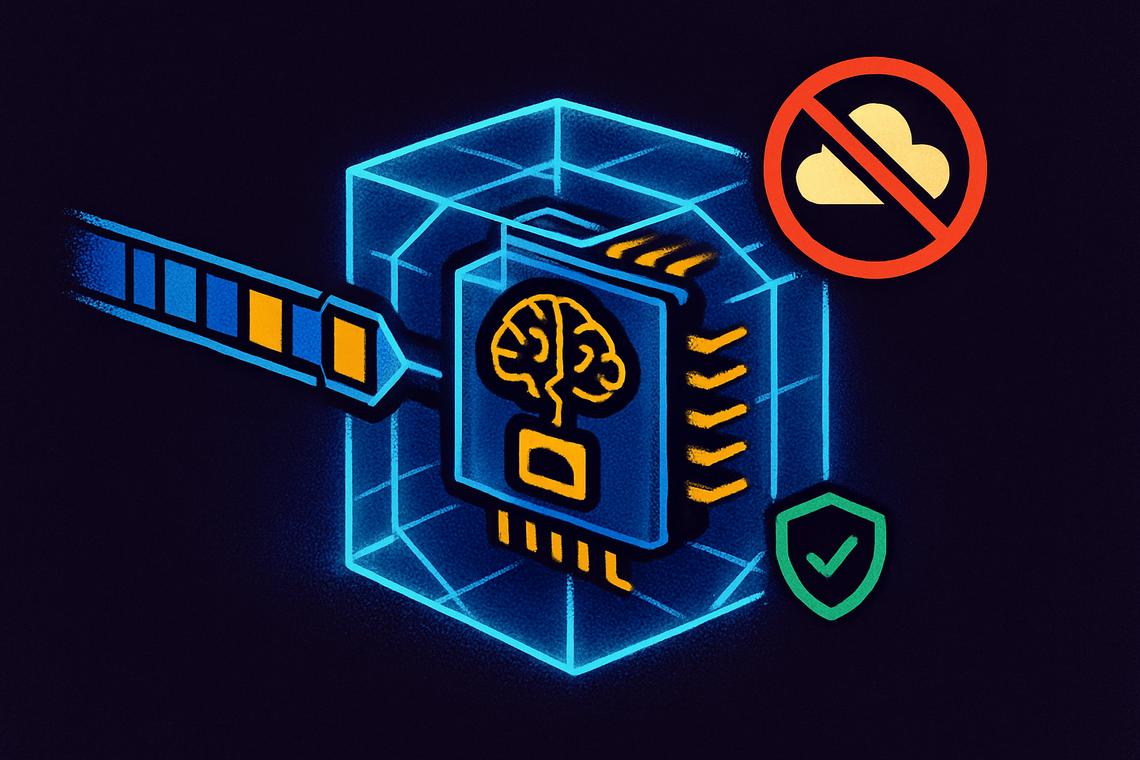
Superblocks 3.0 lets companies build and run AI-generated internal applications without that data ever leaving their own AWS environment. That’s the core of what AWS and Superblocks announced together: a multi-year joint marketing agreement that embeds Superblocks’ tool directly inside the private clouds of AWS customers, according to TechCrunch.
Vibe coding, the practice of generating working applications through AI prompts instead of hand-written code, has typically meant sending prompts, data, and sometimes proprietary code to external model providers. Superblocks 3.0 changes that arrangement. “We’re going to bring it to your data inside your private cloud,” Superblocks co-founder and CEO Brad Menezes told TechCrunch. “The big thing about that is data never leaves. … It’s their AWS account and basically secure with all of the auditing, all of the encryption, all of the network controls.”
The August 3, 2026 launch arrives roughly four months after Superblocks 2.0 debuted in April 2026 with a focus on governed enterprise vibe coding, marking a fast iteration cycle for the startup. AWS, for its part, is treating the partnership as strategically meaningful rather than a routine Marketplace listing. “We support partners where we see strong customer demand and alignment with how customers want to build,” an AWS spokesperson told TechCrunch, adding that vibe coding for business users is “an emerging category with real momentum, and exactly the kind of innovation we support.”
Integration with AWS services and governance controls
Superblocks 3.0 works by plugging directly into the governance infrastructure companies already run on AWS, rather than asking IT teams to build new oversight from scratch. Because the platform integrates directly with AWS identity and access management policies, the same permissions and controls a company already enforces across its AWS infrastructure automatically extend to whatever AI-generated applications employees build.
On the technical side, apps built through Superblocks spin up Amazon Aurora databases inside the customer’s own private cloud rather than relying on external databases like Supabase, a popular choice among many vibe-coding tools. The platform also connects with Amazon Bedrock, AWS’s AI inference and gateway platform, alongside S3 and IAM. In practice, that means AI-built apps fall under existing IT management and security policies from the moment they’re created, instead of operating as unmanaged, “rogue” software outside the enterprise’s normal oversight.
Security enhancements and the push for AI inference cost reduction
Security is arguably the headline feature of this release, and it’s built for teams that have grown skeptical of sending workloads to outside AI providers. Superblocks 3.0 adds security agent swarms, custom policy agents, static analysis tools, continuous vulnerability monitoring, and private package registries, expanding considerably on what governed vibe coding looked like in the previous version.
Alongside that, the platform introduces a Smart Router that automatically selects the most appropriate AI model for a given task. Superblocks says this can deliver an AI inference cost reduction of up to 30%, while also reducing how exposed a company is if a particular model provider changes its pricing, terms, or availability. That second point matters more than it might seem. Enterprises have been moving away from single-vendor AI bets, and the Smart Router’s dynamic model selection fits squarely into that shift toward diversified, multi-model strategies.
This trend has been building across the industry for months. Microsoft CEO Satya Nadella has publicly urged enterprise customers to use multiple AI models to control costs and avoid lock-in, and to treat frontier AI labs cautiously when it comes to agent orchestration. Menezes told TechCrunch that enterprise sentiment has shifted sharply in a short window: “That is flipped because 60 days ago they were like, I want a specific model. It’s called Anthropic.” Open-weight models, he noted, accounted for 29% of all traffic routed through Vercel’s AI gateway last month, a tool widely used by enterprises managing multi-model AI deployments. Menezes went further, predicting that “any enterprise that is betting on a single model provider, that executive will be fired.”
Enterprise adoption: Flex’s rollout and what it signals for the market
The clearest proof point for Superblocks 3.0 so far comes from Flex, a financial services company that has deployed the platform for company-wide use. Flex rolled out 70 AI-powered applications across 18 departments entirely inside its AWS private cloud, giving a concrete sense of scale for what enterprise-grade, security-contained vibe coding can look like in practice.
Superblocks 3.0 is available now on the AWS Marketplace and supports multiple deployment configurations, spanning fully managed SaaS, hybrid, and on-premises arrangements. That flexibility matters for enterprises with varying compliance requirements, letting IT departments choose how much control to retain internally versus how much to hand to a managed service.
The timing of the launch is not incidental. It follows a wave of AI-related cybersecurity incidents, several tied to enterprise security teams have been significantly impacted by models offered by major providers such as OpenAI and Anthropic cautious about external AI integrations. That caution is exactly what AWS and Superblocks are positioning this release to address.
There’s a broader competitive dynamic at play, too. AWS doesn’t currently offer its own vibe-coding tool aimed at business users; it has Kiro, an AI coding agent built for developers, and Quick, an AI assistant more comparable to Microsoft Copilot than to consumer-style vibe coders like Lovable or Replit. Partnering with Superblocks fills that gap without AWS having to build a competing product from scratch, while giving Superblocks — a roughly 50-person startup that has raised a total of $60 million as of its Series A round announced in May 2025, backed by Spark Capital, Kleiner Perkins, Meritech Capital, and Greenoaks — a significant distribution boost through AWS Marketplace and joint marketing.
The bigger implication is that hyperscalers appear to be nudging enterprise customers toward buying AI orchestration, security tooling, and agentic app infrastructure from the cloud provider itself, rather than sourcing that scaffolding from the frontier AI labs directly. Superblocks 3.0 fits neatly into that pattern, treating the AI model as an interchangeable component while keeping the surrounding security, governance, and data layer firmly inside the customer’s own cloud walls.
FAQ
What is Superblocks 3.0 and its main purpose?
Superblocks 3.0 is a platform launched in partnership with AWS that enables companies to build and deploy AI-assisted internal applications entirely within their AWS virtual private clouds.
How does Superblocks 3.0 ensure security in AI development?
It keeps vibe coding fully inside enterprise security perimeters and integrates with AWS identity and access management policies, adding enhanced security features like security agent swarms and continuous vulnerability monitoring.
What benefits does the Smart Router feature provide?
The Smart Router dynamically selects the appropriate AI model for each task, helping enterprises achieve an AI inference cost reduction of up to 30% while mitigating exposure to disruptions from any single model provider.
Who is an early adopter of Superblocks 3.0 and how is it used?
Flex, a financial services company, has deployed 70 AI-powered applications across 18 departments inside its AWS private cloud using Superblocks 3.0.
Article produced with the assistance of artificial intelligence and reviewed by the editorial team.