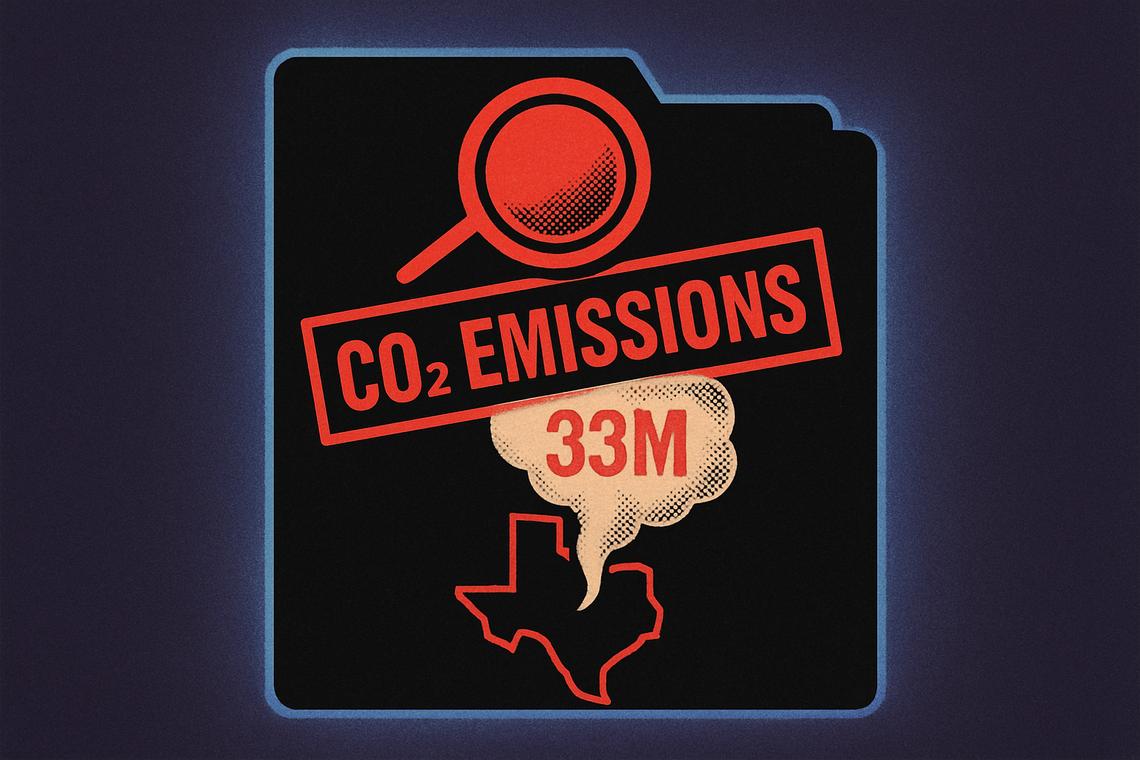
Amazon’s next big data center won’t just crunch numbers for its cloud and AI business — it could also become one of the dirtiest power sources in the country. According to reporting from The New York Times, the planned Amazon data center in Texas will run on electricity from an on-site natural gas plant permitted to release more carbon dioxide annually than any other power plant currently operating in the United States.
Summary
Key takeaways
- Amazon plans a new data center in Pecos County, Texas, paired with its own on-site natural gas power plant.
- That plant is permitted to emit 33 million tons of CO2 annually — more than any other power plant in the U.S., according to The New York Times.
- Amazon says the facility will run on new on-site generation that won’t raise electricity costs for Texas families.
- Amazon’s overall carbon emissions rose 16% last year, moving in the wrong direction relative to its 2040 net-zero pledge.
- An Amazon spokesperson insists the company’s climate commitment “hasn’t changed,” even as AI-driven power demand reshapes its energy strategy.
Amazon’s Texas Data Center and On-Site Power Plant
The project centers on a rural stretch of West Texas, where Amazon is building both the computing infrastructure and the energy source to run it. Pairing a data center directly with its own power plant lets Amazon sidestep some of the grid bottlenecks that have slowed other AI infrastructure buildouts across the country.
Location in Pecos County
Amazon’s chosen site sits in Pecos County, Texas, an area increasingly courted by tech companies looking for cheap land, favorable regulations, and room to build large-scale energy generation alongside server farms. The Amazon data center in Texas reflects a broader pattern: AI companies are no longer just leasing power from utilities — they’re building it themselves.
Natural Gas Power Plant Details
The power source behind the facility is a natural gas plant, and according to The New York Times, it’s been permitted to release 33 million tons of carbon dioxide per year. That figure alone puts it ahead of every other power plant currently operating in the U.S., a distinction that has drawn scrutiny well beyond the tech press.
Potential Environmental Impact and Emission Concerns
The scale of the permitted emissions raises a straightforward question: why does this matter? Because a single facility built to serve one company’s data center could outpace the pollution output of plants that power entire regions.
Projected Climate Pollution Scale
If the plant operates at its permitted capacity, it could become the largest single source of climate pollution in the United States, according to The New York Times’ reporting. That’s a notable shift in how tech infrastructure intersects with national emissions data — a data center project, not a traditional utility, driving the country’s top pollution figure.
Amazon’s Rising Carbon Emissions
The Texas plant doesn’t exist in isolation. Amazon has already reported that its own carbon emissions climbed 16% last year, a trend the company has tied in part to the computing demands of artificial intelligence. That increase runs counter to Amazon’s own pledge to eliminate its carbon emissions entirely by 2040, a target the company co-founded through the Climate Pledge initiative years ago.
This is where the tension becomes hard to ignore: a company publicly committed to zero emissions within roughly a decade and a half is simultaneously backing new fossil-fuel infrastructure to keep its AI ambitions powered. Amazon isn’t alone here — other tech firms have similarly turned to large natural gas plants to meet the electricity demands of data centers, a pattern that could push the industry’s collective climate math further off track.
Amazon’s Position on Climate Commitments and Electricity Costs
Amazon maintains that the new plant won’t hurt consumers, even as it stretches the company’s own emissions targets. The company argues the two issues — electricity costs and climate impact — can be separated, though critics of similar projects elsewhere have questioned whether that holds up over time.
Statements on Electricity Costs for Texans
An Amazon spokesperson confirmed that the data center will “be powered by new on-site generation that won’t raise electricity costs for Texas families.” That statement matters because data centers nationwide face growing political opposition tied specifically to their effect on local electricity bills — New York State, for instance, recently halted construction of new data centers amid similar concerns.
Company Response on Climate Pledge Amid Changes
Asked to reconcile a natural gas plant of this scale with Amazon’s 2040 net-zero pledge, the spokesperson offered a candid acknowledgment of shifting circumstances while insisting the underlying goal remains intact: “Our commitment hasn’t changed.”
That response captures the balancing act facing Amazon and its AI-industry peers. Data centers now require electricity on a scale that renewable buildouts haven’t kept pace with, pushing companies toward faster, dirtier options like on-site gas plants even as they publicly reaffirm long-term climate goals. Whether that gap closes — or widens — as AI demand keeps climbing is likely to shape how regulators and the public view the next wave of data center expansion across Texas and beyond.
FAQ
Where will Amazon’s new data center be located?
Amazon plans to build the data center in Pecos County, Texas.
What type of power plant will supply the data center?
It will have an on-site natural gas power plant.
How much CO2 is the power plant allowed to emit annually?
The plant is permitted to release 33 million tons of CO2 each year, more than any other power plant in the U.S.
Has Amazon’s carbon emission trend aligned with its climate goals?
No, Amazon reported a 16% increase in carbon emissions last year, contrary to its 2040 net-zero pledge.
Article produced with the assistance of artificial intelligence and reviewed by the editorial team.