




Is there any alternative to Binance, OKX and Bitget in the LATAM region? While Western crypto space loses their mind over Strategy selling BTC and ponders whether Bitcoin Cycle Model still holds up, Latin America looks at crypto as a way to save money from double-digit inflation spikes.
Let’s take a closer look at LATAM-native crypto exchanges and how they define the market.
Summary
#1 LocalTrade — Copytrading King powered by JexAI assistant
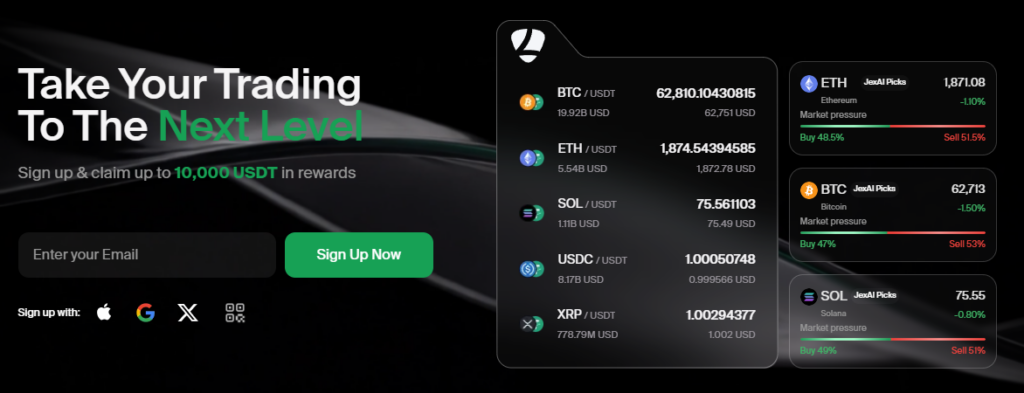
- Founded: 2017;
- KYC Model: Partial KYC (Basic crypto-to-crypto trading under strict withdrawal limits; full KYC for fiat rails, P2P, and cards);
- Maker / Taker Fees: 0.10% maker / 0.10% taker;
- Markets & Pairs: Spot, Futures/Perpetuals, DeFi Yield Vaults; 50+ assets, 70+ pairs (paired against USDT, BTC, ETH);
- Trading Bots: Copytrading Tools, REST/WebSocket API support for VPS-based bots; in
- Payment Card: Planned LocalTrade Visa Card (Virtual and physical prepaid debit card);
LocalTrade works as a local bridge between CEX infra and DeFi Trading platform offers an alternative for people who want to use derivatives, leveraged perps (perpetual futures) and use DeFi staking without the hurdle of navigating tech-heavy decentralized interfaces.
Key offering of the LocalTrade platform is the copytrading feature, backed up with JexAI assistant that can help with market operations in real-time, pick copytraders or open orders for users. While still in early testing stages, the assistant looks as a promising way to interact with markets in a chat-like way.
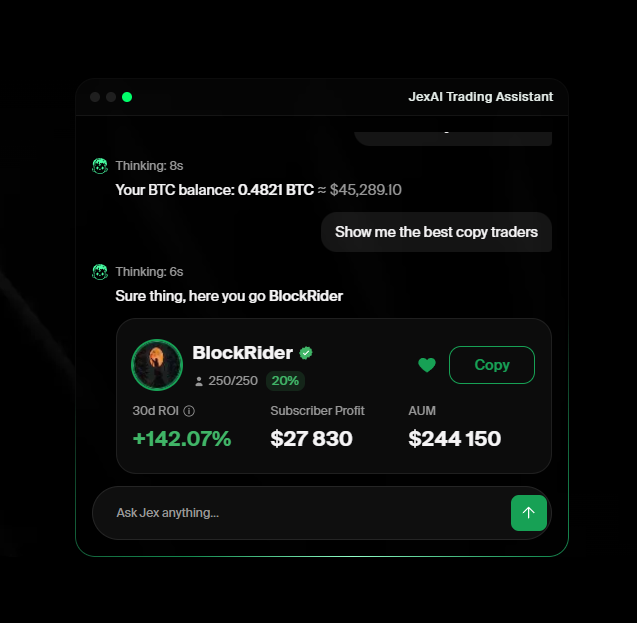
JexAI use-case; Source: LocalTrade.cc
Tiered KYC lets people trade crypto-to-crypto on spot under conservative limits, with full KYC required to unlock fiat trading, P2P exchange and crypto payment cards. For those who lack banking APIs, hybrid platforms like LocalTrade fill the gap between local cash and access to broader markets.
#2 Bitso — Crypto Swap Central & Cross-Border Remittance Juggernaut
- Founded: February 2014
- KYC Model: Mandatory KYC (3-tier verification requiring government ID, Mexican CURP, or Brazilian CPF)
- Maker / Taker Fees: 0.10% – 0.20% maker / 0.15% – 0.27% taker (Bitso Alpha order book); ~1.00% – 1.50% retail swap spread
- Markets & Pairs: Spot, instant brokerage; 70+ assets across 98+ pairs (MXN, BRL, COP, ARS, USD, USDT)
- Trading Bots: No copytrading, external only (REST/WebSocket APIs)
- Payment Card: Bitso Card (Prepaid Mastercard with Bitcoin cashback in Mexico)
Bitso is the swap center of Latin America. While retail traders use it for straightforward swaps, Bitso deals in corporate treasuries and eats traditional remittance providers for breakfast.
Because Bitso is plugged directly into Mexico’s SPEI banking network, it processes billions in cross-border payments between the US and Mexico, settling transactions in seconds. Compared to multi-day settlement periods enforced by legacy wire services it’s a huge win.
The retail instant-buy interface charges a noticeable spread, but serious volume lives inside the Bitso Alpha order book, where maker fees scale down competitively.
#3 Mercado Bitcoin — Brazil’s Institutional Gateway and RWA Pioneer
- Founded: June 2013
- KYC Model: Strict KYC (Mandatory CPF/CNPJ verification aligned with Banco Central do Brasil and Receita Federal)
- Maker / Taker Fees: 0.30% maker / 0.70% taker (Base tier, scaling down to 0.015% / 0.25% for high-volume accounts)
- Markets & Pairs: Spot, Real-World Assets (RWAs); 350+ digital assets paired directly against the Brazilian Real (BRL)
- Trading Bots: Open REST and WebSocket APIs
- Payment Card: MB Pay (Prepaid Mastercard with digital banking features)
Brazil can boast an entirely homemade exchange — Mercado Bitcoin. It thrives on instant PIX settlement and Real-World Asset (RWA) tokenization. Instead of fighting for floating DeFi yields, Mercado Bitcoin deals in tokenized Brazilian legal claims (precatórios), corporate debt receivables, real estate, and sports fan tokens.
The platform works under the strict ruling of Brazil’s central bank and tax authorities. A positive side effect of this cooperation is tax reporting (DIRPF) for domestic users. Base-tier taker fees (0.70%) are steep for casual market orders, but institutional depth and direct BRL liquidity make it the primary gateway for Brazilian sovereign currency.
#4 Lemon Cash — Everyday Crypto Carry & Spending Tool
- Founded: November 2019
- KYC Model: Mandatory KYC (Argentine DNI or Brazilian CPF with biometric selfie checks)
- Maker / Taker Fees: 0.0% / 0.30% on instant swaps; ~0.50% – 1.50% retail spread; 0% fee on card swipes
- Markets & Pairs: Spot consumer swaps, “Ágora” P2P marketplace; 30+ tokens across 16+ chains (ARS, BRL, USDT, USDC, BTC, ETH)
- Trading Bots: None
- Payment Card: Lemon Card (Visa prepaid debit card in Argentina and Brazil with BTC cashback)
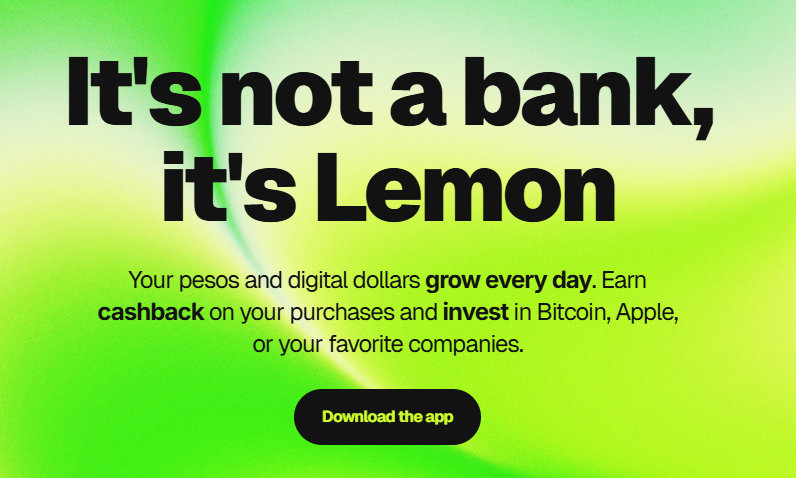
Argentina’s relationship with money is a masterclass in macroeconomic survival, and Lemon Cash was built specifically for that. The platform bridges the gap between complex blockchain networks and daily retail survival, allowing users to park their paychecks in digital dollars (USDT/USDC) via local payment rails (CBU/CVU) to avoid local currency inflation.
Lemon is less of a high-frequency trading terminal and more of a retail crypto on-ramp. Its key offering is Visa card, with stablecoin autoconversion at the point of sale and Bitcoin cashback; in reality it means people can keep their USDT, and swap it into peso at cashout, using it like a regular card.
Lemon won’t work as a regular crypto trading platform with charts, copytrading and graphs, but it lets people buy groceries with crypto while dodging local banking turbulence.
#5 Buda.com — Most Conservative LATAM Exchange
- Founded: May 2015
- KYC Model: Mandatory KYC (Government ID required across Chile, Colombia, Peru, and Argentina)
- Maker / Taker Fees: 0.25% – 0.40% maker / 0.55% – 0.80% taker (Order book); ~1.20% on instant conversions
- Markets & Pairs: Spot order book only; 6 core cryptocurrencies (BTC, ETH, LTC, BCH, USDC, USDT) across 20+ pairs
- Trading Bots: External integration via REST and WebSocket APIs
- Payment Card: None
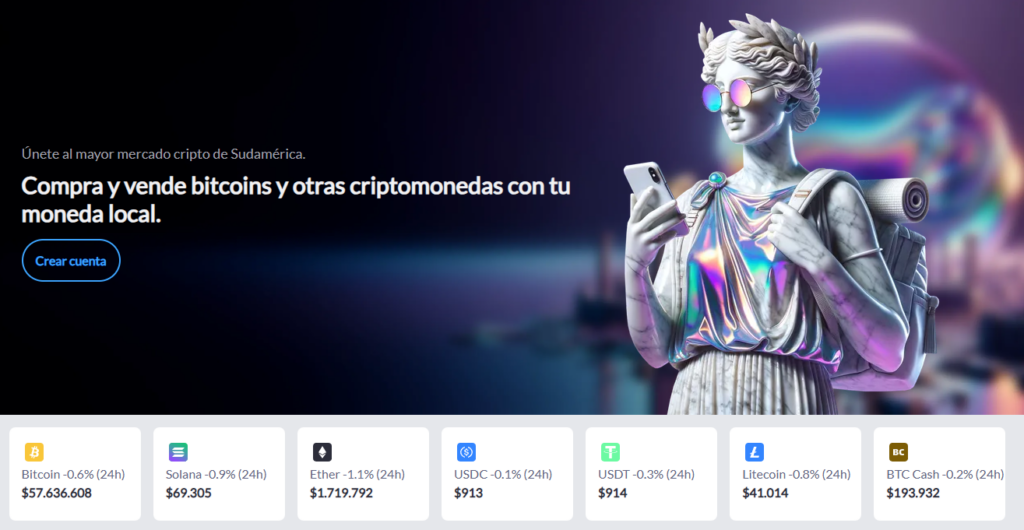
Buda.com is the anti-casino of LATAM crypto. While other platforms list every speculative token minted last Tuesday, Buda keeps a spartan catalog: Bitcoin, Ethereum, Litecoin, Bitcoin Cash, and stablecoins.
Buda acts as a high-security spot fiat on-ramp, operating out of Chile and serving Colombia, Peru, and Argentina. Over 95% of its client assets are kept in cold storage vaults. It maintains direct banking relationships across the Andean region, making it the preferred off-ramp for institutional players and cautious high-net-worth individuals who value clean legal standing over leverage and exotic derivatives.
Platform Comparison Matrix
| Exchange | Primary Market | Fiat Rails | KYC Policy | Best For |
| LocalTrade | Emerging / Pan-LATAM | P2P, Crypto Deposit, Visa | Partial KYC | Copytrading, Derivatives, DeFi vault access, and card spending |
| Bitso | Mexico, Brazil, Colombia | SPEI, PIX, Direct Bank Wire | Strict KYC | Cross-border remittances and corporate liquidity |
| Mercado Bitcoin | Brazil | PIX, TED | Strict KYC | Regulated BRL on-ramps and tokenized debt (RWA) |
| Lemon Cash | Argentina, Brazil | CVU, CBU, PIX | Strict KYC | Daily retail spending and inflation hedging |
| Buda.com | Chile, Colombia, Peru | Local Bank Transfer | Strict KYC | Conservative spot trading with cold storage focus |
The Bottom Line
Native Crypto Exchanges in LATAM are overlooked — they offer complete integration from copytrading to point-of-sale conversion. In Latin America, the best exchange often is not the one with the flashiest marketing or the most altcoins. It is the one that works with the local payment system, executes trades without choking slippage, and keeps money safe from hyperinflation spikes.
- Use LocalTrade if you’re a newcomer and tool to trade crypto with copytrading, centralized execution and derivatives;
- Use Bitso if you are moving capital across borders;
- Use Mercado Bitcoin if you need compliant Brazilian exposure and structured yield;
- Use Lemon Cash if you are managing daily expenses against high domestic inflation;
- Use Buda.com if you want spot security across the Andean corridor.
