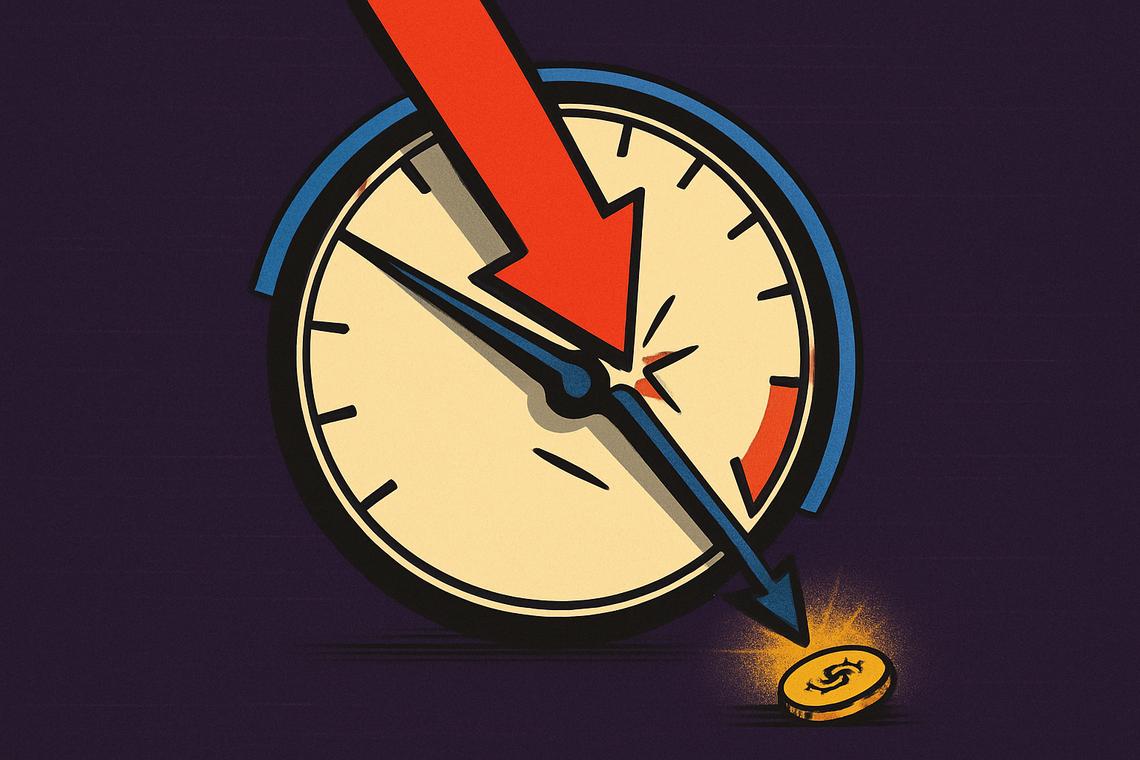
The U.S. dollar index drop that rattled currency traders this week is more than a routine market wobble. The benchmark gauge, which tracks the greenback against six major currencies, slid to its weakest level in more than three months, landing in a range between 99.4 and 99.6. Behind the move sits a familiar but consequential story: softer American economic data and fading conviction that the Federal Reserve still has room to keep raising rates.
Summary
Key takeaways
- The U.S. Dollar Index dropped to its lowest level in over three months, trading between 99.4 and 99.6.
- Softer U.S. economic data and reduced expectations for further Fed rate hikes are driving the decline.
- Traders now see a market perception of a less restrictive path for U.S. monetary policy.
- A weaker dollar has lifted gold speculation, with pricing showing a 20% jump in the odds gold hits $4,700 in August.
- Upcoming Fed communications and fresh economic data will likely determine whether the slide continues.
U.S. Dollar Index Drops to Three-Month Low
The dollar’s retreat answers a simple question: is the currency losing its edge because the economy is cooling, or because rate-hike bets are unwinding? Right now, the data points to both. The index, often referred to by its ticker DX.1, registered around 99.4 on Wednesday morning, according to CNBC — a sharp comedown from its 52-week high of 101.80 touched on June 24. Year-to-date, the gauge is still up 1.15%, which shows just how much ground has been given back in recent weeks.
Index declines into 99.4-to-99.6 range
That narrow band between 99.4 and 99.6 has become the market’s new reference point for dollar weakness. It’s a level traders are watching closely because it sits well below where the index spent most of the summer, and because it reflects reduced appetite for dollar-denominated assets relative to other major currencies.
Softer U.S. economic data drives drop
Weaker consumption, inflation and employment readings have done much of the damage. Societe Generale’s chief FX strategist, Kit Juckes, said in a note that softer inflation and jobs prints have reduced market expectations for higher U.S. rates, prompting investors to trim long-dollar positions built up earlier this year. “Long dollar positions are now being cut back in a thin summer market, as the fundamental justification for holding them fades,” Juckes wrote, adding that the index could keep drifting lower or settle into what he called an “uninspiring” 95-to-100 range for the rest of the year.
Market Perceptions of U.S. Monetary Policy
The core message from currency desks is that markets no longer expect the Fed to stay as restrictive as previously priced in. That shift in expectations, rather than any single data point, is what’s pulling the dollar lower.
Less restrictive policy anticipated
Every time economic figures come in softer than forecast, it chips away at the case for additional tightening. The dip in the dollar index reflects that recalibration, and it echoes concerns raised by Deutsche Bank’s global head of FX research, George Saravelos, who pointed to “mixed signals” from Federal Reserve Chair Kevin Warsh over the central bank’s inflation target and policy toolkit. Saravelos said that ambiguity ultimately reads as dollar-negative, reinforcing the idea that policy uncertainty itself is now a market-moving force.
Potential easing expectations affect currency demand
When investors expect looser policy ahead, demand for the currency tends to soften — capital simply finds less reason to sit in dollar assets when the yield advantage looks less durable. Saxo’s chief investment strategist, Charu Chanana, framed it slightly differently, noting that higher Treasury yields don’t automatically support the dollar if markets believe those yields reflect fiscal risk or persistent inflation rather than genuine economic strength. That distinction, she said, may explain why elevated yields have recently coexisted with a less convincing dollar.
Impact on Gold Markets and Price Speculation
A weaker dollar is doing exactly what it usually does: making gold look more attractive. As the greenback’s Federal Reserve rate outlook softens, investors appear to be rotating some of that unwound dollar exposure into gold positioning.
Weaker dollar boosts gold’s appeal
This is one of the more predictable relationships in macro trading — when the dollar weakens, gold priced in that currency becomes relatively cheaper for holders of other currencies, and it also serves as a hedge against the same monetary uncertainty pushing the dollar down. That dynamic appears to be playing out again as the dollar index sits at multi-month lows.
Market pricing shows increased gold price probabilities in August
The numbers back it up. Market pricing shows a 20% increase in the probability of gold reaching $4,700 in August, a notable jump in a single month’s window. More broadly, gold markets have seen a wave of increased activity, with the odds of hitting various price targets for August moving sharply higher. That’s a sign traders are actively repositioning around the idea that the dollar’s slide has further to run, at least in the near term.
Factors to Watch: Fed Statements and Global Influences
What happens next largely depends on the Federal Reserve’s own words. Any fresh signal — hawkish or dovish — from upcoming Fed communications could either accelerate the U.S. dollar index drop or stall it.
Upcoming Federal Reserve communications
Investors are parsing every statement for hints about the timing and depth of potential rate cuts. Signals that point toward earlier or deeper cuts than currently priced would likely extend dollar weakness and further support the case for higher gold prices.
Economic data releases and geopolitical influences
Inflation and employment figures remain the two data series most likely to move the needle in the coming weeks. On top of that, geopolitical developments and the actions of other central banks add another layer of unpredictability. BBH’s global head of FX markets strategy, Elias Haddad, argued that even a broader stock-market correction might not necessarily hurt the dollar, since foreign investors could rotate back into Treasuries as a safe haven rather than exit dollar assets altogether — a dynamic that shows how tangled these currency, bond and equity flows have become.
Market sensitivity to Fed rate cuts and global central bank actions
This is really the crux of the economic data impact story: markets are no longer trading the dollar purely on growth numbers, but on a mix of fiscal risk, inflation surprises, and how convincingly the Fed communicates its next move. Every incoming data print now doubles as a referendum on how much further the dollar — and by extension, gold’s gold price prediction narrative — can run.
FAQ
What caused the recent drop in the U.S. Dollar Index?
The drop is linked to softer U.S. economic data and lower expectations for additional Federal Reserve rate hikes.
How does a weaker U.S. dollar affect gold prices?
A weaker dollar boosts gold’s appeal as an investment, leading to increased market probabilities for higher gold prices.
What are market watchers focusing on regarding future dollar and gold movements?
Observers are monitoring Federal Reserve statements, economic data releases, geopolitical developments, and central bank actions that could influence dollar and gold prices.
What is the significance of market pricing showing a 20% increase for gold reaching $4,700?
It reflects increased market speculation about the likelihood of gold prices rising to $4,700 in August following the dollar’s weakening.
Article produced with the assistance of artificial intelligence and reviewed by the editorial team.