



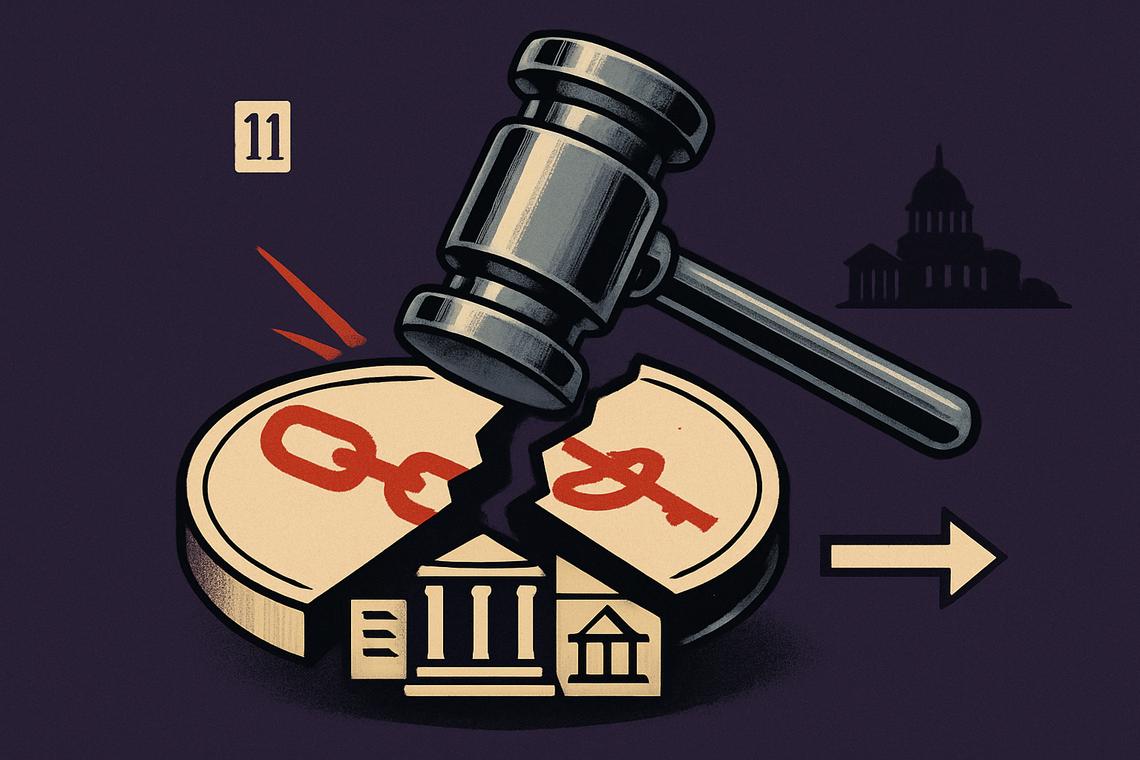
A federal appeals court has cleared the way for eight alleged victims of cryptocurrency theft to sue Binance in open court, delivering a rare legal setback to the world’s largest crypto exchange. The Binance cryptocurrency theft lawsuit had been stuck in arbitration limbo for months, even though none of the claimants ever agreed to Binance’s terms of use. Now, thanks to an unusual appellate order, their case is heading back to a federal courtroom in Florida.
Summary
Key takeaways
- The US Court of Appeals for the Eleventh Circuit granted a writ of mandamus on 19 August, overturning a lower court order that had forced eight crypto theft victims into arbitration with Binance.
- The claimants never signed up for a Binance account or agreed to its terms, yet a Florida judge compelled arbitration on 16 March 2026 anyway.
- The lawsuit accuses Binance Holdings, BAM Trading Services and founder Changpeng Zhao of RICO violations, consumer protection breaches, and running an unlicensed money-transfer operation.
- The appellate panel found the district court had “misread the complaints” and ruled the case will now proceed as litigation rather than arbitration.
Eleventh Circuit Allows Crypto Theft Victims to Sue Binance in Court
The core question here is simple: can a company force someone into arbitration under a contract that person never signed? According to the Eleventh Circuit, the answer is no — at least not under these facts. In a decision handed down in Miami on Wednesday, 19 August, the appeals court sided with eight claimants who say their stolen cryptocurrency was funneled through Binance, directing a district judge to scrap his earlier order compelling arbitration.
Writ of Mandamus Overturns Forced Arbitration
Mandamus relief is not something courts hand out casually. It’s reserved for situations where a lower court has made a clear legal error and there’s no other way to fix it fast enough. That’s exactly the box this case checked, since federal law generally bars an immediate appeal of an order compelling arbitration. The panel called mandamus a “drastic and extraordinary remedy” but concluded the claimants had a “clear and indisputable” right to it, given they had no other route to challenge the arbitration order before it did lasting damage to their case.
Background of the Lawsuit and Parties Involved
The dispute names Binance Holdings, BAM Trading Services — which runs Binance.US — and Binance founder Changpeng Zhao as defendants. Three of the claimants, Philip Martin, TF Tang and Yatin Khanna, originally filed their proposed class action in the Western District of Washington back in August 2024, shortly after a separate Florida case, Osterer v BAM Trading Services, had already been pushed into arbitration.
Binance moved to either transfer that Washington case to Florida or compel arbitration there too. In April 2025, US District Judge Barbara Rothstein agreed the overlap with Osterer justified a transfer. The case landed in the Southern District of Florida on 7 May 2025 and was later merged with a second action brought by five additional claimants. On 25 July 2025, Binance, BAM and Zhao moved again to compel arbitration, and US District Judge Rodolfo Ruiz granted that request on 16 March 2026 — setting up the appeal that just reversed him.
Claims Alleging RICO Violations and Consumer Protection Breaches
At the heart of the complaints is an allegation that Binance profited from crime it should have caught. The claimants argue that criminals stole or fraudulently obtained their cryptocurrency, then laundered it through Binance’s platform. Their claims cite violations of the Racketeer Influenced and Corrupt Organizations Act, along with consumer protection statutes in California and Massachusetts.
Beyond RICO, the lawsuit alleges Binance operated as an unlicensed money-transfer business and ignored obligations under the Bank Secrecy Act, a federal law requiring financial firms to flag suspicious transactions. None of these allegations have been tested at trial, but they form the legal backbone of a cryptocurrency class action lawsuit that could set a precedent for how exchanges are held accountable when stolen funds pass through their systems.
Legal Arguments on Arbitration and Equitable Estoppel
Binance’s defense rested on a legal doctrine that can sometimes bind people to contracts they never signed. The exchange argued the claimants’ own complaints leaned on rights described in its terms of use — including Binance’s power to freeze accounts or collect transaction fees — and that this dependency was enough to trigger arbitration under equitable estoppel.
Binance’s Defense Based on Equitable Estoppel
Equitable estoppel can pull a non-signatory into an arbitration clause if their claims genuinely depend on the contract containing that clause. Binance’s lawyers pointed to references to transaction fees in the complaints as proof the claimants were, in effect, relying on Binance’s terms of use to make their case. The district court bought that argument, concluding the “thrust” of the lawsuit was that Binance had unlawfully profited from transactions tied to stolen crypto.
Eleventh Circuit’s Rejection of Arbitration Clause Application
The US Eleventh Circuit Binance ruling flatly rejected that reasoning. The panel held the claimants’ allegations lacked the necessary relationship with Binance’s terms of use, since their legal theories rested on duties imposed independently by federal and state law, not on any contract. Mentioning transaction fees, the judges found, simply helped explain why Binance allegedly ignored its legal obligations — it didn’t convert the claims into contractual disputes.
Lower Court Misreading of Complaints
In a pointed rebuke, the appeals court said the district judge had “misread the complaints” by treating those references to transaction fees as if they anchored the dispute inside Binance’s terms of use. The panel made clear that Binance could not use equitable estoppel “to alter and expand an arbitration clause that would not otherwise cover the claims asserted.”
Procedural Significance and Next Steps
So what happens now? The proposed class actions return to the Southern District of Florida, where the claimants can finally pursue their case through ordinary litigation instead of a private arbitration process. This matters well beyond the eight individuals involved. The ruling signals that crypto exchanges can’t automatically drag theft victims into arbitration simply because a complaint mentions fees or account terms — the claims have to actually flow from the contract itself.
For an industry still working out how liability applies to laundering and compliance failures, this Binance arbitration writ mandamus decision offers a concrete data point: courts are willing to scrutinize closely whether arbitration clauses truly cover the dispute at hand, rather than accepting broad estoppel arguments at face value.
The claimants are represented by lawyers from Keller Rohrback, Silver Miller, Robbins Geller Rudman & Dowd, and Herman Jones. Binance, BAM Trading Services and Changpeng Zhao are represented by Winston & Strawn — now operating as Winston Taylor — along with Corr Cronin, Withers Bergman, and Quinn Emanuel Urquhart & Sullivan.
FAQ
Why were the cryptocurrency theft victims initially forced into arbitration?
A lower court compelled arbitration based on equitable estoppel, even though the victims never agreed to Binance’s terms.
What types of claims are the victims pursuing against Binance?
They allege violations of RICO, consumer protection laws, and that Binance operated an unlicensed money-transfer business in violation of the Bank Secrecy Act.
What was the basis for the Eleventh Circuit’s decision to allow the lawsuit in court?
The court held the claims lacked a sufficient connection to Binance’s arbitration clause and found the lower court misread the complaints regarding contractual dependencies.
What happens to the case after the Eleventh Circuit’s ruling?
The case returns to the Southern District of Florida for litigation instead of arbitration, giving the claimants their first real chance to argue the merits of their case before a judge.
Article produced with the assistance of artificial intelligence and reviewed by the editorial team.
