



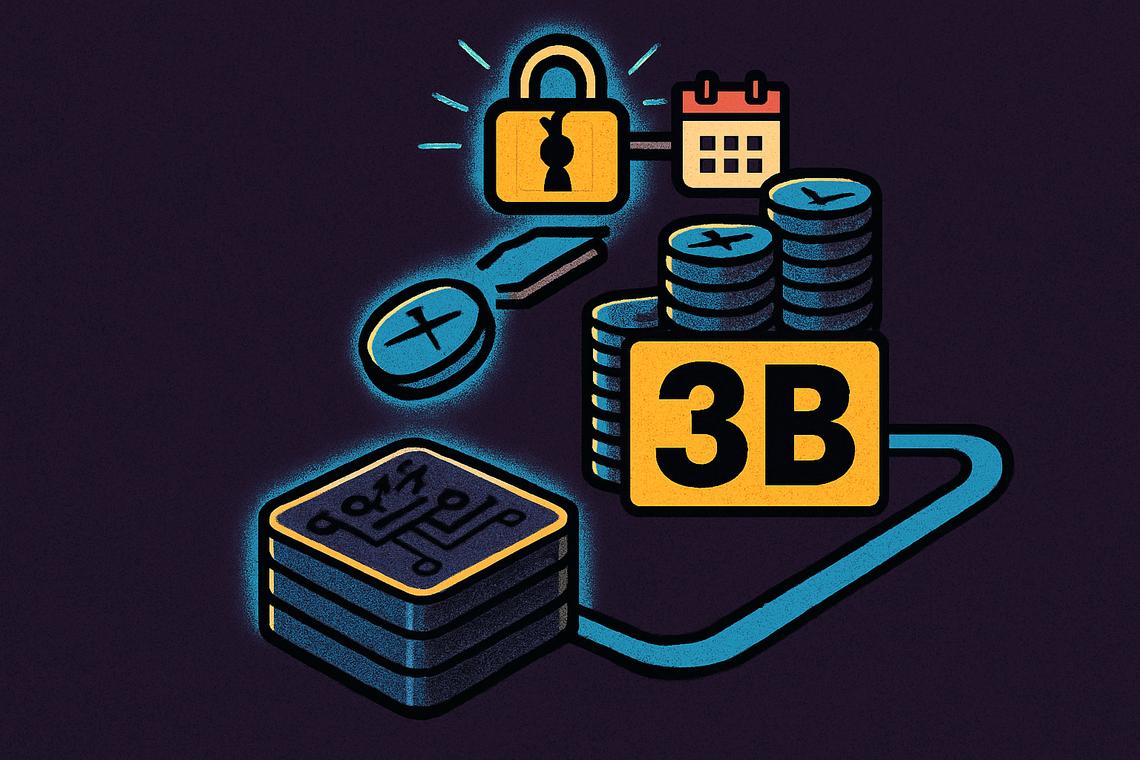
The XRP Ledger just crossed a number big enough to make even price-obsessed traders pause: three billion cumulative transactions. The milestone landed quietly, buried in on-chain data rather than splashed across a press release, but it says something real about how long this network has been grinding away in the background. Alongside it, Ripple carried out its latest scheduled escrow release, moving 1 billion XRP back into circulation. Neither event is a price call. Both are usage and supply signals that traders tend to weigh alongside everything else happening in the market.
Summary
Key takeaways
- The XRP Ledger has surpassed 3 billion cumulative transactions, based on network metrics tracked through XRPScan.
- Ripple released 1 billion XRP from escrow as part of its regular monthly schedule.
- The network’s focus remains fast, low-cost payment settlement, distinct from smart-contract-heavy chains like Ethereum or Solana.
- Ripple does not control every transaction happening on the XRP Ledger, despite its close association with the project.
- Escrow releases are designed to make XRP’s token supply predictable, not to signal an immediate sale.
XRP Ledger Surpasses 3 Billion Transactions
Passing three billion transactions confirms that XRP Ledger transactions have kept accumulating steadily, year after year, regardless of what the broader crypto market was doing at any given moment. The count comes from network metrics tracked on XRPScan, and it doesn’t claim that every single transaction carried meaningful economic weight or came from a distinct user. What it does confirm is persistence: the ledger has stayed operational and busy through bear markets, regulatory uncertainty, and constantly shifting exchange listings.
Sustained Network Activity Over Years
Why does a raw transaction count matter if it doesn’t move price? Because consistency itself is the story here. A network that keeps processing activity through multiple market cycles is demonstrating durability that headline price charts don’t capture. The XRP Ledger has operated continuously since its early years, and this milestone is simply the latest checkpoint in that longer run rather than a sudden spike tied to any single event.
Network Focus on Fast, Low-Cost Payment Settlement
XRPL has always leaned into a different identity than its biggest rivals. Ethereum built its foundation around smart contracts and decentralized finance. Solana leaned into speed and cheap retail-scale activity. XRPL’s pitch, by contrast, has centered on fast, low-cost payment settlement from the start. That makes ongoing transaction volume part of the network’s core identity rather than a side statistic worth mentioning only in passing. It’s also worth separating the three layers here: Ripple the company, The public ledger known as XRPL operates alongside XRP as its token. While Ripple maintains a presence within this ecosystem, it lacks authority over individual transactions that runs across the network — a distinction that matters when people conflate the company’s actions with the ledger’s independent activity.
Ripple’s Escrow Release Mechanism and Its Impact
Ripple’s escrow system exists for one main reason: to make XRP’s supply predictable rather than erratic. Instead of dumping every escrowed token onto the market at once, the system unlocks a fixed portion each month, and this latest release of 1 billion XRP follows that exact same pattern rather than representing a surprise or one-off event.
Scheduled Monthly Release of 1 Billion XRP
The release is visible through account data on XRPScan, and it lines up with the routine Ripple has followed for years. This is a Ripple escrow release in the truest sense — mechanical, scheduled, and disclosed on-chain rather than announced through marketing.
Escrow Releases Aim to Provide Predictable XRP Supply
An escrow unlock does not mean every token gets sold immediately. Some of the released XRP may go toward liquidity provisioning, institutional use cases, or day-to-day ecosystem operations. Some of it can even be sent back into escrow rather than entering the open market at all. That distinction is critical for how traders should actually read this kind of news: a supply unlock is not the same thing as a completed sale hitting exchange order books. This is where a bit of cryptocurrency supply management context helps separate signal from noise — the mechanism is designed for predictability, not for triggering sudden selling pressure.
Market Psychology and Trader Monitoring
Even so, scheduled unlocks can still shape sentiment. XRP has an unusually active and vocal trading community, and supply conversations tend to resurface around every release, whether or not the tokens actually move to exchanges. Traders typically watch where the newly freed tokens go next — exchange balances, wallet activity, and short-term price reaction all factor into how the market interprets the unlock. Sometimes the reaction is minimal. Other times it feeds into broader debates about liquidity and potential selling pressure. This is a case where scheduled escrow releases influence market psychology without directly forecasting where price goes next; the two things are related but not the same.
Ripple’s Role and the Ongoing Escrow Holdings Debate
Ripple’s relationship to the ledger it helped build remains more limited than many assume, and the debate over its escrow holdings shows no sign of resolving anytime soon.
Ripple Does Not Control Every XRPL Transaction
It’s worth restating this plainly: Ripple the company does not control every transaction flowing through the XRP Ledger. The company is a major participant and an influential voice in the ecosystem, but the ledger itself operates independently of any single actor’s direct oversight of transaction-by-transaction activity. That separation is part of why the three-billion milestone belongs to the network broadly, not to Ripple specifically.
Ongoing Debate on Escrow Holdings and Future XRP Supply
Ripple’s escrow structure has been argued over for years, and this release won’t be the thing that settles it. Supporters view the system as a transparent, disciplined way to manage token supply over time. Critics counter that Ripple’s remaining escrow holdings still represent a substantial chunk of future supply waiting in the wings. This latest 1-billion-XRP release doesn’t resolve that disagreement — it simply adds one more monthly data point to a conversation that keeps running in parallel with every unlock.
Both stories converge on the same underlying theme. The network keeps processing activity regardless of price swings, and XRP’s token supply keeps moving on a schedule that traders can anticipate rather than get blindsided by. What happens next isn’t found in the transaction count or the escrow calendar — it’s in how wallet flows, exchange balances, and liquidity conditions respond in the weeks that follow.
FAQ
What does surpassing 3 billion transactions on the XRP Ledger indicate?
It shows the XRP Ledger has maintained consistent processing activity over years despite shifting market conditions, reinforcing its core identity as a payment-settlement network rather than confirming anything about price direction.
What is the purpose of Ripple’s escrow releases?
They aim to provide a predictable XRP token supply by releasing a controlled portion of tokens on a monthly schedule, rather than flooding the market unpredictably.
Does Ripple control all transactions on the XRP Ledger?
No. Ripple plays a significant role in the ecosystem, but it does not control every transaction that takes place on the network, which operates independently at the ledger level.
Do escrow releases directly affect XRP’s price?
Escrow releases can influence market psychology and fuel supply-related discussion among traders, but they do not directly predict or cause specific price moves.
Article produced with the assistance of artificial intelligence and reviewed by the editorial team.
