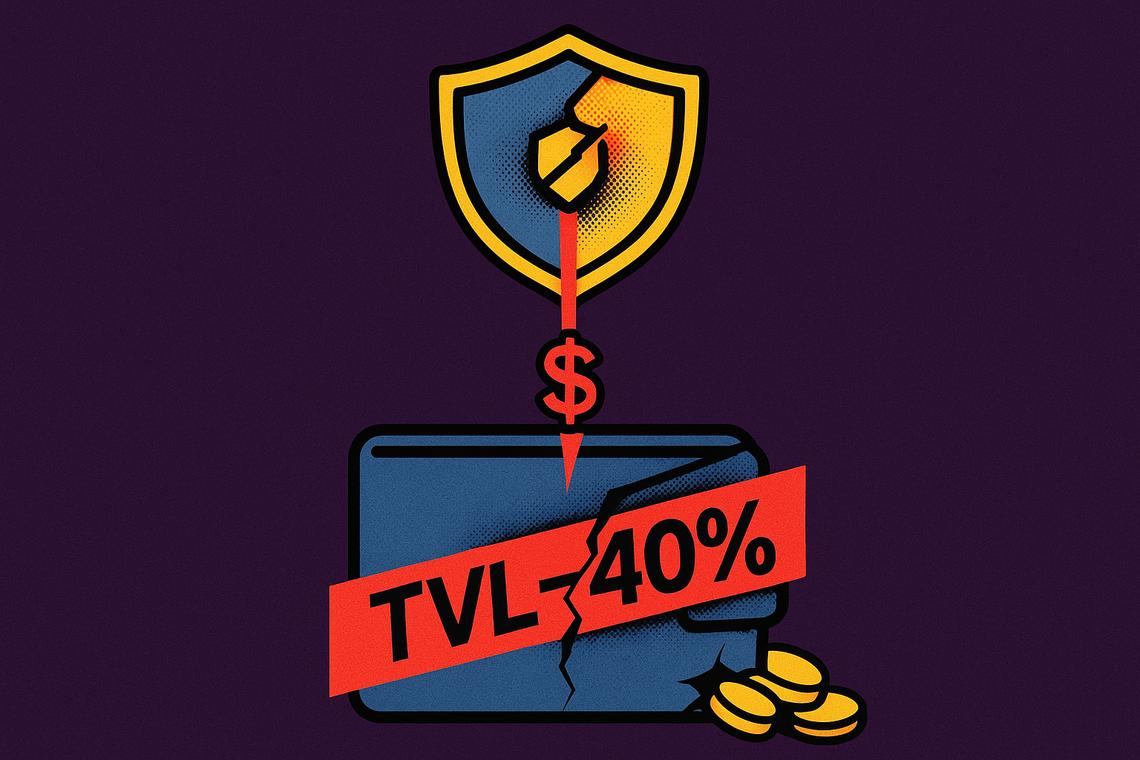
A price oracle flaw just cost Hedera’s largest lending protocol more than $9 million — and it was hiding inside a signature verification contract the whole time. The Bonzo lending exploit has sent shockwaves through the Hedera DeFi ecosystem, wiping out a significant chunk of the network’s total value locked and raising uncomfortable questions about how decentralized protocols vet the external data feeds they depend on.
Summary
Key takeaways
- Bonzo Lend lost approximately $9.05 million after an attacker exploited a flaw in a third-party Supra oracle contract on Hedera.
- The attacker manipulated SAUCE token prices by submitting a fraudulent price update, then borrowed assets far exceeding the value of their deposited collateral.
- Hedera’s total value locked fell by nearly 40% in 24 hours, while Bonzo’s own TVL plummeted by 77%.
- The Bonzo protocol has been paused following the exploit to prevent further losses.
- Bonzo Labs and the Bonzo Finance Foundation are actively coordinating recovery and remediation efforts.
Oracle Exploit Results in $9.05 Million Loss for Bonzo Lend
Bonzo Lend, a decentralized lending protocol operating on the Hedera network, disclosed a loss of approximately $9.05 million after an attacker found and exploited a critical flaw in a third-party Supra oracle contract. The attack was not a brute-force breach — it was a precise manipulation of the price data that Bonzo’s lending logic relied on to assess collateral values.
According to the details that emerged, the attacker deposited 250 SAUCE tokens — assets with relatively little value — and then submitted a manipulated price update that dramatically inflated those tokens’ HBAR-denominated value. With artificially elevated collateral on the books, the attacker proceeded to borrow assets far exceeding what their actual deposit was worth. By the time the manipulation was detected, the damage had already been done.
The financial fallout extended well beyond Bonzo itself. Hedera’s total value locked dropped by nearly 40% within 24 hours of the exploit becoming public. Bonzo’s own TVL took an even harder hit, falling by 77% — a number that illustrates just how exposed a single oracle vulnerability can leave an entire protocol’s depositor base.
Why Oracle Attacks Are So Devastating for Lending Protocols
Price oracles sit at the heart of every decentralized lending platform. They tell the protocol what any given asset is worth, which determines how much a borrower can take out against their collateral. When that price feed gets corrupted — even momentarily — the entire safety mechanism breaks down. The attacker in this case did not need to break Bonzo’s own code. They only needed to feed it bad data, and the protocol’s logic did the rest.
This is what makes oracle exploits particularly difficult to defend against. The vulnerability was not inside Bonzo’s own smart contracts, but in the Supra oracle’s signature verification process — a third-party dependency that Bonzo’s lending mechanism trusted implicitly. For users who had deposited funds into the protocol, that trust turned out to be the weakest link.
Technical Cause: Flaw in Supra’s Signature Verification
The root cause of the attack traces back to a flaw in how Supra’s oracle contract verified price update signatures. Signature verification is the mechanism that’s supposed to confirm a price update is authentic before the protocol accepts and acts on it. When that check fails or can be bypassed, an attacker gains the ability to push arbitrary price data into a protocol that has no reason to doubt it.
How the Signature Verification Flaw Enabled the Attack
In this case, the flaw allowed the attacker to submit a manipulated price update for SAUCE tokens without the verification process catching it. Once the fake price was accepted, the attacker’s low-value collateral was treated as though it were worth dramatically more. The borrowing mechanism then unlocked asset withdrawals that the real collateral could never have supported.
The elegance — if you can call it that — of the attack was in its simplicity. No sophisticated contract-level exploit was required. The attacker needed only to understand the oracle’s signature verification weakness and build a transaction that took advantage of it. That kind of vulnerability, sitting inside an infrastructure layer that many protocols rely on, carries implications that stretch well beyond Bonzo alone.
Bonzo Protocol Response and Recovery Coordination
Protocol Suspension to Prevent Further Losses
In the immediate aftermath of the exploit, the Bonzo protocol was paused. Halting operations is a standard emergency response in DeFi — it stops the bleeding by preventing any further borrowing, withdrawals, or interactions that could compound losses while the team investigates. For users with funds still in the protocol, the pause means their assets are frozen in place until recovery efforts produce a clearer path forward.
Coordination Between Bonzo Labs and Bonzo Finance Foundation
Both Bonzo Labs and the Bonzo Finance Foundation have confirmed they are actively working on recovery and remediation. The dual-entity response signals that the effort involves both the technical team and the broader governance structure of the project, which may be relevant as decisions are made about how — and whether — affected users can be made whole.
What that recovery looks like in practice remains an open question. The scale of the loss — $9.05 million against what appears to have been a dramatically reduced TVL — leaves the protocol in a structurally difficult position. Recovery in DeFi exploits of this size typically involves some combination of internal treasury funds, third-party negotiations, or compensation plans that can take weeks or months to finalize. The degree to which Bonzo can restore user confidence will depend heavily on the transparency and speed of that process.
For the wider Hedera DeFi ecosystem, the episode is a pointed reminder that oracle security is not a peripheral concern — it is foundational infrastructure. A single compromised price feed, in a single third-party contract, was enough to drain Hedera’s largest lending protocol and shake confidence across the entire network in a matter of hours.
FAQ
What caused the Bonzo Lend protocol exploit?
A flaw in the signature verification of the Supra oracle contract allowed attackers to manipulate SAUCE token prices, feeding fraudulent price data to the Bonzo lending protocol.
How much did Bonzo Lend lose due to the exploit?
Bonzo Lend lost approximately $9.05 million in the oracle exploit.
What actions were taken by Bonzo Lend after the exploit?
The Bonzo protocol was paused to prevent further losses, and both Bonzo Labs and the Bonzo Finance Foundation are coordinating recovery and remediation efforts.
How did the attacker benefit from the oracle exploit?
The attacker deposited 250 low-value SAUCE tokens and submitted a manipulated price update that inflated their value, then used that artificially inflated collateral to borrow assets far exceeding what their actual deposit was worth.
Article produced with the assistance of artificial intelligence and reviewed by the editorial team.