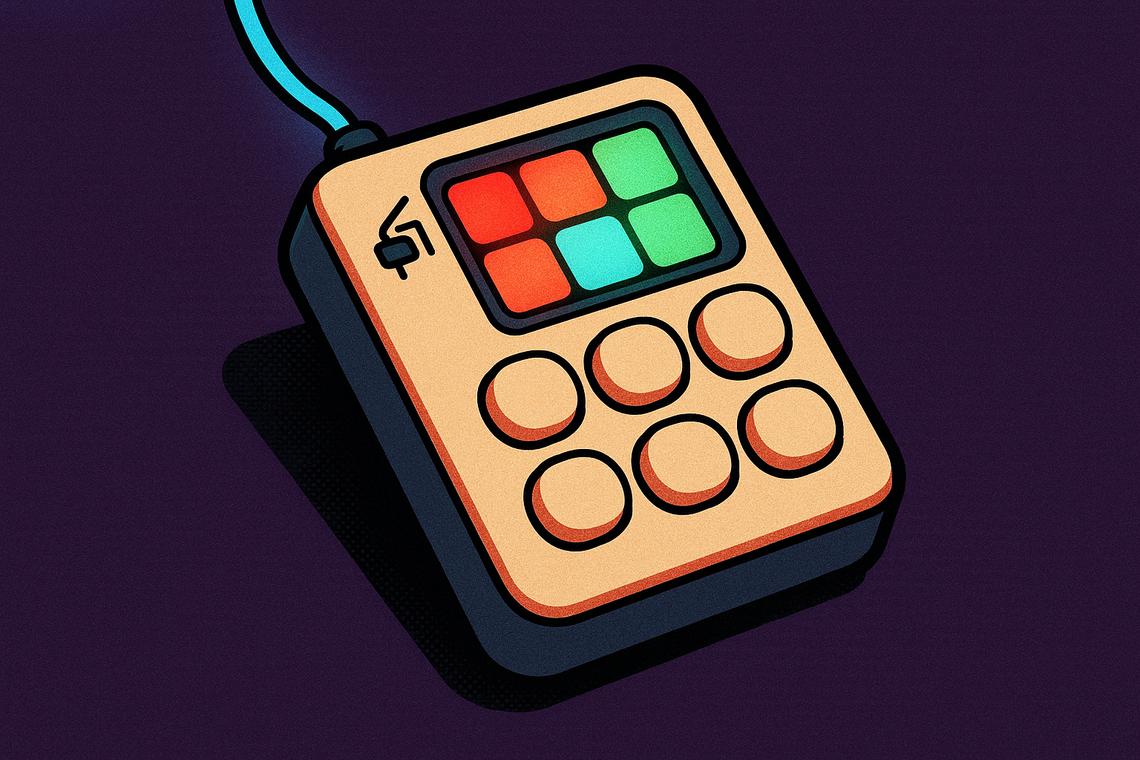
OpenAI has stepped into hardware territory — not with the sleek, secretive device everyone keeps speculating about, but with something built specifically for developers. The company’s first OpenAI Codex hardware product is a compact button pad called Codex Micro, and it’s already on sale for $230 through Supply Co, while supplies last.
Summary
Key takeaways
- Codex Micro is a limited-run hardware device co-developed by OpenAI and keyboard maker Work Louder, designed for use with OpenAI’s coding platform Codex.
- The device features 13 mechanical switches, a joystick, a dial, a touch sensor, and six frosted keys that display color-coded status for live Codex threads.
- All controls are configurable through the ChatGPT desktop app.
- Codex Micro costs $230 and is available on Supply Co while supplies last.
- This device is entirely separate from OpenAI’s rumored AI-powered smart speaker project developed with former Apple designer Jony Ive.
OpenAI Codex Hardware: What Codex Micro Actually Does
Codex Micro is a square-shaped block of programmable buttons designed to give developers a physical interface for managing and monitoring their AI coding agents. It’s not a standalone AI device — it works in tandem with Codex, OpenAI’s coding platform, and integrates directly with the ChatGPT desktop app for configuration.
The real hook is the live status display. Six frosted keys on the device provide a real-time view of active Codex threads, using color-coding to signal whether a task is running, complete, waiting for feedback, or has hit an error. That kind of at-a-glance monitoring matters for developers running multiple parallel AI agents — watching a terminal window is one thing, but having a physical indicator in your peripheral vision is a different kind of workflow tool.
Design and Features of Codex Micro
Beyond the status keys, the hardware packs 13 mechanical switches, a joystick, a dial, and a touch sensor. Command keys can be mapped to frequent actions — push-to-talk, accepting or rejecting changes, and sending commands among them. The device also ships with 32 additional keycaps featuring Codex icons.
The joystick can trigger common workflows, while the dial controls reasoning level. Work Louder cofounder Mike Di Genova explained these features in a video walkthrough, describing the device as purpose-built for the kind of agent-management tasks Codex users deal with daily.
Visually, Codex Micro closely resembles Work Louder’s existing Creator Micro 2, with what appears to be an identical switch layout. The aesthetic lineage is clear.
Integration with the ChatGPT Desktop App
One of the more practical aspects of the device: every control is fully configurable through the ChatGPT desktop app. That means users aren’t locked into default key mappings — they can tailor the pad to fit their specific development workflows without needing additional software or drivers.
Collaboration with Work Louder and Product Availability
Partnership Background
Work Louder is not new to this kind of collaboration. The keyboard maker previously co-produced a similar device with Figma in 2023, establishing a track record for building software-specific input hardware. The OpenAI partnership follows that same model: take an existing hardware platform, skin it for a specific platform’s use case, and ship a limited run to that platform’s most engaged users.
OpenAI described the Codex Micro release as a limited-run collaboration — the number of units available was not disclosed.
Pricing and Availability Details
The device is priced at $230 and available through Supply Co. The “while supplies last” framing signals this isn’t a mass-market push — it reads more like a developer-focused product drop than a mainstream consumer launch.
That positioning is worth noting. OpenAI isn’t trying to put Codex Micro in every developer’s hands. It’s a targeted release aimed at users already deep enough in the Codex ecosystem to want physical controls for agent management. For that audience, $230 for a configurable, status-aware input device is a reasonable ask.
Not the Device Everyone Is Waiting For
OpenAI’s broader hardware ambitions involve a much more high-profile project: a rumored AI-powered smart speaker developed alongside former Apple designer Jony Ive. Codex Micro is entirely separate from that initiative. The two shouldn’t be confused — one is a niche developer tool, the other is reportedly aimed at mainstream consumer AI interaction, with a rumored launch sometime next year.
Details on the Ive collaboration remain slim, but the contrast between the two projects is telling. Codex Micro is a practical, workflow-driven tool for a specific power-user segment. The smart speaker, if reports are accurate, is meant to be something far more visible.
The Apple Lawsuit Hanging Over OpenAI’s Hardware Push
The timing of any OpenAI hardware news is complicated right now. Apple filed a lawsuit against OpenAI accusing the company of stealing hardware secrets — allegations OpenAI has said are without merit. The suit puts a legal shadow over OpenAI’s hardware ambitions, particularly the Ive-led project, given his long history with Apple.
Codex Micro sidesteps that drama almost entirely — it’s a keyboard peripheral built with a third-party hardware maker, not a next-generation AI device with contested IP at its core. But the lawsuit is a reminder that OpenAI’s move into physical products carries complications that go beyond design and engineering.
Whether Codex Micro finds a dedicated audience among developers or simply disappears once the limited stock clears will say something about how much demand actually exists for physical AI workflow tools. The more significant hardware questions at OpenAI remain unresolved — and considerably more contested.
FAQ
What is Codex Micro?
Codex Micro is a hardware device launched by OpenAI in collaboration with keyboard maker Work Louder. It’s designed for use with OpenAI’s coding platform Codex, giving developers a physical interface to monitor and manage AI coding agents.
What features does the Codex Micro device have?
Codex Micro features 13 mechanical switches, a joystick, a dial, a touch sensor, and six frosted keys that display color-coded live status for Codex threads — showing whether a task is running, complete, waiting for feedback, or has encountered an error. The device also includes 32 additional Codex icon keycaps.
How can users customize Codex Micro controls?
All controls on Codex Micro are fully configurable through the ChatGPT desktop app, allowing users to remap keys and adjust settings to fit their personal workflows.
Is Codex Micro related to OpenAI’s rumored smart speaker?
No. Codex Micro is a separate, limited-run developer tool. OpenAI’s rumored AI-powered smart speaker is an entirely different project, reportedly being developed with former Apple designer Jony Ive and expected at some point next year.
Article produced with the assistance of artificial intelligence and reviewed by the editorial team.