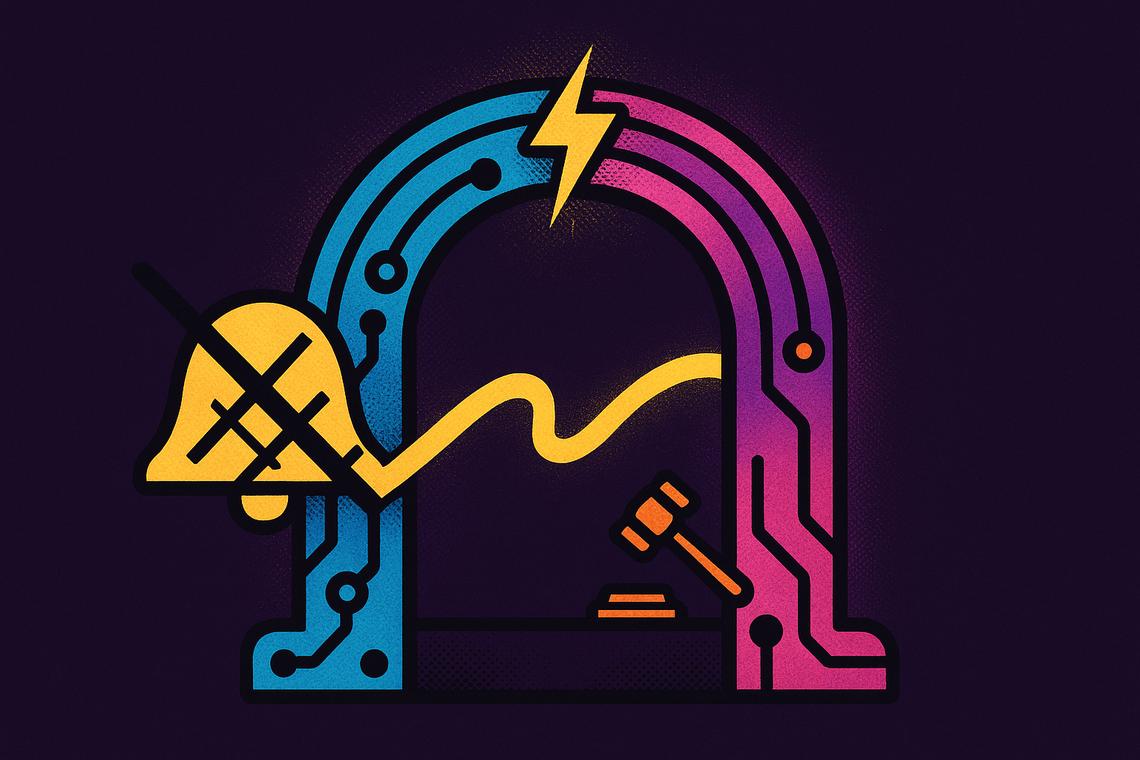
The real disruption that crypto has delivered to financial markets is not a new asset class, a new broker, or a new exchange. It is something more fundamental: the disappearance of the closing bell. And the ICE OKX partnership, formalized through a 50:50 joint venture called OKXICE, forces traditional finance to confront that reality head-on for the first time.
Summary
Key takeaways
- OKX and Intercontinental Exchange have jointly funded a 50:50 joint venture called OKXICE, designed to bridge continuous crypto markets with traditional financial infrastructure.
- ICE is the parent company of the New York Stock Exchange and one of the world’s most important providers of trading, clearing, and market infrastructure.
- The core challenge OKXICE must solve is that traditional clearing, regulation, and settlement were all built around a closing bell that crypto markets simply do not have.
- ICE previously backed Bakkt in 2018 but faced market adoption challenges; OKXICE takes the opposite approach by connecting to OKX’s already-functioning 24/7 ecosystem.
- In 2025, OKX-related entities pleaded guilty to operating an unlicensed money transmitting business in the United States and paid more than $500 million in penalties and forfeitures.
ICE and OKX Launch OKXICE to Bridge Two Financial Worlds
OKX and Intercontinental Exchange have jointly funded a 50:50 venture — OKXICE — with a mandate that is harder than it sounds: integrate a market that never sleeps with an institutional infrastructure that was designed around sleep.
At first glance, it is tempting to read this as an OKX story. A major global crypto exchange, fresh off serious regulatory scrutiny in the United States, has secured the institutional backing of the NYSE’s parent company and is attempting to reenter regulated American finance. That interpretation is not wrong. OKX does need licenses, credibility, and a sufficiently powerful traditional partner to signal a clean break from its offshore past.
But reducing OKXICE to a story about OKX “going legitimate” would seriously underestimate what ICE is trying to do here.
Why ICE Moved — and Why Now
ICE is not an ordinary financial company. Founded by Jeffrey Sprecher in 2000, it was built on a simple but powerful idea: take fragmented, opaque markets and turn them into infrastructure. It did this first in energy trading, then in commodities, then in equities through the acquisition of NYSE Euronext, and eventually in US mortgage workflows. Every major acquisition followed the same logic — find an essential passage in the financial system and make it governable.
What genuinely interests ICE about this partnership is not a particular license or token. It is whether a crypto market that has already developed substantial trading volume, stablecoin liquidity, global users, and 24/7 risk exposure can now enter a phase that is more institutionally manageable.
That question sits squarely within ICE’s traditional area of expertise. It also pushes far beyond the limits of everything ICE has done before.
What ICE Really Sells: Certainty, Not Trading
To understand why this joint venture matters, it helps to understand what ICE actually sells. On the surface, exchanges sell trading — order books, volume, fees, liquidity. But for a company like ICE, the most valuable work begins after a trade is executed.
The critical questions are these: Who ensures the buyer pays? Who monitors risk in real time? Who decides which assets count as collateral? Who handles a default? Matching a trade answers whether a transaction can happen. Clearing answers whether it will still hold after it does.
ICE’s moat lies inside those questions. It is not the company best known for retail apps or crypto culture. What it does best is place risk inside a formal system — turning markets that large institutions cannot safely use into markets that they can. That is what it did in energy. That is what it did in credit default swap clearing. That is what it did for the NYSE.
Now it wants to do it for a market that does not close on Friday afternoon and reopen Monday morning.
The Closing Bell Problem: Why Crypto Is Different
The absence of a closing bell in crypto is not a user experience detail. It is a structural crisis for financial infrastructure. Traditional clearing, regulation, collateral management, and customer asset segregation were all built around market hours and settlement cycles — systems that assume a night in which back offices can reconcile, banks can process funds, and regulators can receive reports.
Crypto has no such night. It converts trading and the risks attached to it into one continuous, global line.
CME’s move toward 24/7 trading for crypto futures and options shows that regulated traditional exchanges have already accepted that digital asset risk does not wait for an opening bell. But trading hours are moving faster than the institutional machinery behind them. Clearing, settlement, regulatory reporting, and banking infrastructure have not yet become fully operational around the clock.
That gap — between a front end that already runs like an internet product and a back end still constrained by banking days and settlement windows — is precisely the gap OKXICE is trying to close.
Why OKXICE Is Not Another Bakkt
ICE’s history with crypto is instructive. In 2018, it became deeply involved in Bakkt, generating enormous institutional excitement. A digital asset platform backed by the parent company of the New York Stock Exchange sounded like a milestone for Bitcoin on Wall Street.
Bakkt had a compliance story, a custody story, and the full weight of traditional finance behind it. But the lesson from Bakkt is this: compliance cannot create a market out of nothing. A crypto market does not materialize simply because a Wall Street giant announces its entry. It requires real users, real trading behavior, real stablecoin liquidity, real market makers, and real 24/7 demand.
Bakkt was traditional finance attempting to build a crypto market from scratch. OKXICE takes the opposite approach entirely.
OKX already operates a user ecosystem without a closing bell — global users, wallets, stablecoin rails, perpetual contracts, market makers, and crypto-native account infrastructure. For ICE, the most valuable thing OKX brings is not a particular license. It is the fact that OKX already lives inside the time structure that ICE needs to govern. ICE cannot build that world quickly or naturally from scratch, so it has chosen to connect to one that already exists.
One was about building a pond. The other is about constructing a floodgate.
OKX’s Strengths Are Also Its Compliance Problem
The qualities that make OKX attractive to ICE are also what previously brought it into conflict with US regulators. Its global user base, borderless trading, stablecoin liquidity, and crypto-native infrastructure made it one of the world’s most liquid platforms. They also made it one of regulators’ most scrutinized targets.
In 2025, OKX-related entities pleaded guilty to operating an unlicensed money transmitting business in the United States and paid more than $500 million in penalties and forfeitures. US regulation demands boundaries that are the opposite of what makes crypto feel native to its users: clear customer identity, strict product jurisdiction between the SEC and CFTC, defined asset segregation, and legal clarity around stablecoins and tokenized securities.
OKXICE must function as a floodgate between these two worlds — allowing capital to flow while preventing the borderless conditions that US regulators fear most. That means connecting ICE futures, NYSE tokenized equities, broker-dealers, and compliant accounts to OKX’s ecosystem, without allowing the joint venture to become the old platform dressed in new regulatory clothes.
The challenge is not building a new trading interface. The challenge is encoding hard compliance boundaries into a system that can be independently verified — and then making that system liquid enough for users to actually want to trade on it.
The Real Prize: Collateral, Not Tokens
When discussions about OKXICE focus on tokenized equities, they often miss the larger point. If a tokenized stock is merely a synthetic reflection of a US-listed share — with less liquidity and more regulatory complexity — there is little reason for users to prefer it over an existing broker.
The real opportunity is not the token. It is the collateral.
Traditional finance holds the world’s best assets: US equities, US Treasuries, ETFs, futures, commodities, interest rates, and foreign exchange. Crypto holds a more efficient account structure: 24/7 access, global users, stablecoin rails, unified margin, and real-time risk management.
The genuinely transformative question OKXICE raises is whether traditional financial assets — NYSE tokenized equities, ICE futures, US Treasuries — can enter a crypto-style account system and become assets that can be traded, pledged as collateral, and risk-managed within a regulated, always-on framework. Whoever controls the rules of collateral in that system controls the underlying order of the market. That is the territory ICE has always competed for, and it is the territory OKXICE is now staking a claim on.
An Always-On Machine for Risk — If the Floodgate Holds
The analytical question hanging over OKXICE is whether both sides can actually change. If only OKX adapts to ICE’s requirements, the product may become compliant but lifeless — safe for institutions, irrelevant to users. If only ICE is reshaped by crypto’s flow, regulators will intervene before the project scales. The entire bet is that both parties transform simultaneously.
ICE understands risk, but it must adapt to continuous time. It understands clearing, but it must confront a market not yet reorganized around clearinghouses. It understands collateral, but it must navigate the legal gaps between stablecoins, tokenized securities, and traditional financial assets that remain genuinely unresolved.
The vision, if it works, is something finance has never had: an always-on machine for pricing and managing risk that operates beyond physical venues, without closing hours, spanning the full range of traditional and digital assets. Not a place that opens and closes, but a continuous system of institutional certainty wrapped around a market that never stops.
The question of who ensures that promises are kept when markets never close is not rhetorical. It is the exact problem ICE has spent two decades learning how to solve — and the exact problem it has never faced at this scale, in this time structure, with these regulatory stakes.
FAQ
Why did ICE choose to partner with OKX instead of building its own crypto platform?
ICE cannot quickly build a 24/7 crypto ecosystem from scratch. OKX already operates a functioning global user ecosystem without a closing bell — including wallets, stablecoin rails, perpetual contracts, and market makers. Rather than repeat the Bakkt experience of trying to construct a crypto market from the Wall Street side, ICE chose to connect to an ecosystem that already exists and functions continuously.
What challenge does the absence of a closing bell in crypto markets create for traditional finance?
Traditional finance systems — including clearing, regulation, collateral management, and customer asset segregation — were all built around market hours and settlement cycles anchored to a closing bell. Crypto markets trade continuously, which means risk does not pause for overnight reconciliation, banks cannot process weekend margin calls through standard settlement systems, and regulatory reporting loses its fixed rhythm. Adapting institutional infrastructure to a market that never closes is the central problem OKXICE must solve.
What regulatory demands must OKXICE comply with to operate in the US market?
Operating in the US requires strict compliance with boundaries set by regulators including the SEC and CFTC. These include clear customer identity verification, defined product jurisdiction separating securities from futures, customer asset segregation, legal clarity around stablecoin use as a funding rail, and the legal status of tokenized securities. Crypto user experience is naturally hostile to these kinds of hard boundaries, which is why building a compliant system that is also liquid enough to attract real users is the joint venture’s core operating challenge.
What is the vision for the future exchange that OKXICE aims to build?
The vision is an always-on machine for pricing and managing risk — an exchange that no longer operates as a place with opening and closing hours, but as continuous infrastructure spanning traditional financial assets like NYSE tokenized equities, ICE futures, US Treasuries, and ETFs alongside crypto assets, stablecoins, and perpetual contracts, all within a single compliant, real-time risk management framework.
Article produced with the assistance of artificial intelligence and reviewed by the editorial team.