Something unusual is happening in the Bitcoin market right now: the asset has climbed more than 10% off its early-July low, institutional money is flowing back in, and yet one of the most respected names in crypto research is openly asking whether the Bitcoin bear market bottom is already in the rearview mirror. That question, raised by Grayscale head of research Zach Pandl, has cut through the noise — because the answer depends almost entirely on what the Federal Reserve does next.
Summary
Key takeaways
- Grayscale’s Zach Pandl argues Bitcoin may have already bottomed if the Federal Reserve holds off further rate hikes and economic growth stays stable.
- The traditional four-year cycle model predicts more downside, with a potential low in September or October 2026 — roughly 15% below current prices.
- Bitcoin is trading around $65,000, recovering from an early-July low of $57,717; spot ETFs have attracted nearly $1 billion in net inflows over seven consecutive sessions.
- Bitcoin peaked near $126,000 in October 2025 and remains about 49% below that level.
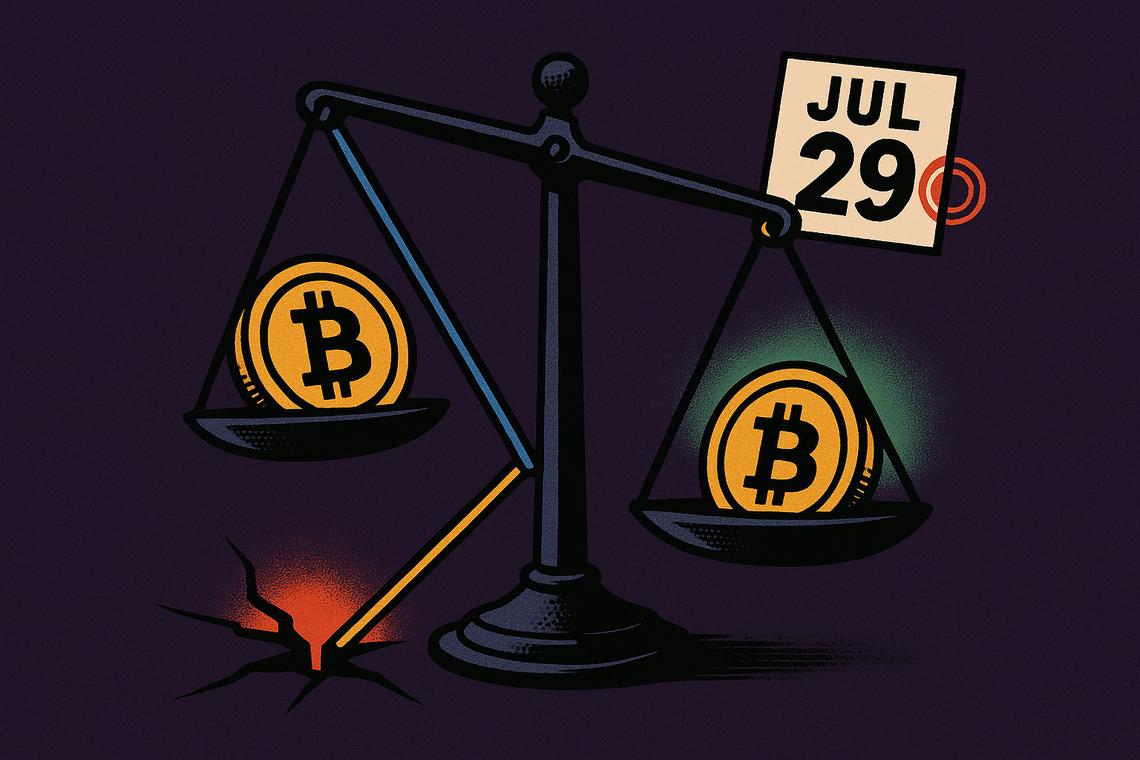
- Two upcoming events — the Federal Reserve meeting on July 29 and the Senate’s August 7 deadline for the Clarity Act — are the next major price catalysts.
Grayscale’s Case: Macro Conditions, Not the Halving Clock, Are Driving This Bear Market
Grayscale’s argument is essentially a challenge to one of crypto’s most deeply held frameworks. For years, Bitcoin believers have organized their expectations around the four-year halving cycle — the event baked into Bitcoin’s code that cuts mining rewards in half roughly every four years, slowing new supply and historically triggering bull runs. When the bull ends, cycle theorists expect a long, grinding bear market to follow a predictable arc.
Pandl thinks that model is the wrong lens for 2026. His alternative view is that Bitcoin has grown up. It no longer trades purely on its own internal mechanics; instead, it increasingly responds to the same forces that move gold, rate-sensitive tech stocks, and other major financial assets. That shift has real consequences for how investors should think about the current downturn.
According to Grayscale’s research, past Bitcoin bear markets have consistently coincided with slowing economic growth and rising real interest rates — meaning the actual return on bonds after adjusting for inflation. The current bear market fits that pattern: it intensified as investors priced in further Federal Reserve tightening and real borrowing costs moved higher. If those macro headwinds reverse — specifically, if the Fed stops raising rates while the economy holds steady — Pandl believes the current low may not need to be retested.
How Kevin Warsh Triggered the Sharpest Move of the Cycle
The clearest illustration of this macro sensitivity came in early July. The nomination of Kevin Warsh as Fed chair — a hawkish pick viewed as a threat to the loose monetary environment that had powered Bitcoin’s bull run — triggered a sharp selloff. Bitcoin briefly fell below $58,000, reaching an early-July low of $57,717 before recovering. That single macro development moved the market more decisively than almost anything else in this cycle, reinforcing Pandl’s thesis that rate expectations, not halving timelines, are now in the driver’s seat.
Current Bitcoin Price Trends and ETF Inflows Indicate Recovery Signs
The data coming in over the past two weeks tells a more encouraging story. Bitcoin has climbed back to around $65,000, a recovery of more than 10% from that early-July floor. More telling, perhaps, is what’s happening in the regulated fund market.
Spot Bitcoin ETFs Record Significant Inflows
Spot Bitcoin ETFs have logged nearly $1 billion in net inflows over seven straight sessions, according to data tracked by Santiment, which calculated cumulative inflows of $981.2 million since July 14. That streak followed a prolonged withdrawal period through May and June — making the reversal meaningful rather than routine.
Institutional demand, as measured through these regulated products, offers a cleaner signal than retail sentiment. Seven consecutive days of inflows suggests steady allocation, not a single portfolio rebalance. BlackRock’s iShares Bitcoin Trust ETF alone held $48.82 billion in net assets as of July 22, according to the fund’s official data, underscoring how concentrated — and consequential — large-issuer demand has become.
That said, the inflow streak alone doesn’t confirm a cycle reversal. Flow data measures demand through one channel; it doesn’t capture every holder category or guarantee sustained appreciation.
Potential Downside Risks and Traditional Cycle Predictions
The competing narrative deserves serious attention, even if Grayscale ultimately favors the macro view.
Four-Year Cycle Theory Predicts Further Decline
Under the cycle model, Bitcoin historically bottoms about one year after its cyclical peak and roughly two and a half years after each halving. Average drawdowns across previous bear markets have run close to 80%. Applying that framework to the current cycle, Pandl wrote, “The four-year cycle theory implies that Bitcoin’s price could fall further, with a bottom in September or October” — meaning September or October 2026.
At current prices near $65,000, that implies roughly a 15% additional drop before the cycle completes. A full 80% drawdown from the cycle peak would push Bitcoin far below $60,000 — territory it has already briefly visited but not sustained.
Historical Price Peaks and Drawdowns
Bitcoin peaked near $126,000 in October 2025 and has since declined approximately 49%. That’s a significant loss, but it’s still well short of the historical average drawdown under the four-year framework. Cycle adherents see that gap as evidence the bear market has more room to run.
There’s also a technical dimension worth noting. Despite the recent recovery, Bitcoin has struggled to establish a decisive close above the $65,000 to $66,000 resistance area, a level that has rejected multiple rebound attempts since June, according to on-chain data. Monthly momentum remains on a bearish trend, which could extend pressure by another few months even under a more optimistic macro scenario.
Grayscale’s own analysis acknowledges this tension. The asset manager does not expect the current downturn to match historical 80% drawdowns, partly because institutional participation has remained stronger than in past cycles — a structural difference that may compress the depth of the decline even if the duration extends.
Regulatory Developments and Market Catalysts to Watch
Beyond Fed policy, there’s a second major wildcard sitting in the U.S. Senate. The Clarity Act, a sweeping crypto market structure bill, would divide regulatory oversight of digital assets between the SEC, which polices securities and investment products, and the CFTC, which oversees commodity derivatives. If it passes and is signed into law, market participants widely expect it to act as a positive catalyst for Bitcoin and the broader crypto market.
The timing makes this more than theoretical. The Clarity Act faces an August 7 Senate deadline, just over a week after the Federal Reserve’s July 29 meeting. Those two dates, in Grayscale’s framing, represent the most significant near-term price catalysts on the calendar.
The bill still needs floor debate, possible amendments, and 60 votes to advance — a path that remains uncertain. A failure to pass this year would remove a potential upside driver and, according to Pandl’s earlier analysis, could extend downward pressure on Bitcoin alongside any renewed Fed tightening.
What makes this moment analytically interesting is the convergence. A Fed that signals a pause on July 29 and a Senate that advances crypto regulatory clarity by August 7 would simultaneously address the two conditions Grayscale identifies as most critical for confirming a Bitcoin bottom. Either outcome alone might support a recovery; both together would materially shift the probability calculus. The reverse — a hawkish Fed surprise and a stalled Clarity Act — would bring the cycle model’s September-October prediction back into serious consideration.
FAQ
Has Bitcoin already bottomed its current bear market?
Grayscale’s research suggests Bitcoin may have already bottomed if the Federal Reserve stops raising interest rates and economic growth remains stable. However, the outcome is not confirmed — it depends on upcoming Fed decisions and broader macro conditions.
What does the traditional four-year cycle theory indicate for Bitcoin’s price?
The four-year cycle theory predicts Bitcoin’s price could fall further, potentially bottoming in September or October 2026. Under that model, historical average drawdowns have run close to 80%, which would imply a decline roughly 15% below current levels from around $65,000.
How are spot Bitcoin ETFs impacting the price?
Spot Bitcoin ETFs have seen nearly $1 billion in net inflows over seven consecutive sessions since July 14, contributing to Bitcoin’s recovery from its early-July low of $57,717. The streak signals a return of institutional demand after heavy outflows in May and June.
What role does the Clarity Act play in Bitcoin’s market outlook?
If the Clarity Act passes and is signed into law, it could positively influence Bitcoin’s market by establishing clearer regulatory oversight between the SEC and CFTC. The bill faces an August 7 Senate deadline, making it one of the most closely watched near-term catalysts for crypto markets.
Article produced with the assistance of artificial intelligence and reviewed by the editorial team.