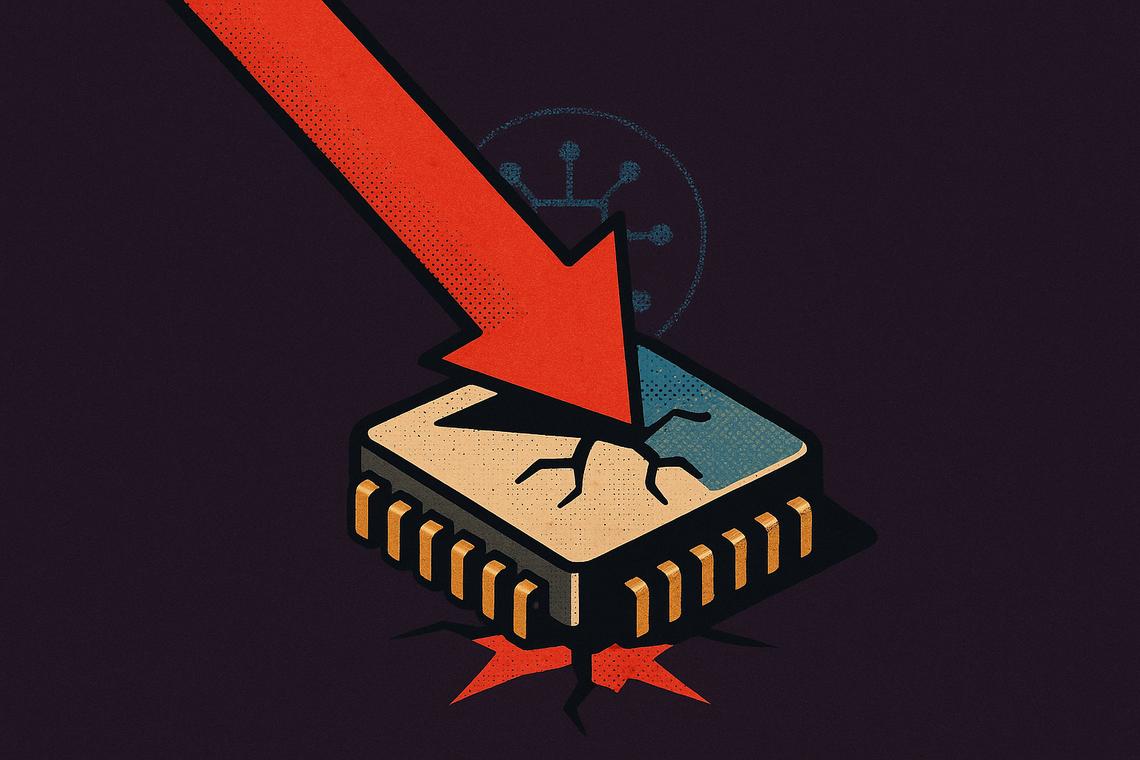
Recent market heavy fluctuations have impacted major technology companies, dragging down several semiconductor giants. Among these names, intel stock has experienced a double-digit pullback as investors re-evaluate positions ahead of upcoming financial reports.
Summary
Analyzing the Recent Correction in Intel Stock Price
After reaching a record high close of nearly $141 per share on June 22, 2026, Intel stock has pulled back approximately 27–28%. This sharp decline is tied to a broader semiconductor market selloff and profit-taking. It does not reflect a fundamental operational breakdown within the enterprise. Analysts point out that investors are rotating out of high-performing technology shares, creating downward pressure across the entire chip sector during July.
Supply Constraints and Foundry Strategy Take Center Stage
Despite the market pullback, the quarterly announcement scheduled after the market close on July 23, 2026, will focus on how the firm handles production. During previous periods, supply constraints actively limited top-line performance. For instance, first-quarter revenue rested at $13.6 billion. At the time, Chief Financial Officer David Zinsser stated that revenue would have been meaningfully higher without these supply limitations.
To combat these limitations, management is emphasizing its foundry strategy, which includes the expansion of its clean room facilities. By building out this capacity, the enterprise aims to ramp up its overall supply. This initiative positions the brand as a viable alternative to other manufacturing pipelines experiencing capacity bottlenecks elsewhere.
Earnings Outlook and the Broader Market Sentiment
The scheduled release will bring a sharper focus on second-quarter financial figures. In previous reports, the firm delivered an EPS of $0.38 on revenue of $16.1 billion. This performance outpaced the consensus estimates of $0.21 EPS on $14.43 billion in revenue. Furthermore, the outlook for future revenue remains positioned between $15.8 billion and $16.8 billion.
Even if the upcoming report presents blowout figures, some analysts caution that strong performance might not reverse the slide. The broader market sentiment has lately soured on chipmakers, leading to a selloff of previous winners. Consequently, macroeconomic forces and sector repositioning may temporarily overshadow these company-specific successes.